Hijron Ka Khanqah Delhi is not just a hidden spiritual corner of Delhi—it is a place where faith feels softer, blessings feel closer, and hearts quietly open. In a city sustained by the grace of Sufi saints, where every lane carries whispers of devotion, this sacred khanqah stands as a symbol of acceptance, hope, and fulfillment of wishes.
Located in the historic lanes of Mehrauli, near Mehrauli Archaeological Park, Hijron Ka Khanqah Mehrauli reflects the deep-rooted belief that Hijras are blessed souls in Indian mythology, culture, and spiritual traditions. Here, prayers are not judged—they are simply heard, making it one of the most unique spiritual places in Delhi for seekers of peace and blessings.
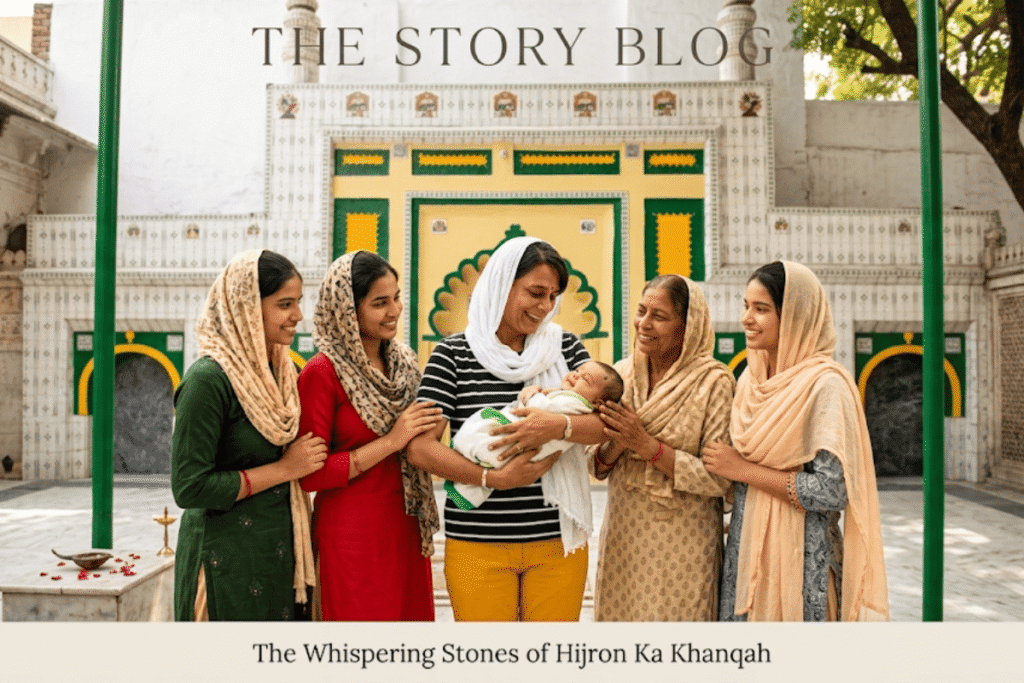
Hijron Ka Khanqah Delhi Story – A Blissful Personal Experience
A couple of years ago, my husband got transferred to Gurgaon, working in an IT company. We rented a house in Hauz Khas. The owner of the house, Harry, was a tour guide in Delhi. I often saw travelers from around the world visiting him—he would take them to historical and spiritual places, sharing stories that made Delhi come alive.
He was also a good friend of my mother-in-law. Whenever she visited us, she would meet him while paying rent, and they would talk for hours.
One quiet afternoon, she came back with a thoughtful expression. She said, “I was talking to Harry about you… about your five years of marriage and your wish for a child.”
She paused, then continued softly, “He suggested visiting a special place—Hijron ka Khanqah in Mehrauli.”
There was something in her voice—gentle, hopeful.
Hijron Ka Khanqah Delhi History – Faith Beyond Boundaries by Tour Guide
As we walked through the quiet lanes of Mehrauli, passing the historic charm of Jahaz Mahal, Harry gently paused near a narrow arched gateway. The entrance, adorned with delicate tiles, seemed modest at first—but it carried a silent dignity, as if guarding centuries of prayers.
Stepping inside Hijron Ka Khanqah, I instantly felt a wave of positive energy. The noise of the outside world faded, replaced by a calm, almost sacred stillness.
Marble steps guided us into a spacious courtyard, where several white-painted tombs rested peacefully under the open sky. A small terrace stood beside them, and on the western side, a simple wall mosque marked the direction of prayer—reminding every visitor that this was not just a resting place, but a living center of devotion.
Among these tombs, the most revered is believed to belong to a respected Hijra saint known as Miyan Saheb. His presence continues to draw devotees who come seeking blessings, healing, and hope.
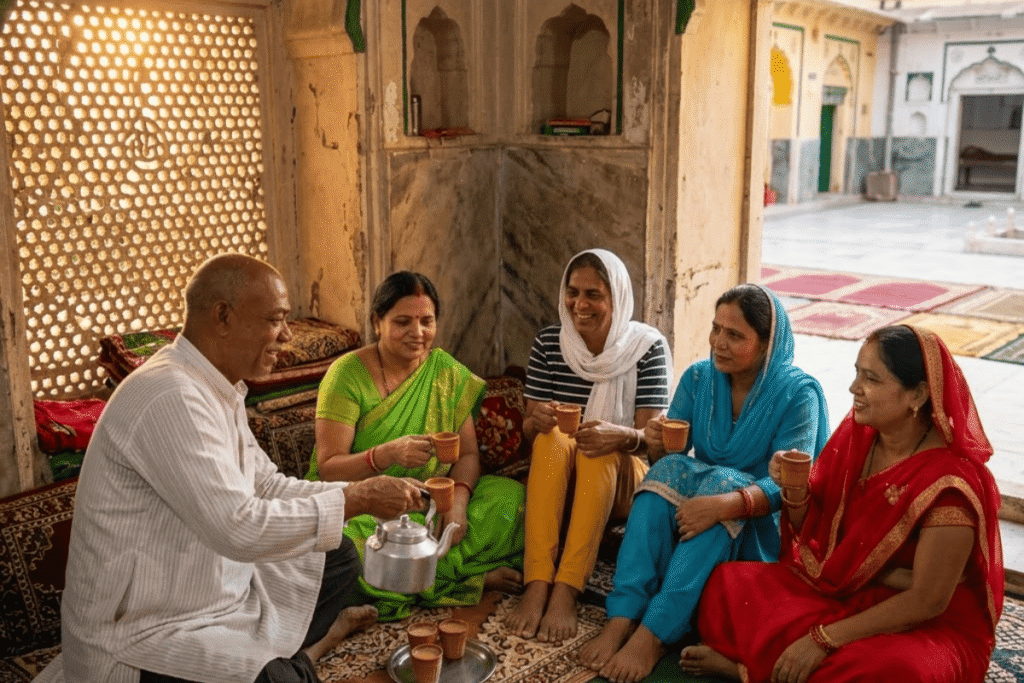
We were warmly welcomed by the caretaker of the khanqah, whose family has lovingly preserved this sacred space for generations. Sitting in a quiet corner room, we were offered tea and samosas—a gesture of hospitality that felt deeply rooted in the Sufi tradition of kindness and sharing.
As we sat there, Harry—our spiritual guide—began to unfold the history of this blessed place. He explained that the khanqah, often referred to as a monastery of eunuchs, dates back to the 16th century, during the time of the Lodhi Sultans. Its location, close to the revered shrine of Qutbuddin Bakhtiar Kaki Dargah, places it within one of Delhi’s most spiritually vibrant landscapes.
In those days, Mehrauli was among the earliest capitals of Delhi, alive with the movement of caravans and merchants. Travelers would rest in nearby serais and, drawn by faith, visit this khanqah to offer prayers and perform acts of charity. It became a place where journeys paused—not just for rest, but for spiritual connection.
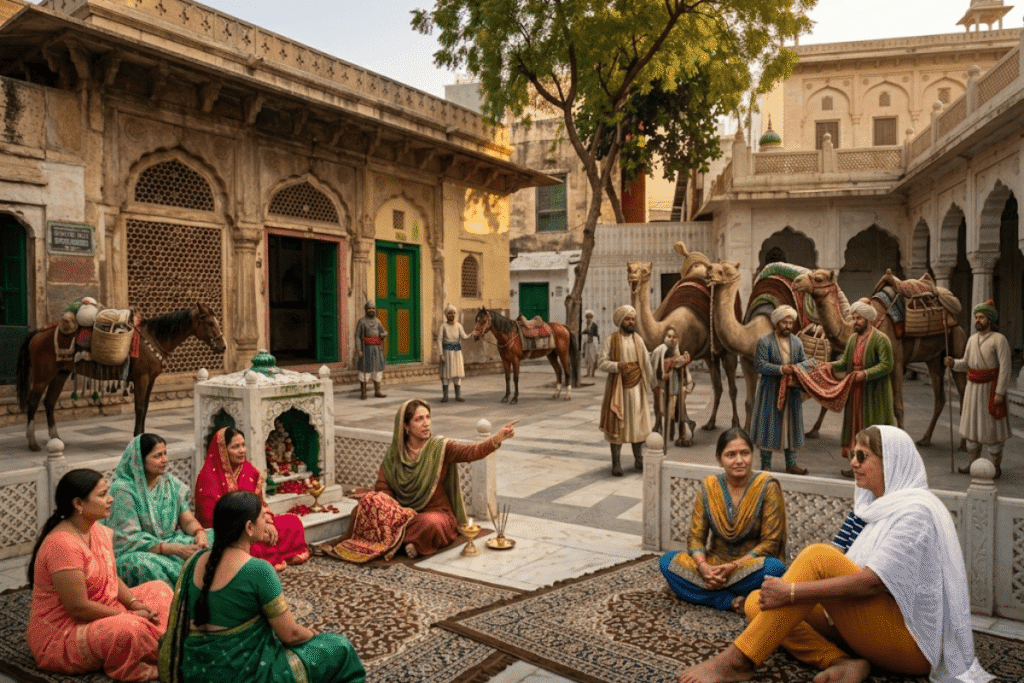
Over centuries, Hijron ka Khanqah has remained a symbol of acceptance, devotion, and blessings. It stands quietly, away from the crowds, yet its story continues to echo through time—reminding us that faith has no boundaries, and every soul has a place in the divine.
Today, visitors can expect the same feeling—a quiet pause in a fast-moving world. Hijron ka Khanqah remains a symbol of acceptance, faith, and divine grace. Away from the crowds, it continues to welcome every soul with warmth, reminding us that true spirituality lies in kindness, belief, and shared humanity.
See: The Location of Hijron Ka Khanqah Delhi at Google Maps
How to Reach Hijron Ka Khanqah Delhi – A Walk Through Mehrauli Park
Reaching Hijron Ka Khanqah is simple, yet the journey becomes meaningful when experienced slowly. Continuing our story, we decided to go together—me, my mother-in-law, and two aunties—with Harry, our friendly Delhi tour guide.
We took the Yellow Line of the Delhi Metro and got down at Qutub Minar Metro Station, the nearest metro station to the khanqah.
Outside the station, auto-rickshaws were easily available charge Rs. 50 per person, but instead of rushing, we chose to walk—allowing the journey to unfold naturally. Our path led us through the historic beauty of Mehrauli Archaeological Park.
Walking through its ancient ruins, greenery, and silent pathways felt like traveling through time. Each step brought a sense of calm, preparing our hearts for the spiritual experience that awaited us at Hijron Ka Khanqah.
Hijron Ka Khanqah Delhi Blessed Moments – A Journey of Faith Fulfilled
Time gently moved on, and life began to change in beautiful ways. My husband received a promotion and was transferred to Hyderabad, and we moved there with new hopes and dreams. Days turned into months, and almost a year later, I began to feel unusual—nausea, a strange irritation, and a quiet feeling that something was different.
My husband took me to the doctor, and after a few simple tests, the doctor smiled and said, “Everything is normal… you are pregnant.”
In that moment, time stood still. Tears of joy filled my eyes, and my heart overflowed with gratitude. Instantly, my thoughts traveled back to Hijron Ka Khanqah, the whispered prayers, and the blessings given with such warmth. I remembered Harry, our spiritual guide, standing beside us with faith in his words and kindness in his heart.
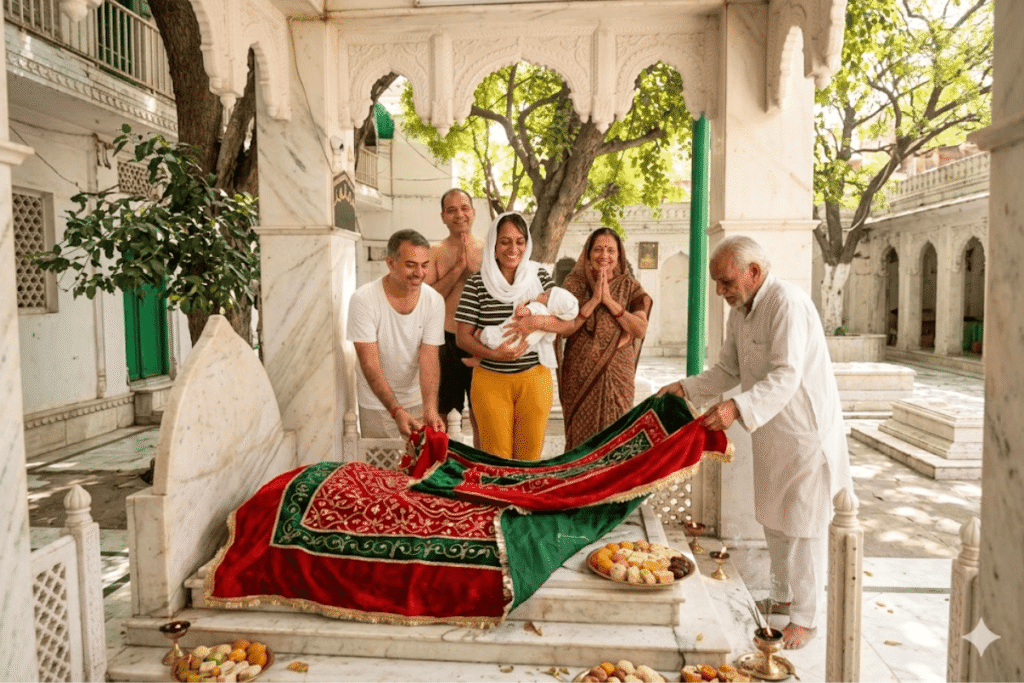
Months later, our home was filled with laughter as a beautiful baby boy was born. The entire family felt like a blessing truly experienced.
With hearts full of gratitude, we decided to return to the khanqah in Mehrauli to offer our thanks. Together, our family and Harry visited once again. This time, the journey felt even more special. Harry gently held our baby in his arms, smiling as if witnessing a miracle come full circle. My father-in-law respectfully offered a chaddar at the shrine and distributed sweets, sharing our happiness with everyone present.
Standing there once again, I felt a deep sense of peace and respect—especially for the Hijra community. Their blessings are not just words; they carry sincerity, faith, and a divine connection that touches lives in the most beautiful ways.
Today, whenever I think of Hijron Ka Khanqah, I don’t just remember a place—I remember a promise fulfilled, a prayer answered, and a journey blessed with love, hope, and happiness.
A Soulful Guide to Spiritual Blessings – Sufi Dargahs in Delhi
Hijron Ka Khanqah Timings & Visiting Tips
- Timings: Generally open from 7.30 morning till 6.30 evening (best visited during daylight hours)
- Travel Tip: Visit with respect and an open heart. This is not just a tourist spot—it’s a place of faith.
Hijron Ka Khanqah Delhi Visitor Guide – Blissful Experience, Blessings & Travel Tips
Hijron Ka Khanqah Delhi in Mehrauli is not about rituals alone—it is about belief, acceptance, and quiet miracles. In a city as vast and vibrant as Delhi, places like this remind us that sometimes the most powerful journeys are not across distances, but within our hearts.
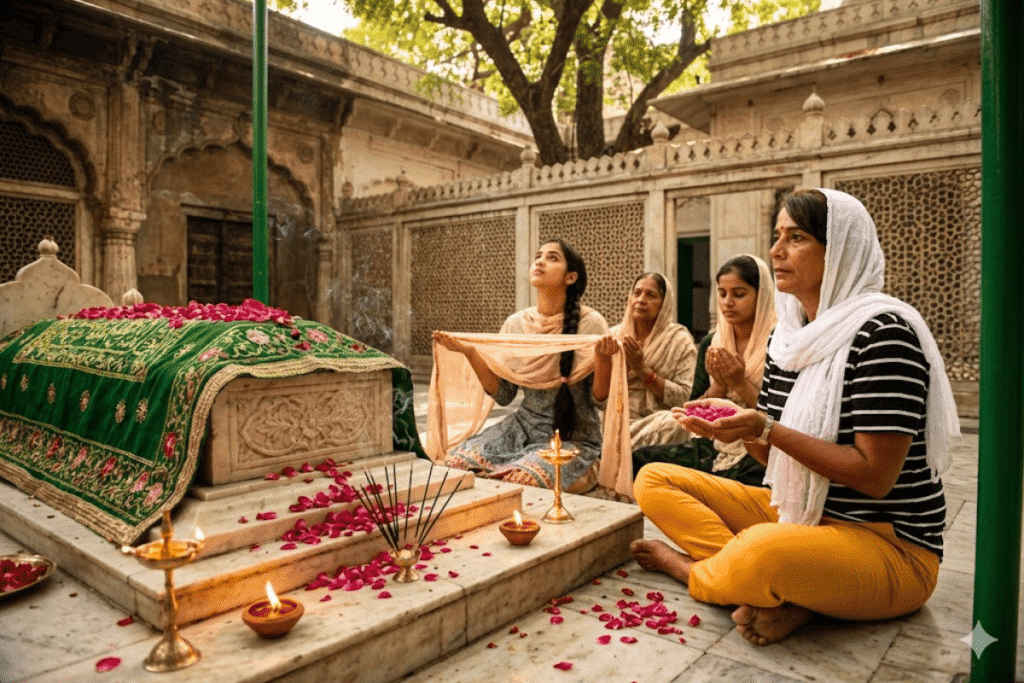
Visiting Hijron Ka Khanqah is not like stepping into a typical monument—it is entering a living world of faith, blessings, and devotion. Inside, a peaceful courtyard opens up with white tombs resting under the sky, carrying centuries of prayers and spiritual energy.
The atmosphere is calm, filled with hope and belief. Devotees visit this unique spiritual place in Mehrauli to tie threads of wishes, whisper prayers, and seek blessings—especially for love, harmony, and children.
The presence of the Hijra community adds a deeply human and spiritual touch. Their blessings are not just traditions—they are heartfelt and meaningful. Visitors are welcomed with warmth, kindness, and an unspoken understanding that faith connects all hearts here.
If you ever walk through Mehrauli, don’t just explore nearby heritage sites like Mehrauli Archaeological Park—pause, step into this sacred space, and experience one of the most peaceful and hidden spiritual places in Delhi.