A Peaceful Journey with a Lotus Temple Tour Guide
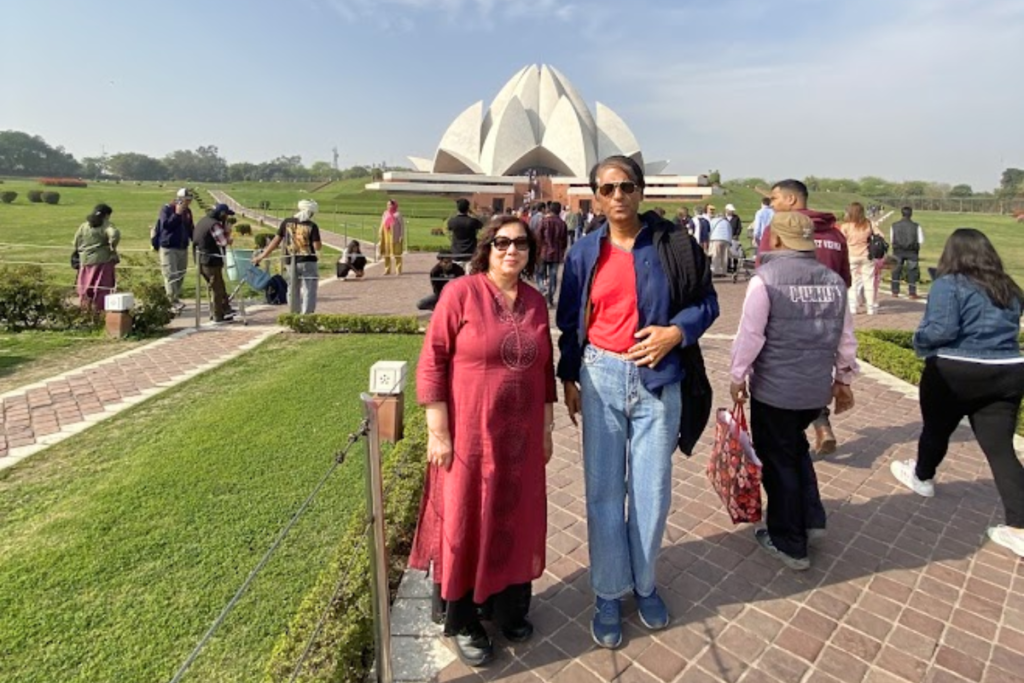
Priya and Simran, two close friends working at a top travel agency in Gurugram, were looking for a quiet escape from their busy lives. One Sunday, they decided to visit the serene Lotus Temple, also lovingly known as Kamal Ka Mandir. Wanting more than just a visit, they chose to explore this spiritual place with a lotus temple tour guide who could help them truly understand its meaning and calmness.
With Harry, their favorite local Delhi Tour guide, the journey became more than just sightseeing. As they walked towards the stunning white marble petals, the noise of the city slowly faded away. What awaited them inside was not just silence—but a deep sense of inner peace, something both Priya and Simran had been unknowingly searching for.
Lotus Temple Nearest Metro Station with Tour Guide

Reaching the beautiful Lotus Temple is easy and convenient with a lotus temple tour guide. Our guide Harry met us at the nearest metro station, Nehru Place Metro Station on the Violet Line, which is just a short distance from the temple. Another nearby option is Kalkaji Mandir Metro Station on the Magenta Line.
From the metro, it’s only a pleasant 5-minute walk to the temple. Along the way, you’ll find a lively food court offering delicious street food and local cuisines, making the journey even more enjoyable before stepping into the peaceful silence of the Lotus Temple.
See The Location of Lotus Temple at Google Maps
Lotus Temple Delhi – Architectural Beauty Explained by a Lotus Temple Tour Guide
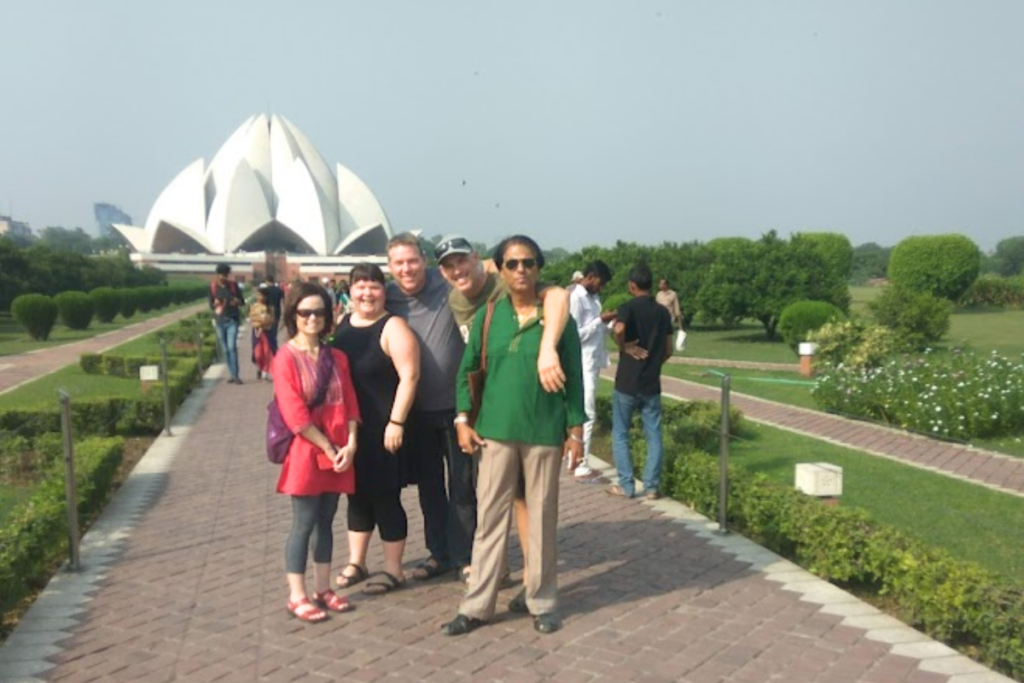
As we walked by Astha Kunj District Park towards the stunning Lotus Temple, passing small local vendors along the way, our lotus temple tour guide Harry began sharing the fascinating story behind this iconic monument. Located in New Delhi, the temple is admired worldwide for its breathtaking architecture—crafted in pure white marble and designed in the shape of a blooming lotus.
Built between 1977 and 1986 by architect Fariborz Sahbaborn born in 1948 Mashhad is an Iranian, the structure is made up of 27 marble-clad petals, symbolizing peace, purity, and unity among all religions. As one of India’s most visited landmarks, the Lotus Temple welcomes people from every faith, offering a space for silence and reflection.
Surrounded by beautifully maintained Persian-style gardens, vibrant flowers, and orange trees, the temple becomes even more magical in the evening when soft floodlights illuminate its petals. With the guidance of a knowledgeable tour guide, the experience transforms from just seeing a monument into truly understanding its deeper meaning and beauty.
Lotus Temple Delhi – Real History Explained by a Lotus Temple Tour Guide
The history of the iconic Lotus Temple begins long before its stunning white petals became a symbol of peace in Delhi. As our lotus temple tour guide Harry shared, the land in Bahapur, New Delhi, was purchased by the Baháʼí Faith in 1953. A generous donation from Ardishír Rustampúr, whose life savings were dedicated to this sacred project, made the dream of building the temple possible.
Construction of the Lotus Temple began in 1977 when Rúhíyyih Khánum laid the foundation stone on 19 October. After nearly a decade of dedication and craftsmanship, the temple was completed and formally dedicated on 24 December 1986. The grand inauguration witnessed around 8,000 Baháʼís from 107 countries, including thousands from across India—making it a truly global spiritual celebration.
The Lotus Temple opened its doors to the public on 1 January 1987, welcoming more than 9,000 visitors on its very first day. Since then, it has become one of the most visited landmarks in India, admired not only for its spiritual significance but also for its architectural brilliance.
One of the most fascinating facts shared by our tour guide is about the temple’s marble. The pure white marble used to clad its 27 petals was sourced from Penteli Mountain in Greece—the same historic source used to build the ancient Parthenon. Known as Pentelic marble, it contains a natural quality that gives it a soft golden glow under sunlight, adding to the temple’s timeless beauty.
With such a rich history, the Lotus Temple is not just an architectural wonder—it is a symbol of unity, devotion, and global harmony, best understood through the insights of a knowledgeable tour guide.
Lotus Temple Architecture & Lotus Symbol Meaning in Hinduism and Buddhism
As our lotus temple tour guide explained, the design of the Lotus Temple is inspired by the sacred lotus flower, a symbol deeply rooted in many religions. Walking around the temple, we began to understand that this was not just architecture—it was a spiritual message in stone.
In the Bhagavad Gita, the lotus represents living in the world without attachment, just as the flower rises pure above muddy water. In Buddhism, it symbolizes purity of mind and spiritual awakening, while in Hinduism, gods like Lakshmi and Brahma are often seen seated on a lotus, representing divine beauty and creation.
The Baháʼí faith embraced this universal symbol to design a temple that speaks to all religions. Its 27 white marble petals rise gracefully, reflecting peace, unity, and the journey of the soul towards light. As the guide softly said, the Lotus Temple is not just a place to visit—it is a place to feel purity, silence, and spiritual connection.
Lotus Temple Delhi Inside Prayer Hall – A Soulful Meditation Experience with a Tour Guide
As we slowly walked towards the majestic Lotus Temple, the noise of the crowd began to fade into silence. Surrounded by peaceful gardens and the soft sound of water, a calm presence gently embraced us. My friend Simran and I followed our tour guide Harry, who guided us with quiet assurance through the pathway leading to the prayer hall.
Before entering, he carefully helped us deposit our shoes, a small act that felt like leaving behind the outside world. As we moved upstairs, the serene blue water pools reflecting the white lotus petals created a magical atmosphere, preparing our hearts for the silence within.
Inside the Lotus Temple prayer hall, everything changed. The space was cool, softly lit, and filled with a deep, sacred silence. Visitors sat quietly, united in meditation beyond religion or language. Our tour guide gently reminded us to close our eyes, breathe slowly, and let our thoughts settle.
In that stillness, time seemed to disappear. I felt a quiet connection within, as if the soul had found a moment of peace it had long been searching for. The Lotus Temple was no longer just a monument—it became a feeling, a place where silence speaks, and where the heart finds comfort in its own rhythm.
As we sat there together, the experience felt deeply personal and almost dreamlike—an unforgettable moment of calm, connection, and inner light. Leaving the hall, I realized that the Lotus Temple is not just a place to visit, but a space where you truly feel peace, presence, and a gentle sense of belonging.
Lotus Temple Information Centre – Exploring Baháʼí Teachings with a Lotus Temple Tour Guide
After experiencing the deep silence inside the Lotus Temple, Simran and I felt calm and light as we followed our lotus temple tour guide to the Lotus Temple Information Centre. As we entered, it felt like stepping into a peaceful museum filled with knowledge, history, and spiritual insight.
Our guide explained how the teachings of the Baháʼí Faith beautifully connect with other religions such as Hinduism, Buddhism, and Judaism—emphasizing unity, peace, and harmony. Walking through the exhibits, he showed us the life and journey of Abdu’l-Bahá, and how his message spread across Persia during the Ottoman era.
We also saw original tools, architectural plans, and rare visuals used during the construction of the Lotus Temple, giving us a deeper understanding of its creation. The visit ended with a display showcasing other Baháʼí Houses of Worship around the world, reminding us that the message of the Lotus Temple goes far beyond Delhi—it connects humanity through peace and unity.
Places to Visit Near Lotus Temple Delhi – A Perfect Ending with a Lotus Temple Tour Guide
As we stepped out of the serene Lotus Temple, our lotus temple tour guide Harry continued to enrich our journey by showing us nearby spiritual landmarks. Just a short walk away, we visited the vibrant Kalkaji Mandir, a place filled with devotion and local energy. From a distance, he also pointed towards the three beautiful domes of ISKCON Temple Delhi, adding another layer to our day of spiritual exploration.
After the walk, we paused at a small tea stall nearby. Harry brought us some light snacks and a cup of warm masala chai. Sitting there, sipping the soothing tea, everything felt calm, simple, and deeply satisfying. The day was no longer just about visiting places—it had become a memory filled with peace, connection, and gentle joy.
Simran and I looked at each other with grateful hearts, truly thankful for such a meaningful experience. Exploring Delhi with Go With Harry was not just a tour—it was a beautiful story we would always carry with us.
Lotus Temple Guide & Information
- Lotus Temple: Closed on Monday
- Lotus Temple Prayers timings are 10:AM, 12:00PM, 3:00PM and 5:00PM
- Lotus Temple Photography Tips: Out Side not Inside the Prayer Hall