The Nizamuddin Dargah walk is one of the most soulful experiences in Delhi, where history, spirituality, and music come together in a truly unforgettable way. Tucked within the narrow lanes of Nizamuddin, this sacred Sufi shrine welcomes travelers from around the world to witness the magic of Sufi Qawwali, a tradition that has echoed here for centuries.
As you begin your Nizamuddin Dargah walk, the atmosphere slowly transforms—from the busy streets of Delhi to a peaceful space filled with devotion, fragrance of incense, and the sound of live qawwali. Exploring this spiritual heart of the city with a local guide adds deeper meaning, as every corner, every story, and every melody reveals a hidden layer of Delhi’s rich cultural heritage.
Whether you are visiting for the first time or returning to feel its charm again, the Nizamuddin Dargah walk offers not just a visit, but an emotional journey that stays with you long after you leave.
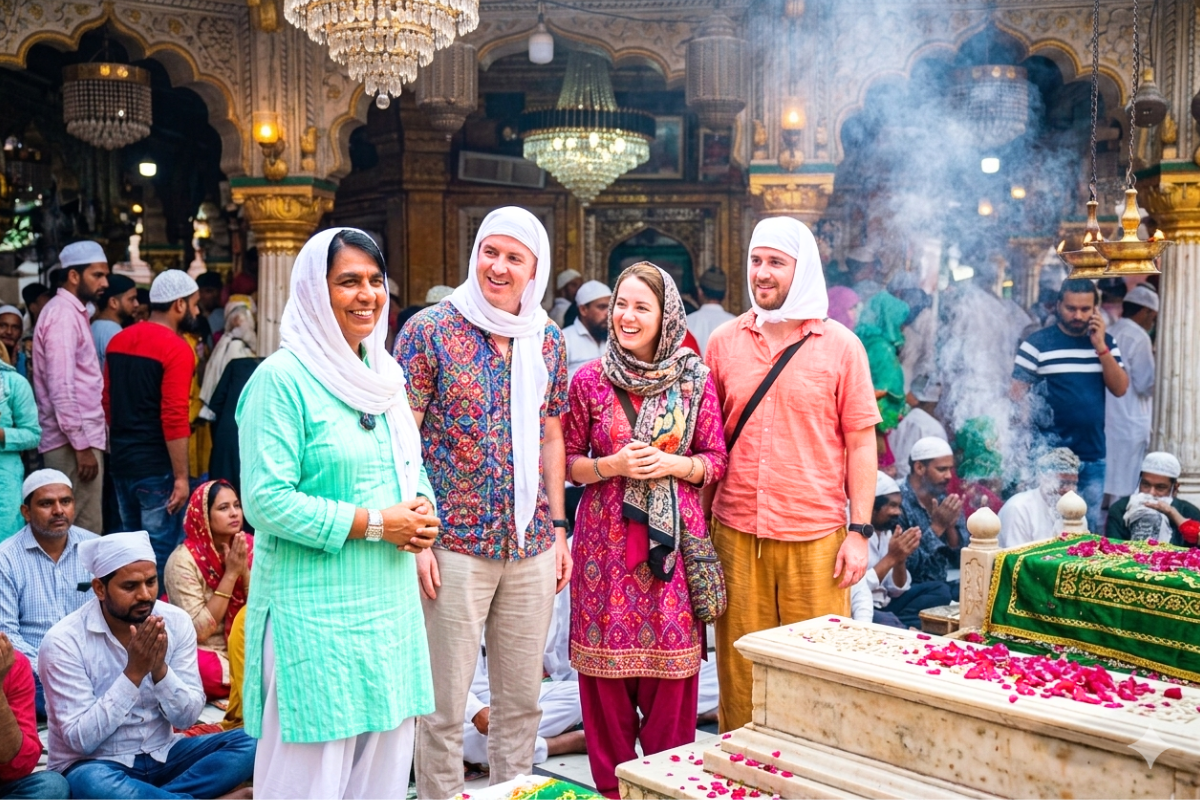
Nizamuddin Dargah Walk – Starting Point and First Impressions
Any Nizamuddin Dargah Walk begins with the story of the saint himself. Hazrat Nizamuddin Auliya was one of the greatest Sufi saints of India and a leading figure of the Chishti Sufi Order. His teachings were simple yet powerful: love all, serve all, and surrender to the divine.
Unlike kings and conquerors, Nizamuddin Auliya believed spiritual power came from compassion, humility, and service to humanity. He refused royal patronage and welcomed the poor, the broken, and the forgotten. Even today, his presence is felt strongly within the dargah—gentle, forgiving, and deeply comforting.
For tourists, understanding his philosophy transforms the walk from a tour into a meaningful experience.
👉Explore More Delhi Tours with Local Guide
Nizamuddin Dargah Walk Through the Narrow Lanes of Delhi
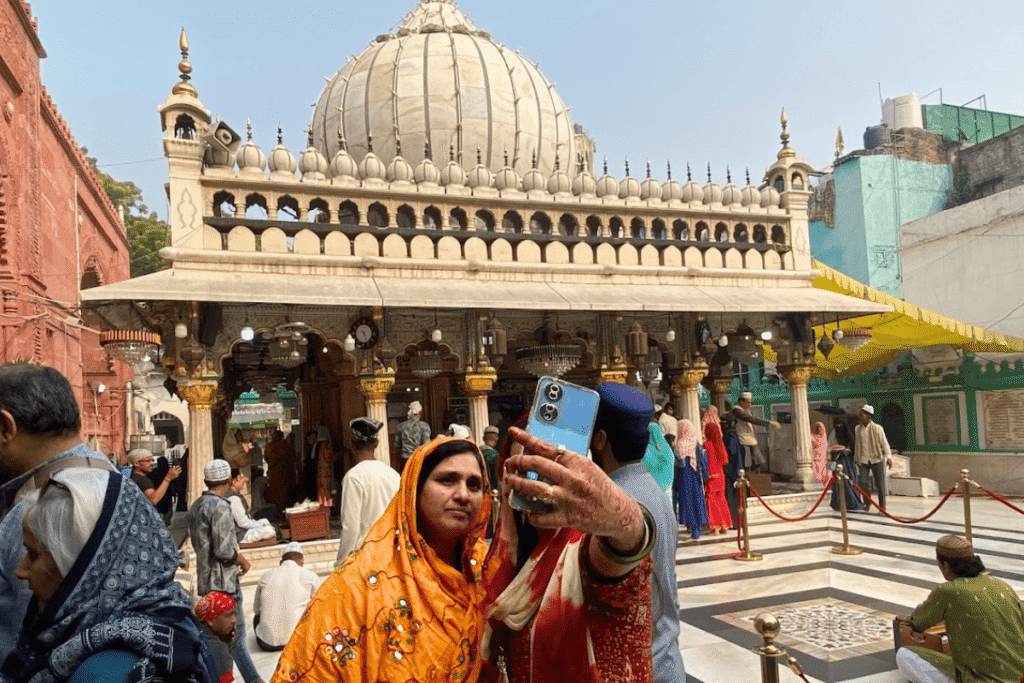
The Nizamuddin Dargah Walk begins through narrow lanes filled with life. Flower sellers, incense stalls, chadar shops, and old homes line the pathway. The scent of roses and attar floats in the air, while soft prayers echo from every corner. Unlike silent monuments, this is a living heritage walk in Delhi. You walk among devotees, not tourists alone. Every step feels intimate, personal, and real.
A knowledgeable local guide helps decode the rituals, stories, and symbolism—why people tie threads, why flowers are offered, and why silence here feels louder than words.
Route of Nizamuddin Dargah Walk from Metro to Shrine
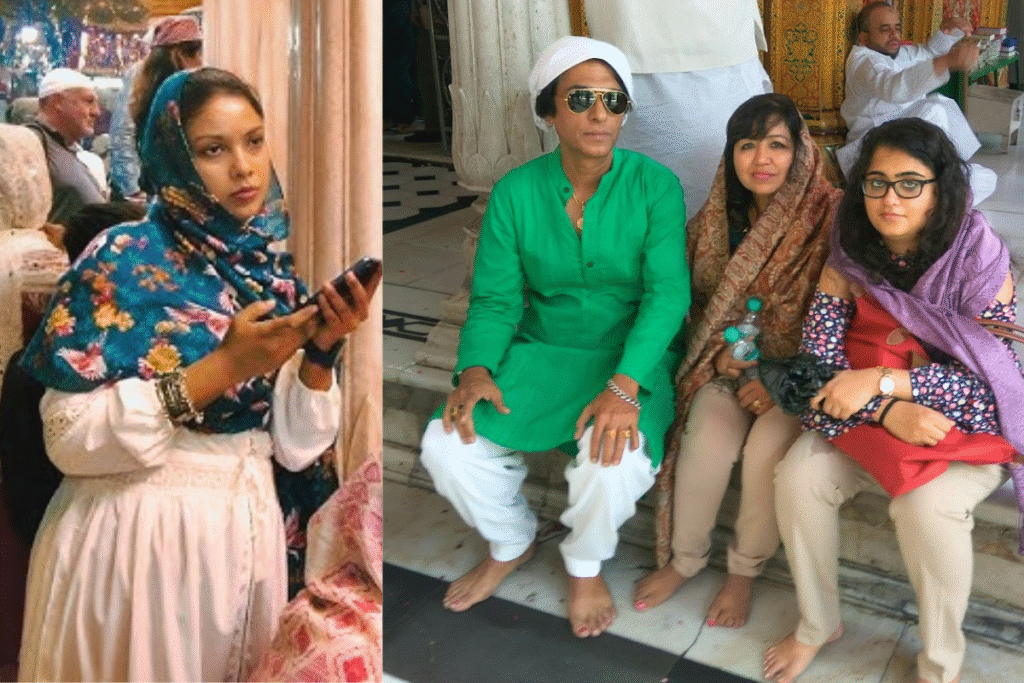
A Sufi walk in Delhi, especially at Nizamuddin, goes beyond religious boundaries. Sufism speaks the language of love, poetry, and surrender. It is about dissolving the ego and finding unity in diversity. Tourists often describe this walk as emotional and transformative. You may not understand the prayers, but you will feel them. You may not follow the faith, but you will sense the devotion.
This is why the Nizamuddin Dargah spiritual walk is loved by solo travelers, women travelers, and those searching for peace in unfamiliar lands.
Nizamuddin Dargah Walk: Qawwali at Nizamuddin Dargah
One of the most powerful highlights of the Nizamuddin Dargah Walk is experiencing live qawwali. Held mainly on Thursday evenings, qawwali is not a performance—it is devotion in rhythm. As the singers begin, harmoniums breathe, tablas pulse, and voices rise in poetry written by Sufi masters like Amir Khusro. The music slowly builds, touching something ancient within you.
For tourists, Qawwali at Nizamuddin Dargah is often the most unforgettable moment of their India journey. People close their eyes, sway gently, cry quietly, and smile without reason. Language dissolves. Only feeling remains.
Nizamuddin Dargah Walk – Sufi Qawwali Experience
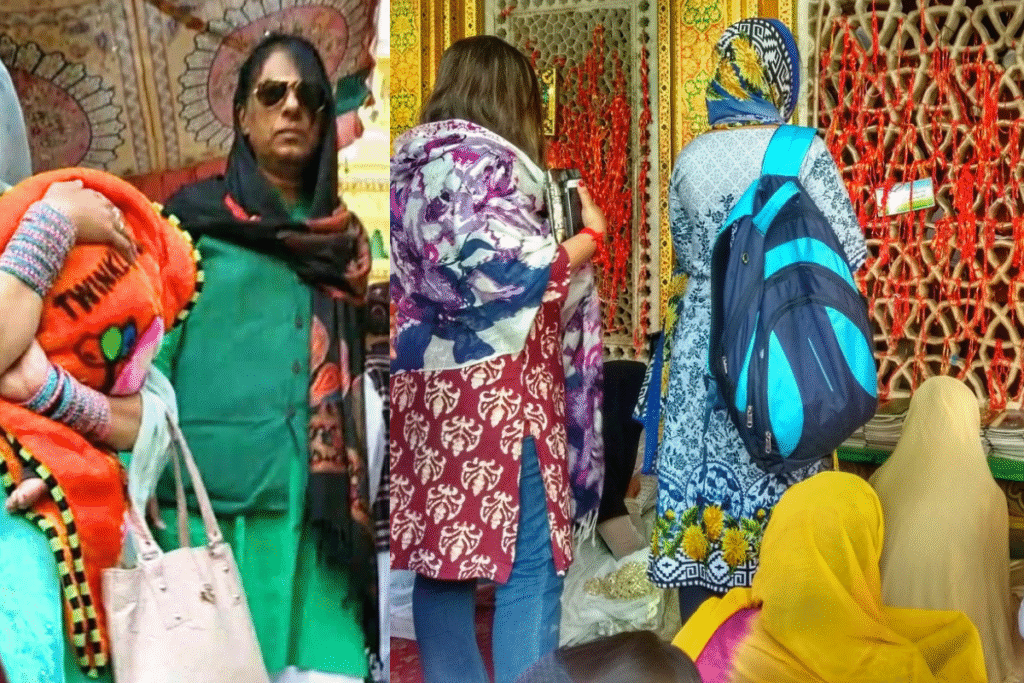
No Nizamuddin Dargah Walk is complete without remembering Amir Khusro, the beloved disciple of Hazrat Nizamuddin Auliya. A poet, musician, and mystic, Khusro gave India some of its earliest musical traditions. Many qawwalis sung today are his compositions—still alive after centuries. As you stand near his tomb, you realize that this is not history frozen in stone; it is history that breathes and sings.
For tourists interested in culture, poetry, and music, this connection adds a deeper layer to the walk.
Nizamuddin Dargah Walk – Sufi Qawwali Experience
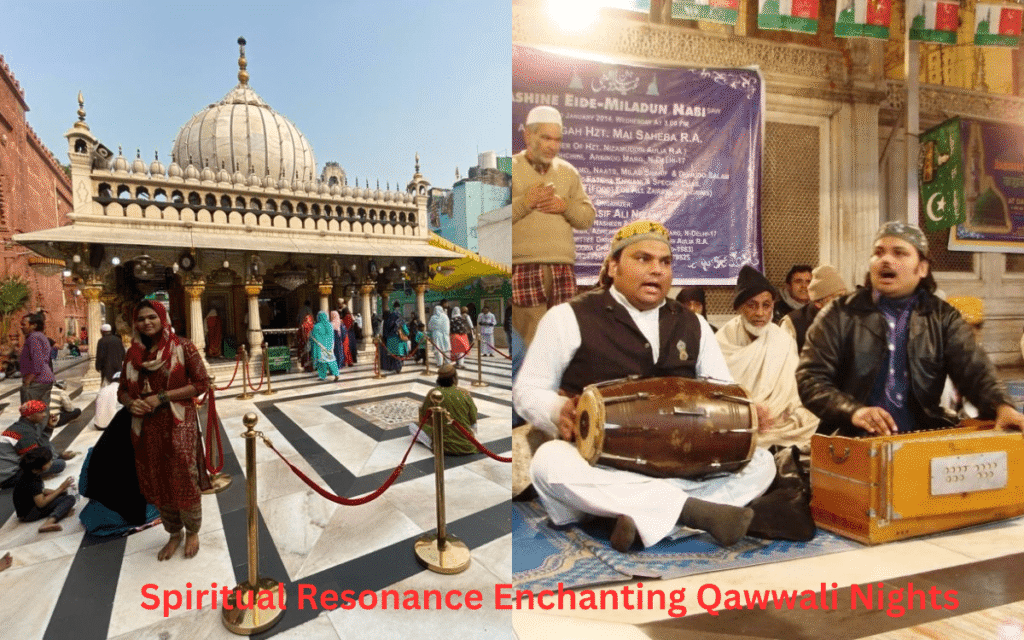
The best time to visit Nizamuddin Dargah is in the evening, especially on Thursday nights, when qawwalis fill the courtyard. The atmosphere becomes mystical and deeply moving.
Winter months (October to March) are ideal for tourists, offering pleasant weather for walking. Urs festivals (death anniversaries of saints) are especially vibrant but crowded—perfect for those who want to witness intense devotion.
Qawwali Timing at Nizamuddin Dargah
A guided Nizamuddin Dargah evening walk ensures you experience both the spiritual calm and cultural depth without feeling overwhelmed.
Entry Rules and Tips for Nizamuddin Dargah
While the dargah welcomes everyone, respecting local customs enhances your experience:
- Dress modestly (cover shoulders and knees)
- Remove shoes before entering the shrine
- Photography is restricted inside sacred areas
- Silence and humility are deeply appreciated
- Follow your guide’s instructions during qawwali
These small gestures help tourists connect more authentically with the sacred space.
Visit More –Famous Dargahs in Delhi with Tour Guide
Exploring Nizamuddin Dargah During the Walk
Travelers often say the Nizamuddin Dargah Walk shows them a side of Delhi they never expected—soft, emotional, and deeply human. Unlike forts and palaces, this place speaks directly to the heart.
It is perfect for:
- Spiritual seekers
- Cultural travelers
- Solo women travelers
- Music and poetry lovers
- Tourists seeking offbeat experiences in Delhi
This walk leaves you lighter, calmer, and strangely comforted—as if the city whispered a secret meant only for you.
My Nizamuddin Dargah Walk Experience with a Local Guide
As you leave the dargah, the sounds fade, but the feeling stays. The prayers, the music, the kindness of strangers—it all lingers quietly within you. A Nizamuddin Dargah Walk with qawwalis is not something you simply see; it is something you carry back home. In a world obsessed with speed and noise, this walk offers stillness, love, and connection.
For tourists visiting Delhi, this is not just a stop—it is an experience that gently changes you.
Nizamuddin Dargah Walk Price- USD 50 Per Person Duration: 2.5 hours
How to Reach Nizamuddin Dargah by Metro
Nearest Metro: Pragati Maidan Blue Line and Jorbagh station at Yellow Line or JL station on Violet Line. From there you can take auto rikshaw up to Nizamuddin Dargah.
Nizamuddin Dargah Walk: Important Information
- No Entry Fee – Devotees often offer Nazarana (offering) and Zakat (charitable donation) as a gesture of faith and devotion.
- Nizamuddin Dargah Visit Timings – The dargah is open from 5:00 AM to 10:30 PM, welcoming devotees throughout the day.
- Best Day to Visit – While open daily, Thursdays are special, with soulful Qawwali performances creating a mystical atmosphere.
- Entry for Women – Ladies are allowed but cannot enter inside the shrine.
Book your Nizamuddin Dargah Walk now and immerse yourself in Delhi’s rich Sufi heritage!
Nizamuddin Dargah Nearby Places To See:
Beyond the Nizamuddin Dargah Walk, explore Delhi’s rich history by visiting Humayun’s Tomb, a UNESCO World Heritage Site just minutes away. Stroll through the scenic Lodhi Garden, a peaceful retreat that houses tombs from the Delhi Sultanate era. For those fascinated by Mughal architecture, a visit to the majestic Qutub Minar or the ancient Old Fort (Purana Qila) offers a deeper dive into the city’s past. These heritage sites provide a glimpse into the grandeur of Delhi’s royal history.
Recreation & Family-Friendly Attractions
If you’re looking for a fun and relaxing outing, head to the National Zoological Park to see exotic animals and reptiles. Enjoy a peaceful retreat at Lodhi Garden, where history and nature blend beautifully with ancient tombs and lush greenery. Families and kids will love Millennium Park, where replicas of the Seven Wonders of the World create a unique sightseeing experience. Whether you’re an explorer, history buff, or nature lover, the Nizamuddin Dargah Walk and its surroundings offer a perfect blend of spirituality, history, and recreation.