Shalimar Bagh Delhi history takes us into a quiet corner of Delhi where the past doesn’t shout—it whispers. Hidden within this historic Mughal garden is the Sheesh Mahal, where broken walls still hold the glow of another age, fountains once danced, and emperors once dreamed.
They once called it “sho’la-i mah” — the flame of the moon. Perhaps it was the way light touched the walls of Sheesh Mahal, reflecting like a diamond under the night sky. Or perhaps it was the magic of Shalimar Bagh itself, where time seems to pause. Walk slowly, listen carefully, and the forgotten stories of Mughal Delhi begin to unfold.
Shalimar Bagh Nearest Metro Station on the Pink Line
See the Location of Sheesh Mahal Shalimar Bagh Delhi a Historic Mughal Garden on Google Maps
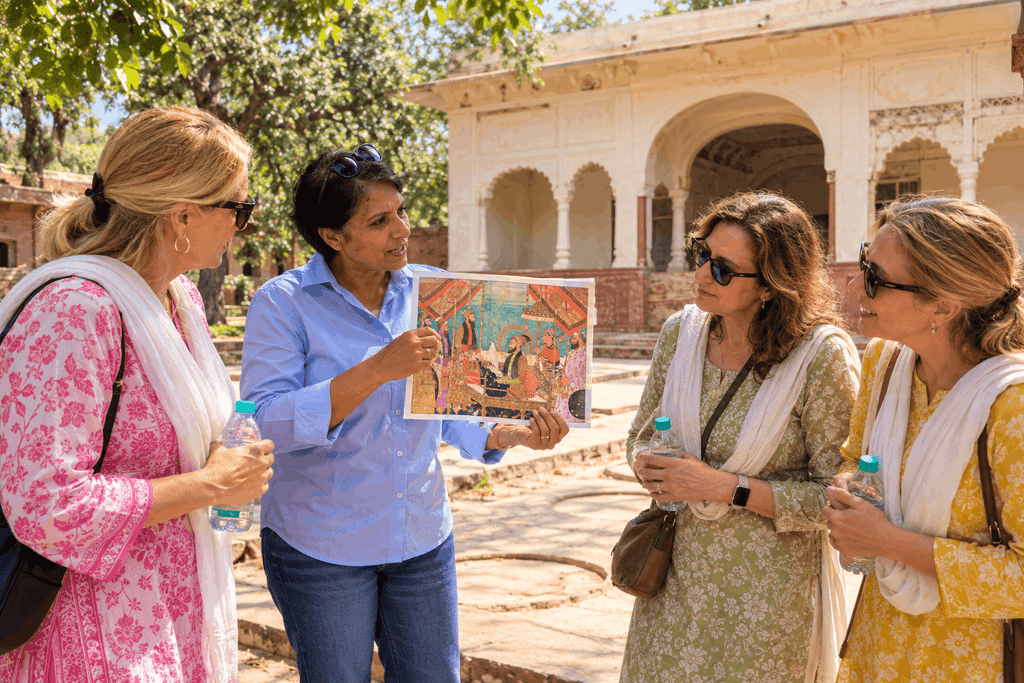
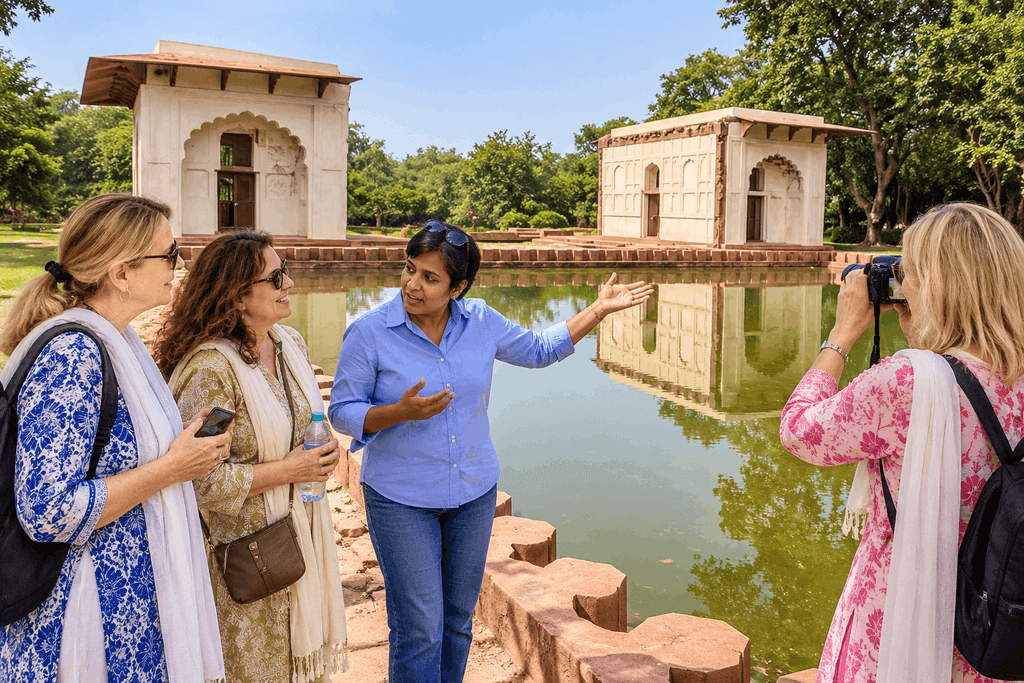
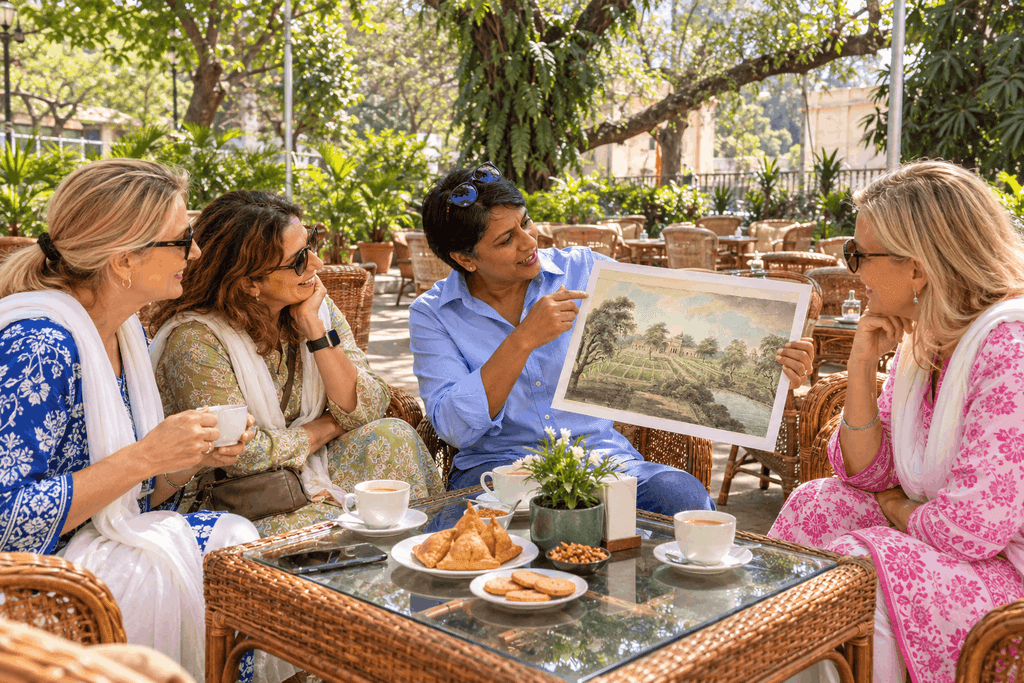
Our journey to discover the forgotten history of Shalimar Bagh began at its nearest metro meeting point on Delhi’s Pink Line. Three local ladies joined me, Harry, their Delhi tour guide, ready to explore a quieter side of Delhi’s Mughal heritage.
From the meeting point, we took a rickshaw towards Shalimar Bagh to visit the historic Sheesh Mahal. As we travelled, the busy streets gradually gave way to the stories of an old Mughal garden—one that many visitors to Delhi have yet to discover. What followed was a lovely walk through history, local conversation and the forgotten beauty of Sheesh Mahal.
Shalimar Bagh Delhi history: Where Moonlight Once Danced on the Walls
The history of Delhi’s Shalimar Bagh feels alive as you step into the ruins of Sheesh Mahal. It doesn’t feel like entering a monument—it feels like stepping into a memory. The silence is deep, almost sacred. And yet, if you look closely, you can imagine the sparkle that once lived here.
The name Sheesh Mahal, meaning “Palace of Mirrors,” evokes grandeur—and this place still invites us to imagine how light once danced across its surfaces. Though much has faded, traces remain. Faint painting marks linger on the ceilings, like echoes refusing to disappear.
Standing there, you begin to understand the magic of this forgotten Mughal garden. Even in ruin, its beauty glows.
The Architecture of Sheesh Mahal: A Glimpse into Shalimar Bagh’s Delhi History
The pavilion stands on a high plinth, overlooking what was once a magnificent Mughal garden. The layout followed the classic charbagh style, with four garden sections divided by flowing water channels.
Imagine this:
25 fountains rising in rhythm…
Water flowing through carved channels…
Fruit orchards surrounding the palace…
The central hall of Sheesh Mahal was designed with elegance, featuring arched doorways, symmetrical chambers and vaulted rooms attached to the structure. At the rear stood an arched hall, perhaps once filled with music, poetry and royal conversations.
This was not just architecture—it was an experience of beauty, balance and luxury. And if these forgotten corners of Delhi’s past inspire you, continue exploring the city’s layered history on an Old Delhi Heritage Walk with Go With Harry.
In Shalimar Bagh Delhi history: The Day an Emperor Was Crowned
Now imagine the year 1658 July 31. Shalimar garden is alive. Nobles gather. Silence spreads. And inside the Shalimar Bagh, history is about to change.
It was here that Aurangzeb crowned himself Mughal emperor after defeating his brother Dara Shikoh adopted the regnal title Alamgir (meaning “Conqueror of the World” or “World Seizer”).. But this was no grand celebration. No elaborate ceremony. No coins minted. No khutba was read.
Just a quiet moment. A simple coronation. A powerful beginning.
And yet, that moment marked the start of a 49-year reign—one of the longest rule in Mughal history.
Today, as you stand in the same place, it’s hard not to feel the weight of that silence.
Shalimar Bagh Delhi History: Witness to Empires and Invasions
The history of Shalimar Bagh is not just a story of beauty—it is also a story of survival. Originally known as Aizzabad Bagh, this Mughal garden dates to 1653 and is associated with the era of Emperor Shah Jahan. Its name later became Shalimar Bagh, meaning “abode of pleasure.” Sheesh Mahal stands as a reminder of the garden’s royal past.
But pleasure did not last forever. In 1738, Nadir Shah camped here before invading Delhi. Later, Ahmad Shah Durrani stayed here during the events leading up to the Third Battle of Panipat.
The garden that once echoed with poetry now heard the footsteps of armies.
Then came the British. In 1803, David Ochterlony made this his summer residence. During the Revolt of 1857, this historic ground witnessed conflict once again.
Empires rose and fell—but the surviving ruins of Sheesh Mahal still invite us to remember the remarkable past of Shalimar Bagh.
Shalimar Bagh Delhi Sheesh Maha: The First Stop to Kashmir
There was a time when Shalimar Bagh was not forgotten.
It was the first grand halt for Mughal emperors traveling from Shahjahanabad to Kashmir or Punjab. Imagine royal caravans stopping here—horses resting, fountains flowing, music filling the air.
This garden was once filled with rare trees, especially mango varieties that could not be found anywhere else. Shah Jahan named it Shalimar—a place of joy.
Today, the joy is quieter. But if you close your eyes, you can still feel it.