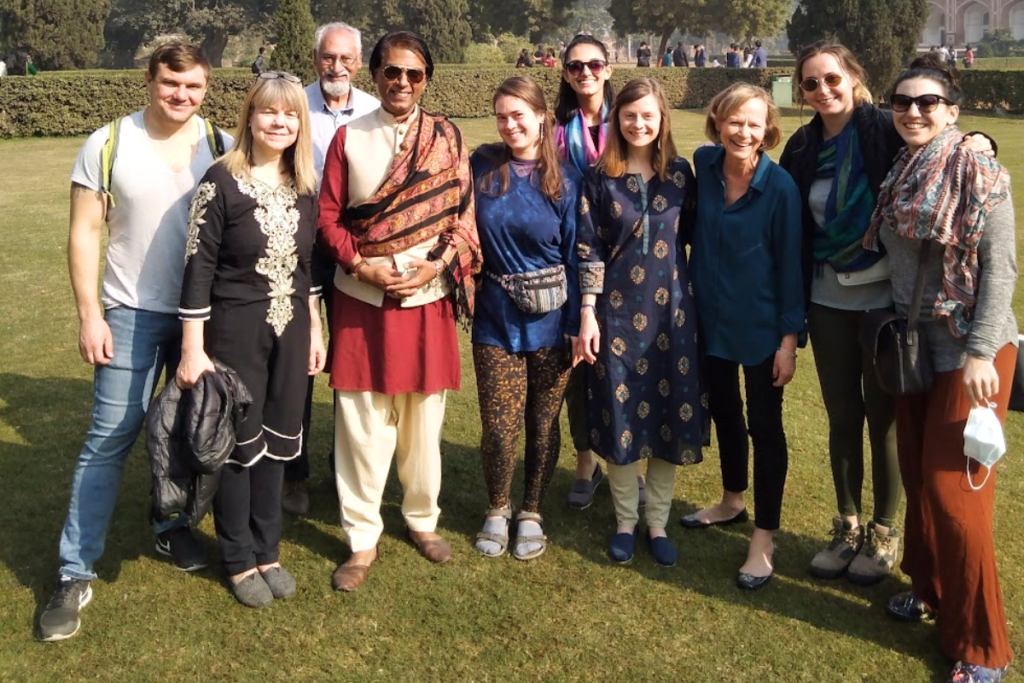
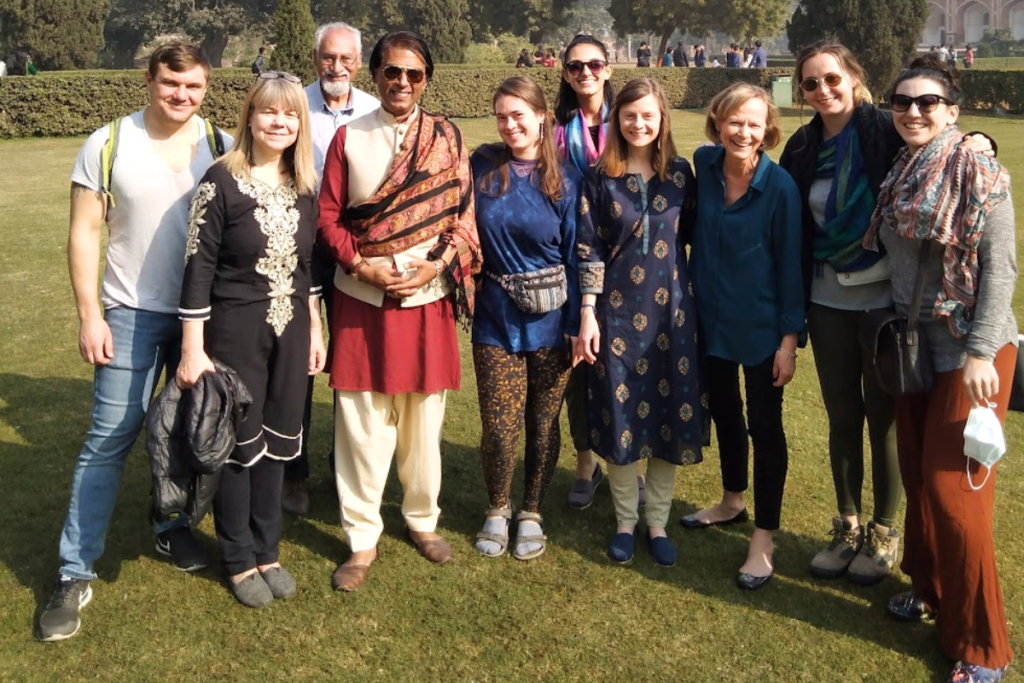
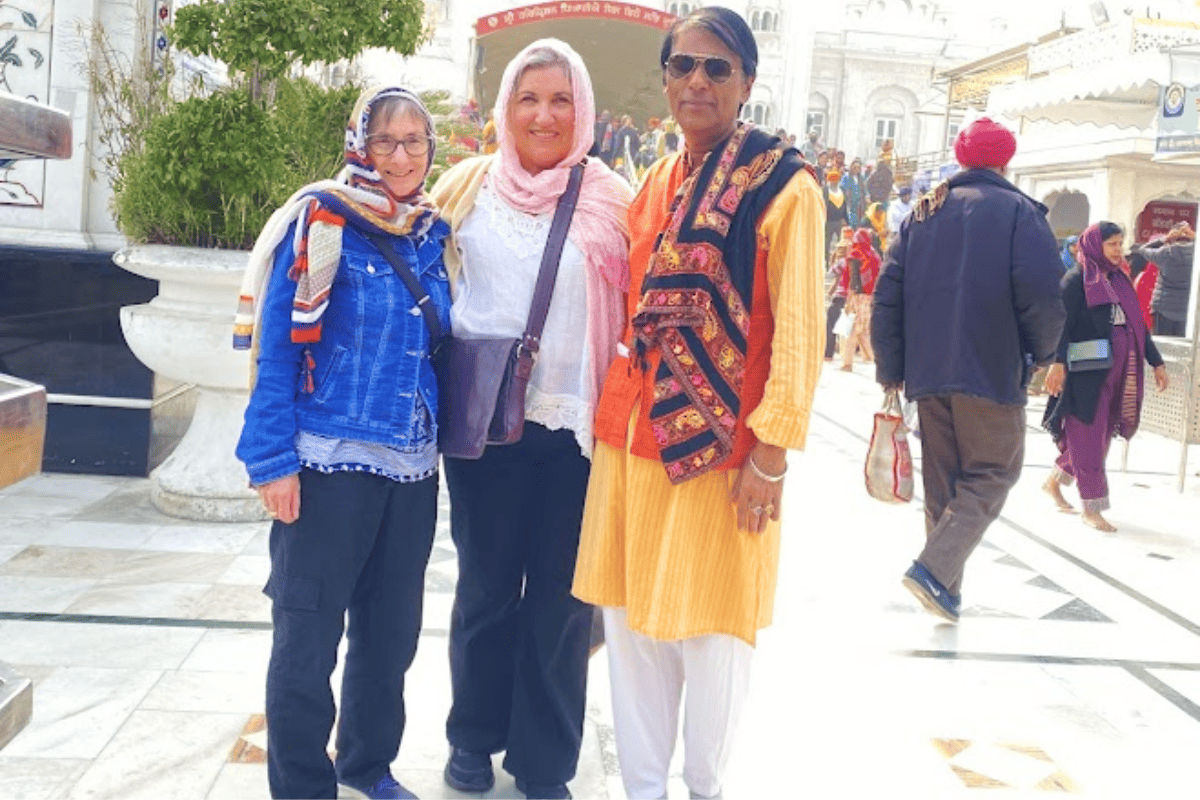
As a professor at an international university in the United States, I have always believed that history is best understood when experienced beyond the classroom. During our educational tour of India, our search for an expert tour guide in Jaipur led us to an incredible historian who completely transformed how my university students experienced the majestic Amber Fort. After exploring the layers of historic Delhi and witnessing the timeless beauty of the Taj Mahal in Agra, our academic journey brought us to the royal capital of Rajasthan, where the concrete history of the Rajputs was waiting to be discovered.
To help my students gain a deeper, college-level understanding of Rajput architecture, Rajasthan’s royal history, and the evolution of Jaipur from a princely state to a modern city, I wanted someone who could offer rigorous academic insight. Google highly recommended Harry, a renowned history specialist, and from our very first meeting, it was clear that he was a passionate storyteller who brought centuries of history to life. What began as a simple fort visit soon became one of the most memorable and inspiring learning experiences of our entire India tour.
Meeting Amber Fort Tour Guide in the Lobby and a Briefing About Their Visit
Our educational journey officially began at 8:30 AM in our hotel lobby, where we met our tour guide for a vital pre-tour briefing before heading out to the fortress. Gathering the college students in a quiet corner of the lounge, Harry laid out a large architectural map of the complex and outline the day’s rigorous historical timeline. He briefed the group on how the fort’s design seamlessly blends Hindu and Mughal elements, preparing the students on what key features to watch out for, such as the ancient water-lifting engineering and the strategic defensive layouts. This initial briefing set a serious, academic tone for the day, ensuring every student had their notebooks ready and knew exactly how to analyze the grand royal structures they were about to encounter.
History of Amber Fort – Walking Through Rajasthan’s Royal Past with a Tour Guide in Jaipur
As we stood beside the picturesque Maota Lake, our expert tour guide in Jaipur invited us to pause and look up before entering the grand fortress. From the water’s edge, the fort appeared magnificent, rising dramatically above the rugged Aravalli hills like a guardian of Rajasthan’s royal heritage. Harry explained that Amber Fort, located in the historic town of Amer about 11 kilometers from Jaipur, served as the majestic capital of the Kachwaha Rajput rulers long before the modern city of Jaipur was founded in 1727.
Historically, there are three ways to reach the main complex: an elephant ride, a jeep, or ascending via the historic stone pathway leading straight to the Suraj Pol (Sun Gate). For our educational visit, our tour guide in Jaipur recommended climbing the ancient stairs from the Aram Bagh area near Maota Lake. Harry believed this pedestrian ascent was the absolute best way for university students to appreciate the fort’s strategic military location and truly understand how royal visitors would have approached the palace centuries ago.
Engineering Marvels and Architectural Styles Revealed by Our Jaipur Tour Guide
As we slowly climbed the rugged stone steps, our tour guide in Jaipur pointed toward the remains of old Persian wheels still visible along the hillside. These remarkable medieval engineering devices once carried water from Maota Lake all the way up to the palace complex, providing a highly reliable water supply to the royal family and the thousands of soldiers and citizens who lived within the fort. My students were absolutely fascinated to learn how advanced water management systems supported life in a hilltop fortress long before modern technology existed.
Along the pathway, Harry explained that Amber Fort is celebrated not only for its defensive military strength but also for its artistic excellence. The massive ramparts, impressive gateways, cobbled pathways, elegant courtyards, and beautifully decorated palaces reflect a completely unique blend of Rajput and Mughal architectural styles. Looking back toward the shimmering waters of Maota Lake, we could easily understand why this fortress remains one of Rajasthan’s most visited and admired historical monuments. By the time we reached Suraj Pol, the students were already deeply engaged in discussions about architecture, engineering, and the rise of the Rajput kingdoms—the walk itself had seamlessly transformed into a live, outdoor history lesson.
Jaleb Chowk – Where Kings Received Salutes and Armies Marched with Honor
Passing through the impressive Suraj Pol (Sun Gate), our tour guide in Jaipur, Harry, led us into the vast open courtyard known as Jaleb Chowk. The moment we entered, Harry asked the students to stop and imagine the scene three hundred years ago. Suddenly, the empty courtyard transformed in our minds into a place filled with royal ceremonies, military parades, and the sounds of beating drums.
Harry explained that Jaleb Chowk was the main parade ground of Amber Fort. Whenever the Maharajas of Jaipur returned from battle, hunting expeditions, or important state ceremonies, they would enter through Suraj Pol and receive a grand guard of honor here. Soldiers dressed in royal uniforms would line the courtyard, horses would stand ready, and military commanders would present their reports before the ruler entered the palace.
Military Traditions and Royal Processions Explained by a Tour Guide in Jaipur
Looking toward Chand Pol, the Moon Gate, our tour guide in Jaipur described how royal processions once moved through the fort. The rhythmic beating of large ceremonial drums announced the arrival of kings, princes, and distinguished guests. The echoes of those drums would travel across the surrounding hills, informing the entire palace that the ruler had returned safely.
My students were fascinated as Harry brought the courtyard to life with vivid storytelling. Standing in the center of Jaleb Chowk, it was easy to imagine rows of Rajput warriors carrying swords and banners while musicians played trumpets and drums in celebration. What appeared to be an open courtyard was actually the ceremonial heart of Amber Fort.
Today, the atmosphere is different but equally lively. We watched elephants carrying visitors up the historic route to Amber Fort, gently unloading their passengers at Jaleb Chowk before returning down the hill. The contrast between modern tourism and centuries of royal history created a fascinating connection between the past and present. As an educator, I appreciated how Harry transformed architecture into a living classroom. Rather than simply showing us a courtyard, he helped my students understand the traditions, military culture, and royal ceremonies that once defined the powerful kingdom of Amber and the rulers of Jaipur.
Diwan-e-Aam and Ganesh Pol – Where the Maharajas of Jaipur Governed Their Kingdom
Leaving Jaleb Chowk behind, our expert tour guide in Jaipur guided us toward one of the most important sections of Amber Fort—the Diwan-e-Aam, or Hall of Public Audience. As we entered the grand pillared hall, Harry asked my students a simple question: “How do you think a king governed thousands of people without telephones, newspapers, or the internet?” The students smiled, and Harry began to explain the concrete administrative systems of the Rajput era.
Standing beneath the elegant rows of dual columns, we learned that this was where the rulers of Amber and later Jaipur met their subjects, listened to grievances, settled disputes, announced royal decisions, and received important visitors. The Maharaja would sit on an elevated platform while nobles, merchants, military officers, and ordinary citizens gathered below. It was here that justice was delivered and the daily administration of the kingdom was carried out.
As an educator, I appreciated how Harry transformed a stone structure into a living lesson on governance. My students could easily imagine the hall filled with colorful turbans, royal officials, and petitioners waiting for an audience with the ruler.
Crossing the Sacred Gateway: Insights from a Tour Guide in Jaipur
Beyond the Diwan-e-Aam stood the magnificent Ganesh Pol, widely celebrated as one of the most beautiful and photographed gateways in all of Rajasthan. Decorated with intricate frescoes, rich floral motifs, and a striking image of Lord Ganesha painted beautifully above the entrance, the gateway immediately captured the entire group’s attention.
Our tour guide in Jaipur explained that Ganesh Pol was much more than an architectural masterpiece; it served as the strict ceremonial entrance to the private palaces of the royal family. Only trusted nobles, distinguished guests, and members of the royal household were permitted to pass through this gateway. While the Diwan-e-Aam represented the public face of the kingdom, Ganesh Pol marked the beginning of the ruler’s private world.
Standing before the gateway, Harry pointed out the delicate, minute artwork and explained how Rajput and Mughal artistic influences blended seamlessly within its structural design. The students were fascinated to learn that generations of Jaipur rulers had passed through this very gate on their way to private meetings, family ceremonies, and royal celebrations. As we walked through Ganesh Pol, it felt as though we were crossing an invisible boundary—from the world of public administration into the hidden, private heart of royal life. Once again, Harry had turned history into an unforgettable classroom, helping us understand not only the architecture of Amber Fort but also the daily lives of the Maharajas who shaped the history of Jaipur.
Sheesh Mahal and Sukh Niwas – The Royal Luxury of Amber Fort
After passing through the magnificent Ganesh Pol, our expert tour guide in Jaipur led us into the most enchanting and luxurious section of Amber Fort. My university students had already admired the grand courtyards and rugged military history of the fortress, but nothing prepared them for the breathtaking, luminous beauty of Sheesh Mahal, the famous Mirror Palace.
As we entered the grand hall, thousands of tiny, concave mirrors sparkled across the walls and ceilings. Harry asked the students to imagine a single candle being lit inside this dark palace chamber at night. Instantly, the mirrors would reflect that lone flame in every direction, creating the dazzling illusion of countless stars shining brightly above the royal family. The students stood silently, gazing upward as Harry explained how highly skilled artisans carefully embedded each individual mirror piece into intricate floral and geometric plaster patterns centuries ago. For the historic rulers of Jaipur, Sheesh Mahal was a massive symbol of royal wealth, artistic excellence, and refined taste.
Ingenious Cooling Systems Explained by Our Tour Guide in Jaipur
From the glittering mirrors, our tour guide in Jaipur guided us into Sukh Niwas, or the Hall of Pleasure, where the students discovered an early, brilliant form of royal air conditioning. Outside the palace rooms stretched a beautiful Mughal-style garden divided by elegant, geometric water channels.
Our tour guide in Jaipur explained how cool water was strategically directed from the fort’s reservoirs through these marble pathways and allowed to flow across specially designed, textured surfaces. As the natural desert breeze passed over the moving water, it cooled the air and carried a refreshing draft straight into the surrounding residential rooms, providing sustainable comfort to the royal family during the scorching summer months.
Looking across the lush garden, Harry also pointed out the gently sloping structural ramps built specifically for the royal queens and princesses to travel comfortably between different levels without climbing steep stairs. Standing beside the flowing water channels, it became absolutely clear to my college group that Amber Fort was a masterfully planned royal city where beauty, engineering, comfort, and security worked together in perfect harmony.
Raja Man Singh Palace – The Private World of Amber Fort’s Royal Family
Continuing deeper into Amber Fort, our expert tour guide in Jaipur brought us to one of the oldest and most historically significant sections of the entire palace complex—the Palace of Raja Man Singh I, the powerful Rajput ruler and trusted general of Emperor Akbar.
Unlike the grand public courtyards and ceremonial halls we had visited earlier, this specific area offered an exclusive glimpse into the deeply private life of the royal family. Built around a central courtyard, the palace was carefully designed to accommodate the queens and members of the royal household. Our tour guide in Jaipur explained that royal marriages during the Rajput era often strengthened critical alliances between kingdoms, helping maintain peace, cooperation, and long-term political stability across Rajasthan and neighboring regions.
Around the courtyard were a series of beautifully designed apartments, traditionally associated with the royal queens. Each queen had her own distinct living quarters, decorated according to her preferences and closely attended by servants and maids who were responsible for daily needs and internal palace administration.
Domestic Traditions and Royal Privacy Uncovered by a Tour Guide in Jaipur
My university students were absolutely fascinated by the sophisticated, strategic design of the palace. The private chambers offered a perfect mix of comfort, security, and absolute privacy while remaining intimately connected to the heart of royal life. Delicate lattice stone windows allowed fresh air and sunlight to enter the rooms while completely preserving the strict privacy expected within a royal residence.
Our tour guide in Jaipur also explained that the inner palace was carefully protected from the outside world. Trusted palace attendants, including specialized guards, were traditionally assigned important security responsibilities within the royal household, ensuring the total safety and privacy of the queens and the royal family.
As we walked through the historic courtyards and quiet passageways, it became clear that the Raja Man Singh Palace was much more than a residence; it perfectly reflected the political alliances, family traditions, and social customs that shaped the history of the Amber kingdom. The architecture beautifully revealed how rulers balanced governance, diplomacy, and family life within the walls of one of Rajasthan’s most remarkable palaces. Standing in the quiet courtyard, surrounded by centuries-old carvings and balconies, my students gained a deeper understanding of how royal life functioned beyond the battlefields and public ceremonies. Once again, Harry successfully transformed stone walls into living history, helping us see the human side of Rajasthan’s royal past.
Questions, Stories, and Final Lessons from Our History Tour Guide in Jaipur
After several hours spent exploring the magnificent palaces, courtyards, gardens, and hidden corners of Amber Fort, our group finally settled into a charming café overlooking the surrounding hills. The university students were energized rather than tired. Every monument had sparked new curiosity, and Harry, our history-focused tour guide in Jaipur, welcomed every single question with genuine enthusiasm.
What impressed me most as an educator was his immense patience. Whether the student questions were focused on Rajput architecture, Mughal artistic influence, royal customs, military strategy, ancient water management systems, or modern Rajasthan, Harry answered each one thoughtfully, connecting historical events with present-day India. No question seemed too simple or too complex. By the end of our open discussion, every student felt completely satisfied and eager to continue exploring the region’s heritage.
Secret Tunnels and Sacred Origins Explored by Our Tour Guide in Jaipur
Before concluding our educational tour, our tour guide in Jaipur pointed toward the massive walls of Jaigarh Fort standing proudly on the mountain ridge directly above Amber Fort. From our viewpoint, we could clearly see how these two separate forts worked together as part of a highly sophisticated, interconnected defense system. Harry explained that a secret passage and protected tunnel connected Amber Fort with Jaigarh Fort, allowing members of the royal family and military commanders to move safely between the two fortresses during times of conflict or siege.
Looking across the hills, the students were completely fascinated by this example of strategic military planning. As we made our way back down, Harry also introduced us to the ancient Ambikeshwar Mahadev Temple, one of the oldest temples in the region. He explained that the historic town of Amer (Amber) is believed to derive its name from Ambikeshwar, making this temple an important spiritual landmark connected directly to the origins of the city itself.
Walking through the bustling lanes below the fort, we passed several book stalls filled with volumes on Rajasthan’s architecture and royal dynasties, where many students stopped to browse. Our final stop was a traditional souvenir shop filled with beautifully crafted keepsakes, from miniature paintings to handcrafted artifacts. As we finally departed, I realized that through the expertise of a remarkable tour guide in Jaipur, my students had experienced history not as dry text, but as a living story filled with architecture, engineering, diplomacy, and human ambition. It was undoubtedly one of the most memorable educational experiences of our India journey.