Nizamuddin Dargah Delhi with Guide – soul-stirring experience
The Nizamuddin Dargah walk is one of the most spiritual experiences in Delhi, known for its Sufi shrine, qawwali music, and peaceful evening atmosphere. I, Suzie, along with my friend Laura and our husbands, were warmly welcomed by a local guide as we began our Nizamuddin Dargah walk. The journey started with a beautiful thought shared by Amir Khusro, who lovingly called Delhi “Hazrat-e-Dilli”—a city of Sufis and saints. On the spiritual status of Delhi: It was famously known as Baais Khwaja ki Chaukhat (The Threshold of 22 Saints).
At the heart of this spiritual world lies the sacred Nizamuddin Dargah, the shrine of the great Sufi master Nizamuddin Auliya, also known as Mahbub-e-Ilahi (Beloved of God). Living during the Delhi Sultanate from 1238 to 1325, his presence still feels alive in every corner of this historic place.
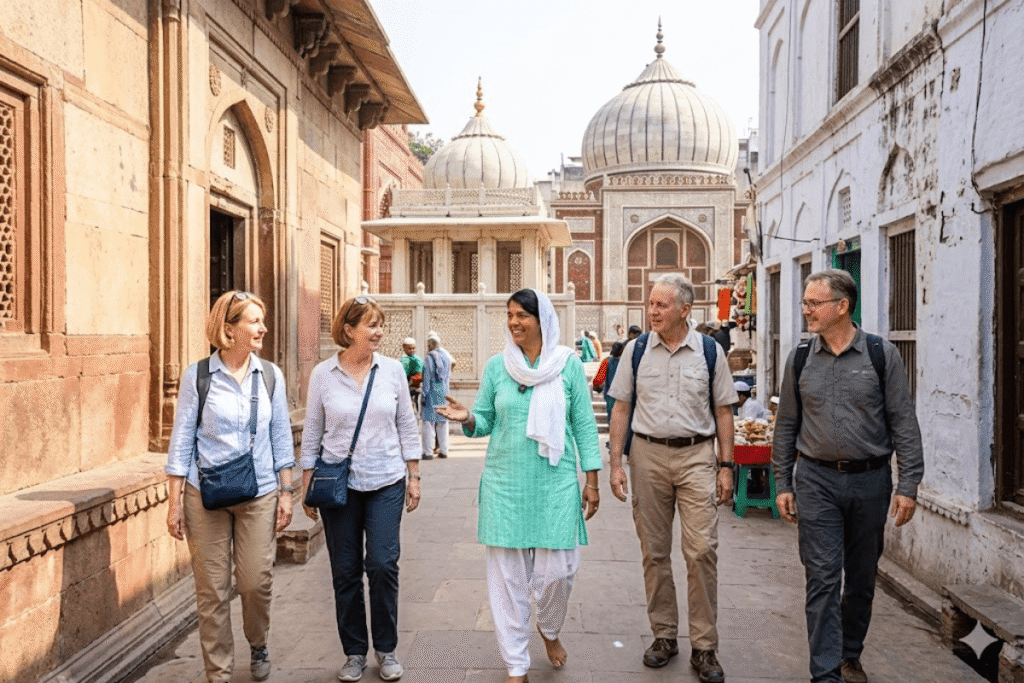
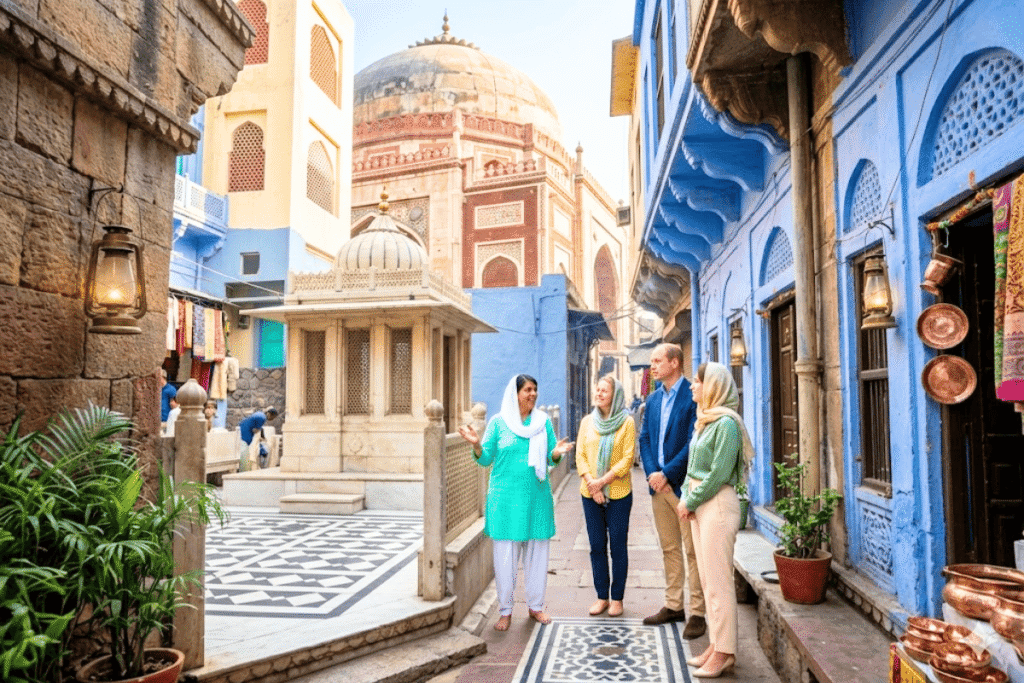
As we stepped into the narrow lanes of Basti Nizamuddin, our guide began sharing stories of devotion, miracles, and the countless followers who once walked these paths—kings, queens, princes, and common people alike. The atmosphere felt timeless, as if history was gently unfolding around us.
Nizamuddin Dargah – First Impression of Timeless Oasis of Spirituality
From the very first steps of our Nizamuddin Dargah walk, something within us began to change. What started as a simple visit slowly unfolded into a soulful journey toward the spiritual heart of Delhi.
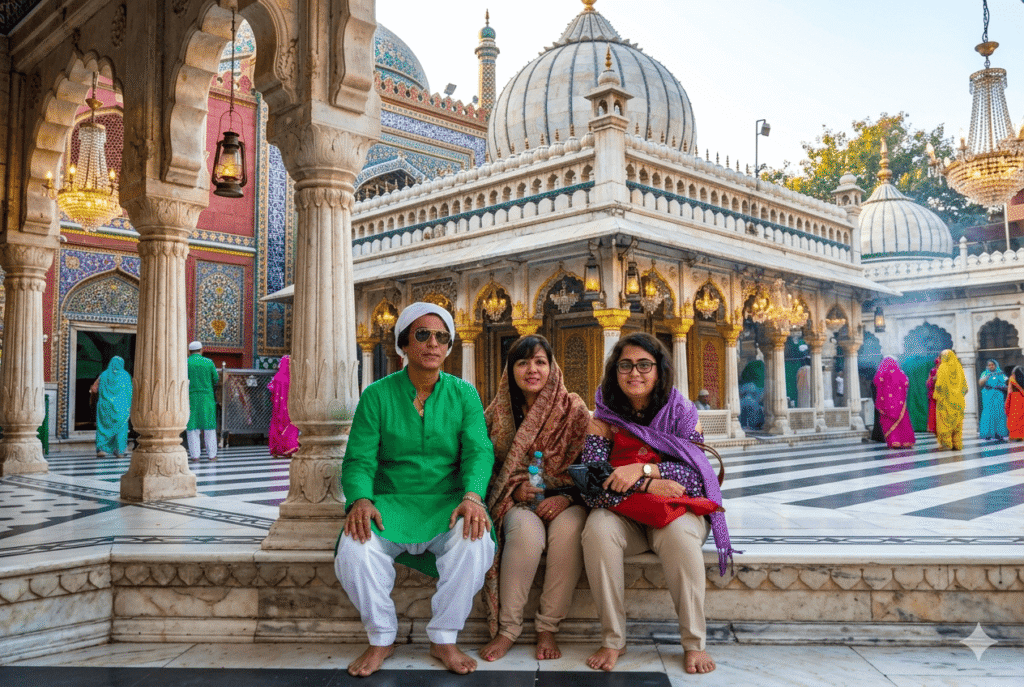
As I stood there with Laura, surrounded by the sacred aura of Nizamuddin Dargah, a deep sense of peace quietly settled within us. The soft echoes of prayers, the fragrance in the air, and the gentle rhythm of devotion made it feel as though this place was not just visited—but felt.
The vibes of Nizamuddin Dargah truly hit differently. Our hearts felt lighter, grateful, and deeply connected. In that moment, we were no longer just travelers—we were souls finding a sense of belonging. Lost in the divine energy of this sacred space, we realized that this walk was not about reaching a destination, but about discovering something within ourselves.
Nizamuddin Dargah – Tips and Entry Rules for Visitors
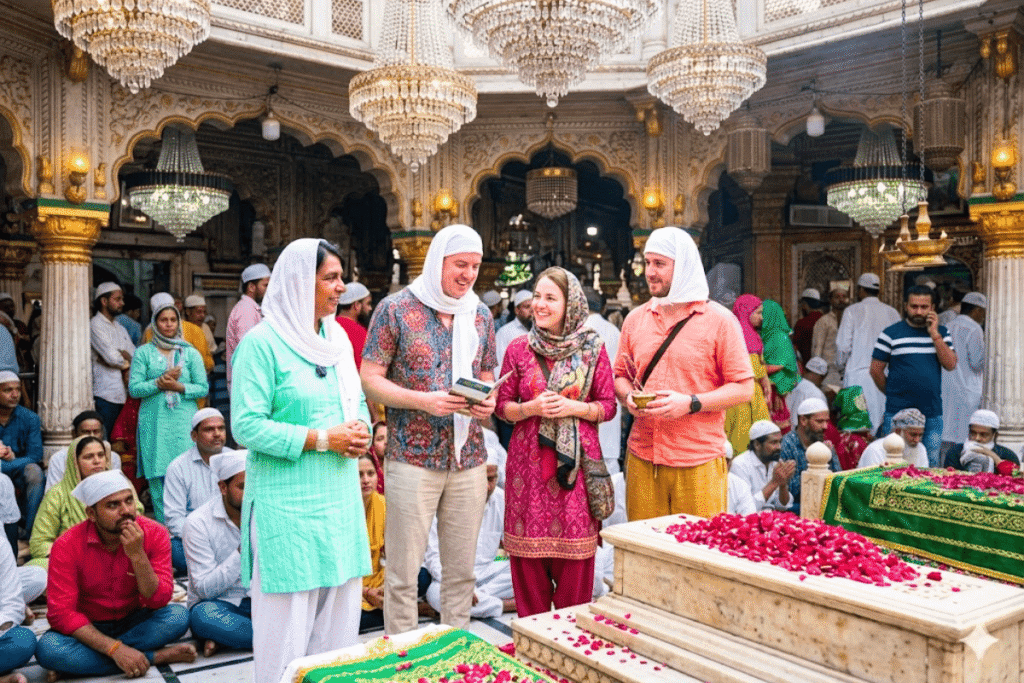
While the sacred Nizamuddin Dargah warmly welcomes visitors from all walks of life, following a few simple customs can make your Nizamuddin Dargah walk more respectful and meaningful. Our local guide gently advised us on these traditions, helping us experience the spiritual atmosphere with deeper understanding.
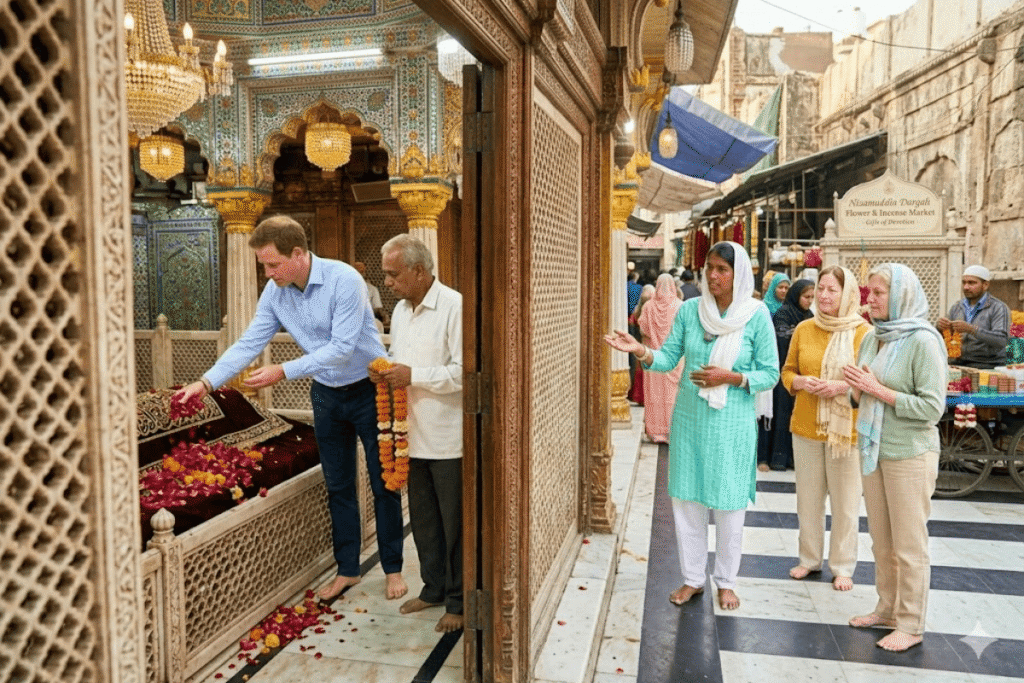
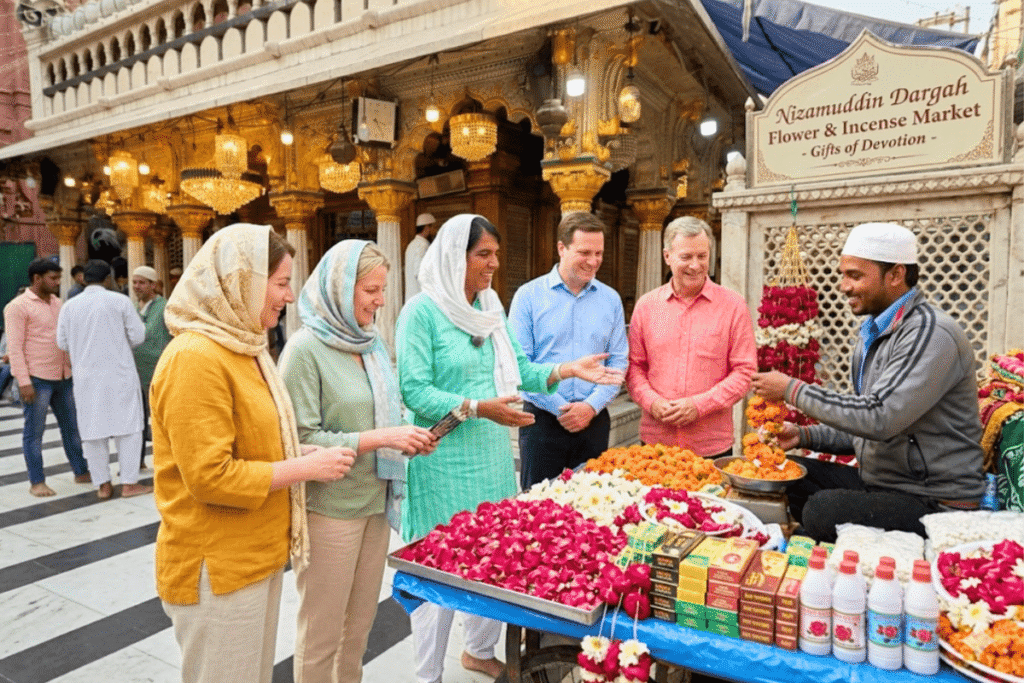
Dress modestly: It is recommended to cover shoulders and knees. You can easily buy scarves or dupattas from nearby shops to cover your head before entering.
Remove shoes before entry: Visitors must take off their shoes at designated areas, often near flower stalls at the entrance.
Restricted areas: Certain inner sections of the shrine may not be accessible to women, so it’s important to follow local guidelines.
Maintain silence and humility: The dargah is a place of prayer and devotion, where calmness and respect are deeply appreciated.
Following these simple tips not only shows respect for local traditions but also allows you to fully connect with the peaceful and spiritual essence of the Nizamuddin Dargah walk.
To truly understand the soul of the city, exploring with a Delhi tour guide makes every moment more meaningful.
Sufi Qawwali Music – Nizamuddin Dargah with Guide
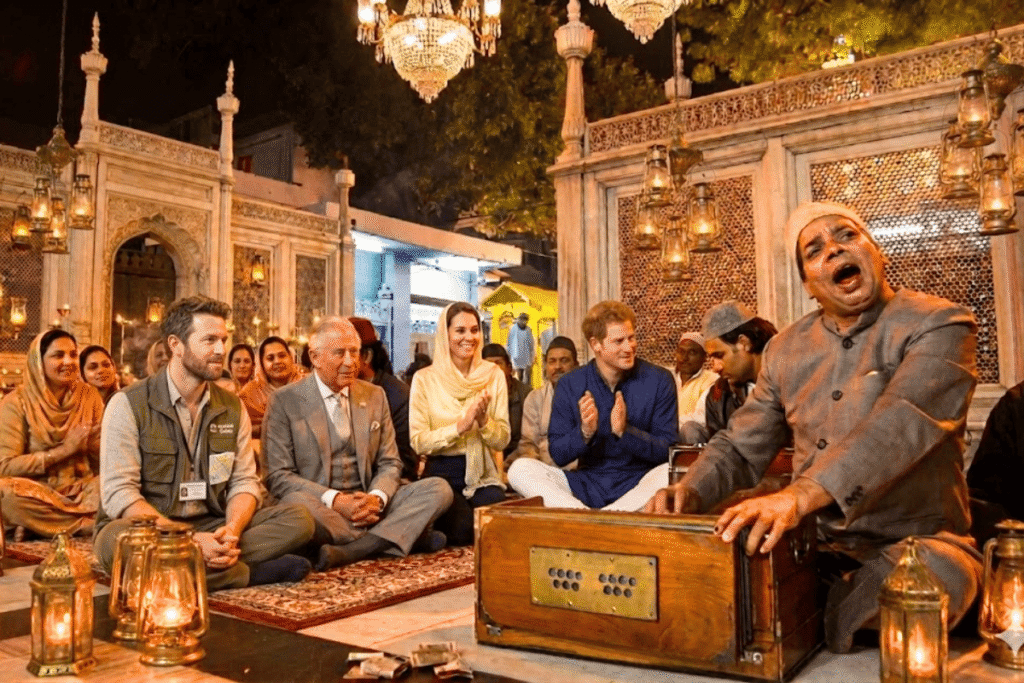
As the sun slowly sets over Nizamuddin Dargah, our Nizamuddin Dargah walk transforms into a deeply spiritual evening. The air softens, lamps begin to glow, and the sacred ritual of Dua-e-Roshni fills the courtyard with quiet devotion, as prayers rise for the wishes of every heart gathered there.
We sit among the crowd, surrounded by believers and travelers, waiting for the moment when music becomes prayer. Soon, the qawwals arrive, welcomed with warm cheers that echo through the marble courtyard. Their presence alone carries centuries of Sufi tradition. As they gently tune their instruments, testing notes and rhythms, the atmosphere builds—until suddenly, the music begins.
The Sufi qawwali flows like a river of love and longing—deep, poetic, and soul-stirring. The voices rise in devotion, filling the evening with timeless verses. With our Khadim guide by our side, each word comes alive in meaning as he softly translates the sacred poetry of Amir Khusro.
Verses like “Kun Faya Kun,” “Allah Hu,” “Bhar Do Jholi Meri,” and “Chhaap Tilak Sab Chheeni Re” are not just songs—they are whispers of the soul, calling for love, surrender, and divine connection.
For the next hour, we are lost in this magical mehfil, where music feels like prayer and every note touches the heart. In that moment, the Nizamuddin Dargah walk is no longer just a journey—it becomes a romantic union of soul and spirituality, where one feels closer not only to the divine, but also to something deeply hidden within.
Qawwali Timings at Dargah Nizamuddin in The Evening
Daily evening qawwalis: Most days qawwals perform after Isha prayers, roughly between 7:00 PM and 10:30 PM. Exact start time varies with season (earlier in winter, later in summer).
Best Time to Visit: Thursday evenings are best for Qawwali, typically around 6:00 PM – 7:30 PM and 9:00 PM – 10:30 PM. Take something to cover your head, and give a generous donation there. Feels good. Follow your Khadim’s instructions during qawwali
Nizamuddin Dargah Walk – Where to Start and Expect Through Narrow Lanes
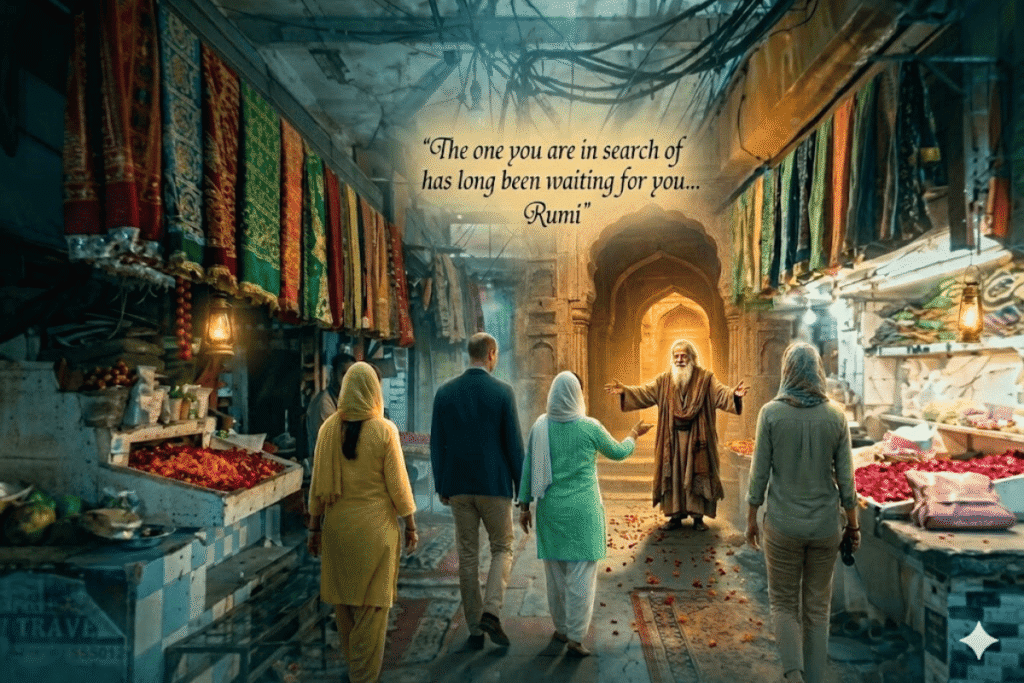
Our Nizamuddin Dargah walk begins through the narrow, vibrant lanes of Nizamuddin Basti, slowly leading us toward the sacred Nizamuddin Dargah with our local guide. This 700-year-old spiritual journey opens the doors to Delhi’s Sufi heart, where every step feels alive with history, devotion, and timeless energy. Our Nizamuddin Dargah walk unfolds like a journey through layers of history as we begin with a visit to Chaunsath Khamba, the elegant “64-pillared” structure from the Mughal era. Its symmetry and quiet charm set a peaceful tone for the walk.
From there, we move towards the resting place of Mirza Ghalib, one of India’s greatest poets. Our guide shares a few of his timeless verses, written during the fading days of the Mughal Empire, adding a poetic depth to the experience. Passing by Ghalib Academy, we continue deeper into the heritage lanes.
As the walk progresses, we arrive at the 16th-century tomb of Atgah Khan, a beautifully decorated monument built for Emperor Akbar’s trusted guardian. Nearby lies the humble grave of Jahanara Begum, the beloved daughter of Shah Jahan, who chose simplicity over grandeur, wishing only grass to grow over her resting place.
Just beyond, our guide points out an ancient baoli (stepwell), hidden behind the walls—another reminder of the rich and layered past of this area.
Nizamuddin Baoli – A Sacred Stepwell of Faith and Miracles
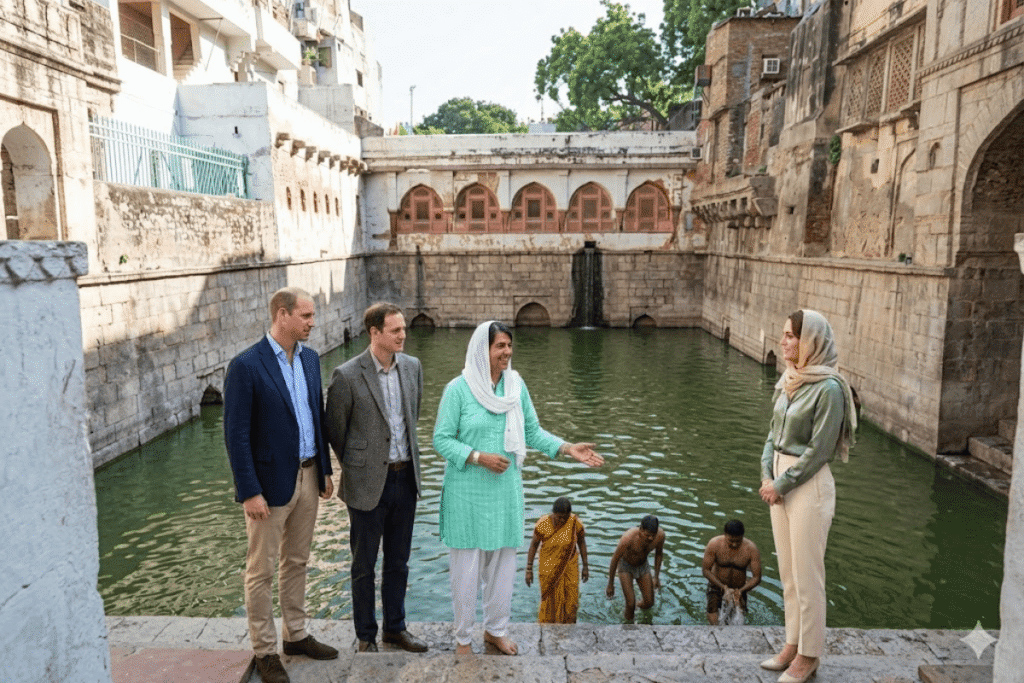
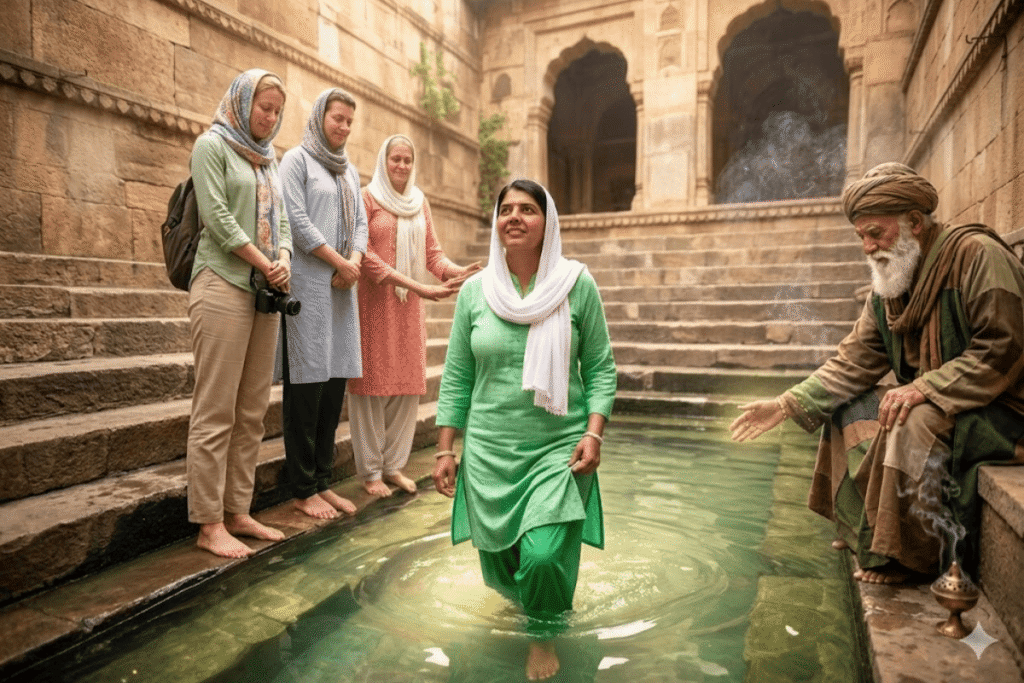
During our Nizamuddin Dargah walk, our guide gently led us toward a hidden spiritual gem—the ancient baoli, a stepwell that holds centuries of faith, mystery, and divine stories. Standing before the 80-foot-deep sacred water, we were told that it is not just a structure, but a blessing. It is believed that those who drink from this holy baoli, blessed by Nizamuddin Auliya, are freed from the fear of hellfire.
As we sat near the quiet waters, our guide began narrating a story that felt almost unreal. During the time of Ghiyas-ud-Din Tughlaq, when the Sultan was building the mighty Tughlaqabad Fort, he ordered all laborers to work only for his fort, forbidding them from helping the saint in constructing this baoli.
Determined to continue, the followers of Hazrat Nizamuddin worked secretly at night. But when the Sultan tried to stop them again by cutting off the oil supply for lamps, something extraordinary happened. On the saint’s command, the disciples lit their lamps using the water of the baoli—and miraculously, the lamps continued to burn. In that moment, faith overcame power, and devotion defeated authority.
Our guide then softly shared another famous tale—the saint’s words to the Sultan: “Hunuz, Dilli duur ast” (Delhi is still far away). It is said that this prophecy came true, as the Sultan never made it back to Delhi.
Sitting beside the baoli, listening to these stories, we felt a deep silence within. The place was not just about history—it carried a living energy, where miracles, faith, and time seemed to flow together like the still waters before us.
Walking through the lively local bazaar, filled with colors, voices, and devotion, we finally approach the white marble threshold of the sacred Nizamuddin Dargah. In that moment, the journey feels complete—yet something deeper is just about to begin.
👉🏿Nizamuddin Dargah Guided Tour Duration: 3 hours Price: 3500 Per Person
Reach Nizamuddin Dargah from Nearest Metro to Shrine
The nearest metro option is Pragati Maidan (Blue Line). From there, we took a shared auto-rickshaw via Purana Qila, enjoying glimpses of old Delhi as we approached the lively lanes of Nizamuddin Basti. This short ride smoothly connects you to the starting point of the walk.
On our return, our local guide suggested alternative metro routes for convenience. The nearest stations include Jor Bagh (Yellow Line) and JLN Stadium (Violet Line), both offering easy connectivity back to different parts of Delhi.
Nizamuddin Dargah Walk Experience with a Local Guide ❤️
Our Nizamuddin Dargah walk turned into one of the most unforgettable experiences in Delhi, all thanks to our local guide who brought the place to life with stories, history, and deep spiritual insight. Walking through the timeless lanes of Nizamuddin Basti felt like stepping into an old-world charm, where every corner echoed with devotion and centuries of Sufi tradition.
The highlight of our evening was the mesmerizing Sufi qawwali—live music that touched the soul and created a magical atmosphere in the courtyard of Nizamuddin Dargah. The rhythm, the voices, and the energy of the gathering made it a truly mind-blowing experience.
If you are looking for something beyond sightseeing—something spiritual, emotional, and deeply meaningful—then the Nizamuddin Dargah walk is a must-do in Delhi. Experiencing it with a knowledgeable local guide makes every moment richer and more memorable.
Nearby Places to Visit After Nizamuddin Dargah Walk
After completing your Nizamuddin Dargah walk, you can explore some of Delhi’s most iconic landmarks nearby. Visit the beautiful Humayun’s Tomb, a UNESCO World Heritage site known for its stunning Mughal architecture, or head towards the majestic India Gate for a peaceful evening walk surrounded by lights and history. These nearby attractions perfectly complement your spiritual journey with culture and heritage.
Review: A Beautiful First Visit to Nizamuddin Dargah with Family ❤️
Me, my wife, and my daughter had a wonderful time on our first visit to Delhi and the sacred Nizamuddin Dargah. The Nizamuddin Dargah walk was a truly special experience for all of us. The evening qawwali was soulful and deeply moving, filling the atmosphere with peace and devotion. Harry, our Khadim and guide, made the experience even more meaningful with his kindness and knowledge. It was a memorable spiritual journey for our family—something we will always cherish. May Allah bless him.