Mutiny Memorial Delhi weekend trips are perfect when life in Gurgaon becomes too busy after a long week in the IT office. This Sunday, I wanted peace, history, and a little romance. So I called my girlfriend Harry, who works as a Delhi guide and knows every hidden story of Old Delhi.
We decided to meet at Delhi Metro near Kashmere Gate Metro Station. The morning air was cool, and Old Delhi looked calm and sleepy. Harry smiled and said, “Today I will show you a forgotten monument where history still whispers.”
From the metro station, we took a cycle rickshaw through the old roads near the Ridge. Slowly, the traffic noise disappeared, and giant old trees surrounded us. Suddenly, I saw a tall red monument rising above the greenery. Harry pointed toward it proudly.
“That is Mutiny Memorial Delhi,” she said softly. “Today people also call it Ajitgarh.”
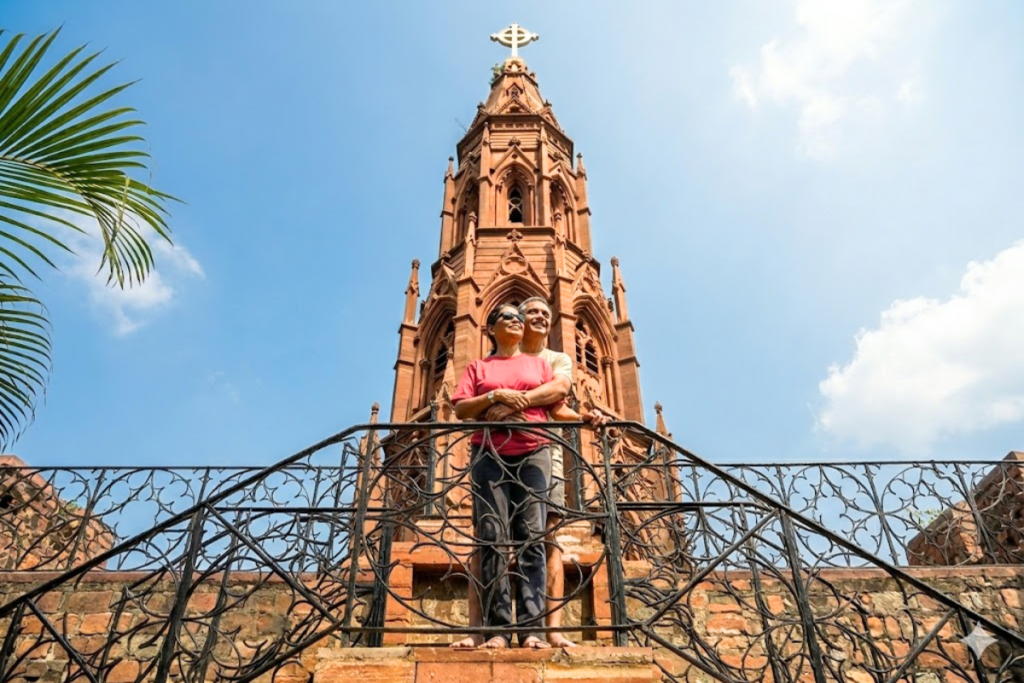
Standing in front of the towering Gothic structure felt magical. It was not crowded like other tourist places in Delhi. Only birds, old trees, and the sound of the wind surrounded us. We clicked photos together, laughed like teenagers, and later sat quietly on a bench watching the monument glow in the afternoon sun. For a Delhiite like me, it became one of the most peaceful weekends ever.
A Romantic Heritage Walk Near Delhi Ridge
Walking with Harry through the green paths near the Ridge felt like entering another world. She explained how this area once witnessed fierce fighting during the Revolt of 1857. Every stone around us carried a hidden memory.
The best part of this heritage walk of Old Delhi was the silence. Unlike busy Chandni Chowk, this side of Delhi felt emotional and mysterious. Couples came here for photography, students explored the history, and a few travelers simply sat under the trees enjoying the breeze.
Harry told me that many people visit famous monuments in Delhi but forget places like Ajitgarh, where the real stories of courage and sacrifice still survive.
Mutiny Memorial Delhi : History, Heritage & Gothic Architecture
Mutiny Memorial also known as Ajitgarh, stands proudly on the Delhi Ridge near Bada Hindu Rao. Built in red sandstone, the monument has beautiful Gothic-style architecture that looks different from Mughal monuments in Delhi.
As we stood beneath the tall structure, Harry explained the story behind it. The British built this memorial to honor soldiers of the Delhi Field Force who died during the Indian Revolt of 1857.
Looking closely at the arches and octagonal design, I could almost imagine the sounds of cannons and marching soldiers from the past. The monument may look peaceful today, but its history is filled with struggle, bravery, and emotion.
For photography lovers, this place is perfect. The red sandstone against the green Ridge creates an amazing background for pictures, especially during winter mornings and golden sunset hours.
Mutiny Memorial Delhi: The Story of Ajitgarh and the 1857 Rebellion
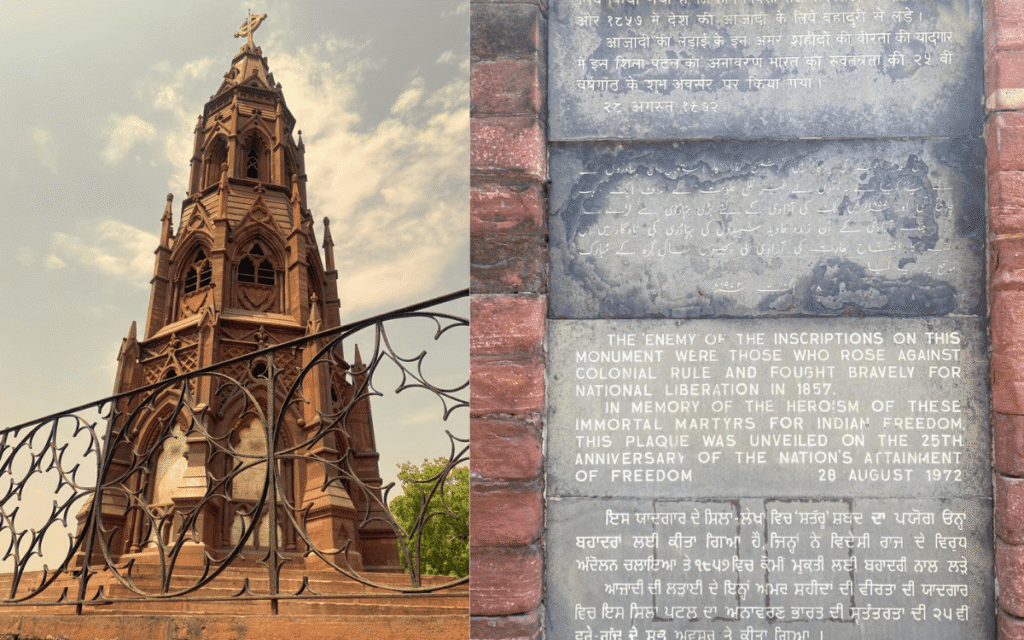
Harry slowly read the plaque near the monument and explained how history changed after Indian independence.
Originally, the structure was called Mutiny Memorial. But in 1972, during the 25th year of Indian independence, the monument was renamed Ajitgarh, meaning “Place of the Unvanquished.”
The meaning of the memorial changed forever. The people once called rebels became remembered as brave freedom fighters and immortal martyrs of India.
Listening to Harry made the monument feel alive. It was not just a building anymore. It became a symbol of changing history and changing perspectives.
She told me how the Indian Revolt of 1857 was one of the biggest uprisings against the British East India Company during Governor General Canning’s rule. Soldiers, kings, and ordinary people joined together in resistance, and Delhi became one of the main centers of rebellion.
Sitting on a Bench with History and Love at Mutiny Memorial Delhi
After exploring the monument, we sat together on a quiet bench under the trees. The sunlight filtered through the branches, and the old monument stood silently behind us.
Harry laughed while checking the photos we clicked together. Some photos looked cinematic because of the Gothic architecture and peaceful surroundings. One picture of us sitting near the monument became my favorite memory of the day.
For a few moments, Gurgaon office stress disappeared completely.
This was not just a historical tour. It felt like a beautiful escape inside Delhi itself.
Mutiny Memorial Delhi Haunted Story of Headless British Soldiers
As the winter sun slowly disappeared behind the trees of the Ridge, the peaceful atmosphere around Mutiny Memorial started feeling mysterious. The cold wind became stronger, and the roads near the monument looked almost empty.
Me and Harry were quietly walking back after taking photos near the old walls when suddenly Harry stopped.
Near the dark pathway, we saw a strange man smoking alone. His face was unclear in the fading light, and he walked slowly without looking at anyone. For a moment, the entire road felt silent.
Harry moved closer to me and softly whispered, “People say the Ridge is haunted by the spirits of British soldiers from 1857.”
She held my arm tightly while telling me one of Old Delhi’s most chilling ghost stories.
According to local legends, travelers and guards near Mutiny House have sometimes seen the ghost of a headless British soldier walking through the roads late in the evening. The strange spirit is often described carrying a cigarette and calmly asking people for a light before disappearing into the darkness.
The story sounds frightening, but Harry smiled and said the ghost never harms anyone. He simply walks silently from the old Mutiny House side toward the main road, as if still lost in another century.
Standing there in the cold evening fog, with old trees moving in the wind and the Gothic monument behind us, the haunted story suddenly felt real. Harry embraced me softly, and I held her tightly while we quickly walked toward the brighter road near the city traffic.
That evening, our heritage walk at Mutiny Memorial Delhi became more than history. It became a memory filled with romance, mystery, and the hidden ghost stories of Old Delhi.
How to Reach Mutiny Memorial (Ajitgarh), Delhi
Visiting the Mutiny Memorial in Delhi, also known as Ajitgarh, is easy and rewarding for history lovers. Located on Rani Jhansi Marg, this 19th-century Gothic monument is well connected by metro and road, making it a must-visit heritage site in Delhi.
Nearest Metro Stations
Kashmiri Gate Metro Station (Yellow Line): The nearest and most convenient stop for travelers.
Pulbangash Metro Station (Red Line): Another nearby option, just a short rickshaw ride away.
Mutiny Memorial Address
Rani Jhansi Marg, New Delhi, India
Timings
Opening Hours: 10:00 AM – 5:00 PM
Best Time to Visit: Between 10:00 AM and 12:00 PM for pleasant weather and better light for photography.
Time Required
Around 1 hour to explore, photograph, and learn about the 1857 uprising and the British-era architecture.
Travel Tips & Nearby Attractions
Travel Tip: Carry a bottle of water and wear comfortable shoes — the memorial sits on a small hill with panoramic views of Delhi. Morning visits are best for photography and quiet exploration.