Looking for an unforgettable Old Delhi Tour? Step into the heart of 17th-century Shahjahanabad, where centuries-old temples, grand mosques, colourful bazaars and lively streets still tell the story of Delhi.
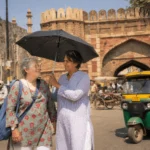
On this 3-hour Old Delhi Heritage Walk, Harry, our Local Expert, took us beyond the usual sightseeing route — from Chandni Chowk towards Old Delhi Railway Station. We walked through historic lanes, met local people, discovered hidden corners, tasted the flavours of Old Delhi and listened to stories that made the city feel wonderfully alive.
It was not just a walk through Old Delhi. It was an experience we will remember long after leaving Delh
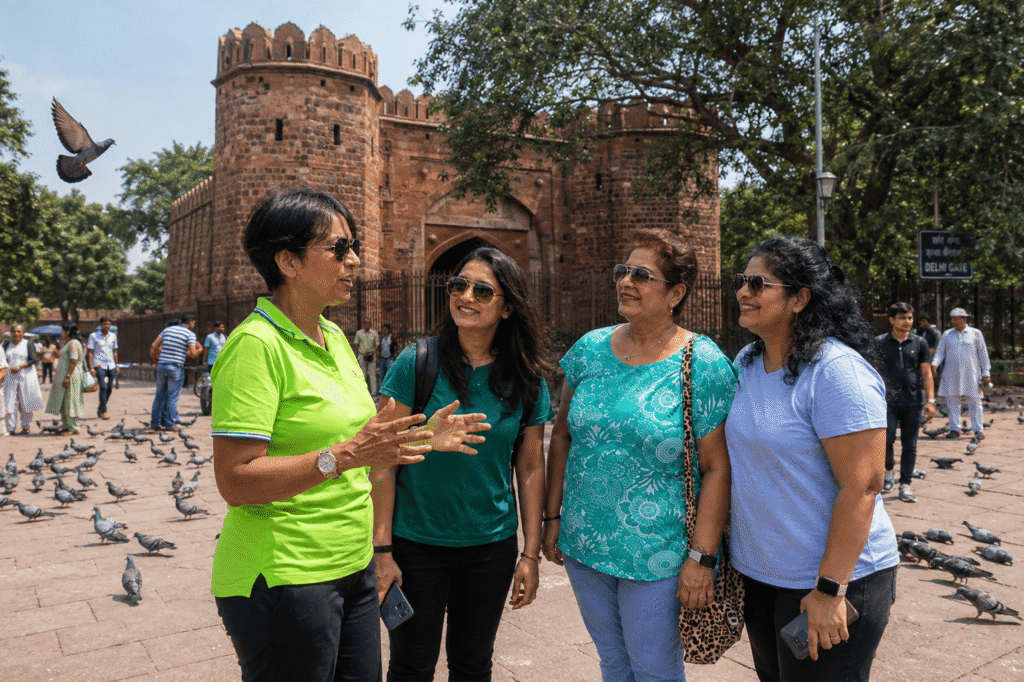
Old Delhi Tour: Shahjahanabad Through Delhi Gate with Harry
“Old Delhi Tour with Harry — where every ancient wall has a story.” ❤️
Stepping through the historic stone arches of Delhi Gate isn’t just starting a route—it’s crossing a threshold into another century. While our flagship Old Delhi Heritage Walk takes you into the royal heart of Shahjahanabad, this south-to-north trail down to Old Delhi Junction reveals the raw, living soul of a city that never stops moving.
How much does it cost?
Free tours don’t have a fixed price. At the end, each person contributes to the guide the amount they consider fair based on their satisfaction. As a guideline, GoWithHarry recommends between $15 and $50 per participant.
Jama Masjid: The Spiritual Soul at Old Delhi Tour
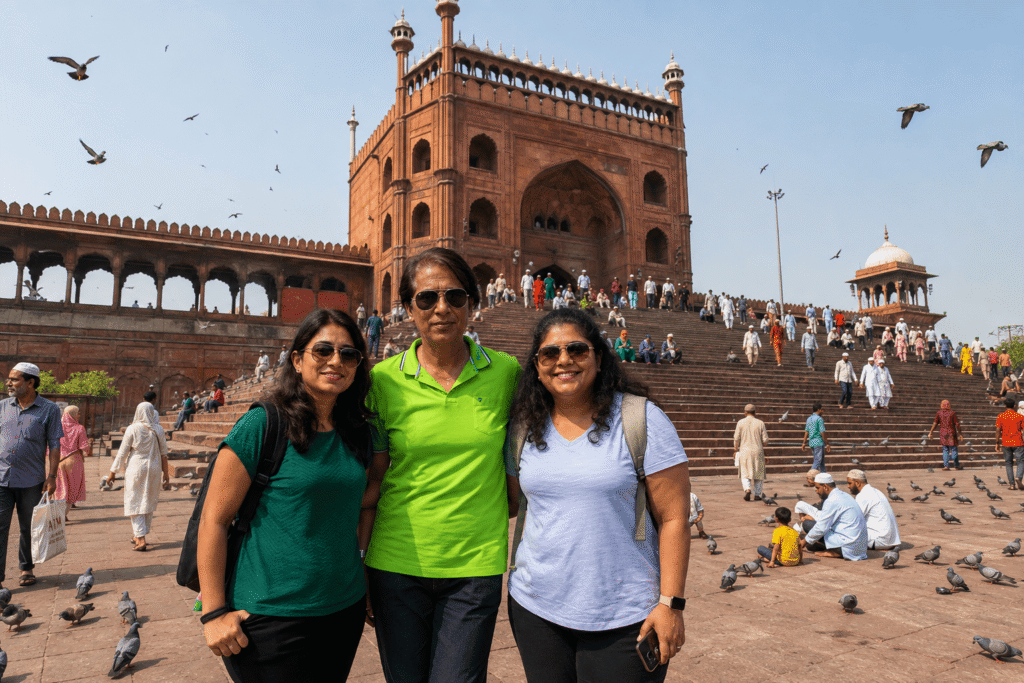
Exploring Jama Masjid the magnificent Mughal architecture of Old Delhi tour.
From Daryaganj, our route guided us toward the towering minarets of Jama Masjid, one of the largest and most magnificent mosques in India. Ascending the grand sandstone steps, the sheer scale of Shah Jahan’s architectural masterpiece took my breath away.
Harry led me across the vast red courtyard, capable of holding over 25,000 worshippers, and pointed out the intricate marble inlay work decorating the prayer halls. As the afternoon sun cast long shadows across the court, she shared the history of its inauguration in 1656 and how the mosque remains the spiritual heart of the city. Standing near the central fountain, gazing out across the bustling rooftops of the walled city toward the horizon, was a moment that etched itself permanently into my Old Delhi Walk.
Red Fort: Shah Jahan’s Crown Jewel of Every Old Delhi Tour
Mughal Tales of Emperors and Concubines of Mughal Empire with Told by Old Delhi Tour Guide
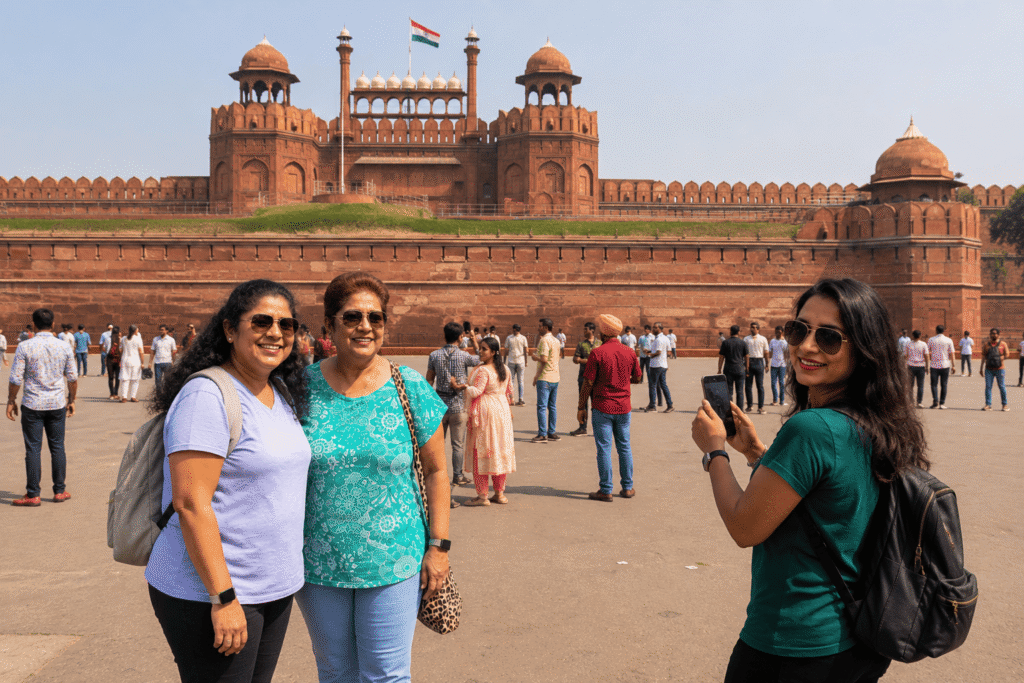
Just a short walk from Jama Masjid sits the colossal crimson citadel that defined Mughal authority for centuries: the Red Fort. Approaching the massive Lahori Gate, Harry described the grandeur of the Mughal court during its golden age, when precious jewels adorned the Diwan-i-Khas and royal processions marched through the fortress gates.
Walking through Chhatta Chowk—the covered bazaar inside the fort where royal tailors and jewelers once catered to the emperor’s family—felt surreal. Harry’s storytelling brought context to every arcade and marble pavilion. Having a dedicated [suspicious link removed] made all the difference; instead of rushing past ruins with a guidebook, I understood the political intrigue, imperial grandeur, and architectural brilliance that built this UNESCO World Heritage Site.
Naugara Havelis: Hidden Treasures of Dariba Kalan Silver Street
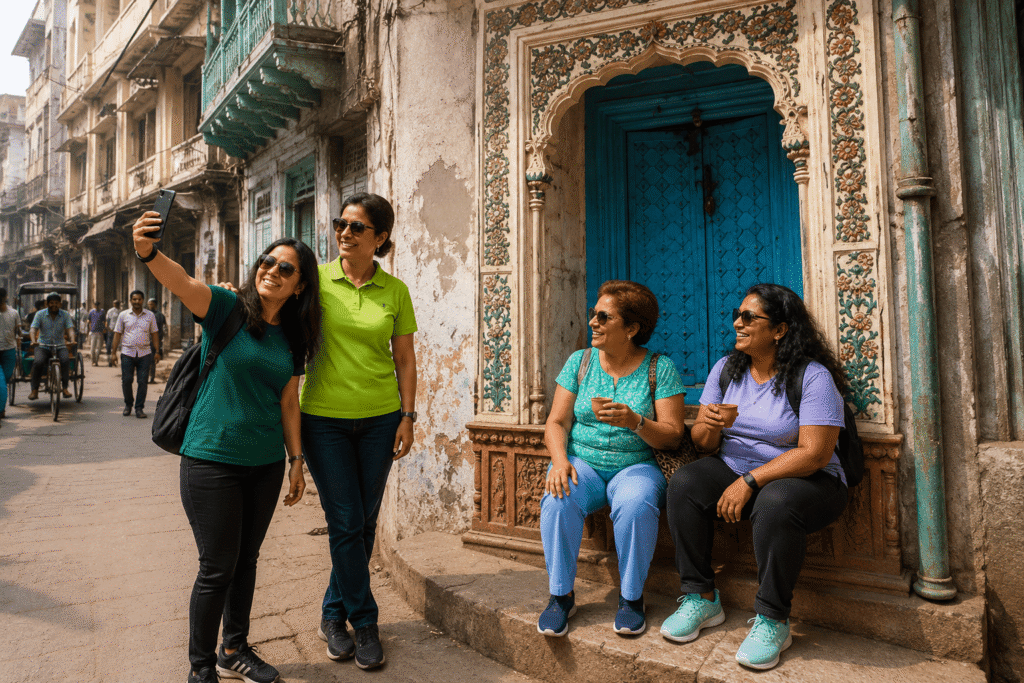
Exploring the peaceful lanes of Old Delhi, with beautiful painted doorways of Naugara with a tea break with Old Delhi tour.
Escaping the main arterial street of Chandni Chowk, Harry steered us into a quiet, narrow katra known as Naugara (Nau Ghara)—a highlight of our Old Delhi tour. The contrast was instant and serene. Naugara is a picturesque cul-de-sac featuring nine historic havelis (traditional mansions) adorned with intricate carved wooden doorways, colorful painted facades, and a beautifully preserved Jain temple at the end of the lane, echoing the architectural charm of 17th-century Shahjahanabad.
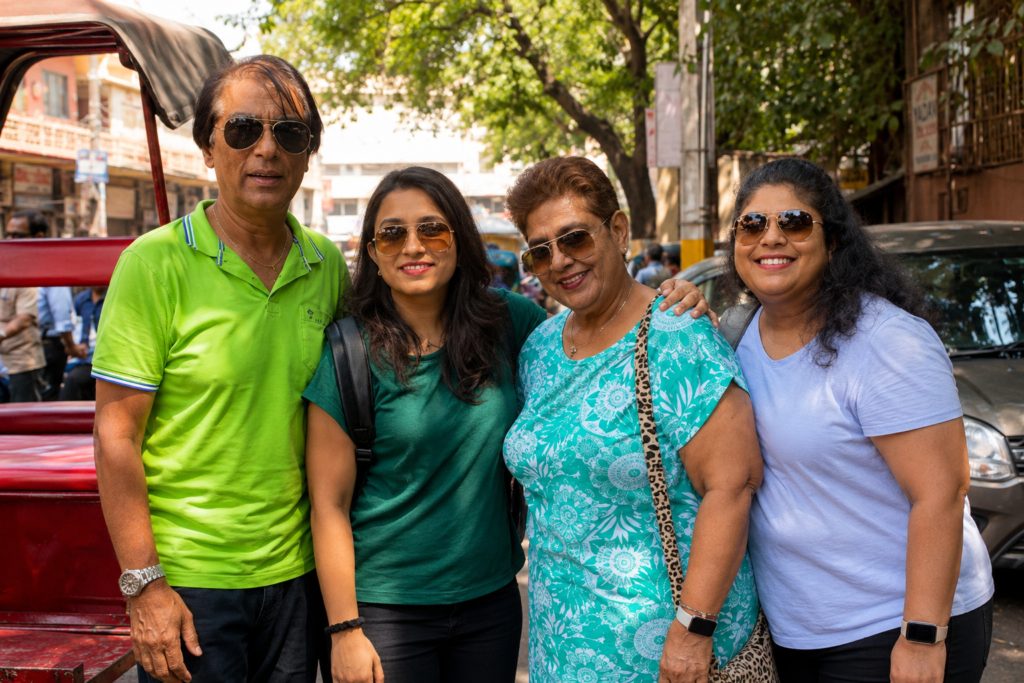
After soaking in the peaceful charm of Naugara, we turned into Dariba Kalan, the famous lane of silversmiths and perfumers established during the reign of Emperor Shah Jahan. The air here was scented with authentic attar (concentrated natural perfumes), sandalwood, and jasmine. Harry showed my daughters and me handcrafted silver jewelry and traditional scent bottles, making this part of our stroll feel like an exclusive Delhi shopping tour . She explained how royal courtiers once frequented these exact shops, reminding us that the true magic of an Old Delhi heritage walk lies in these quiet, historic alleyways.
Chandni Chowk: Old Delhi Tour Through The Legendary Bazaar
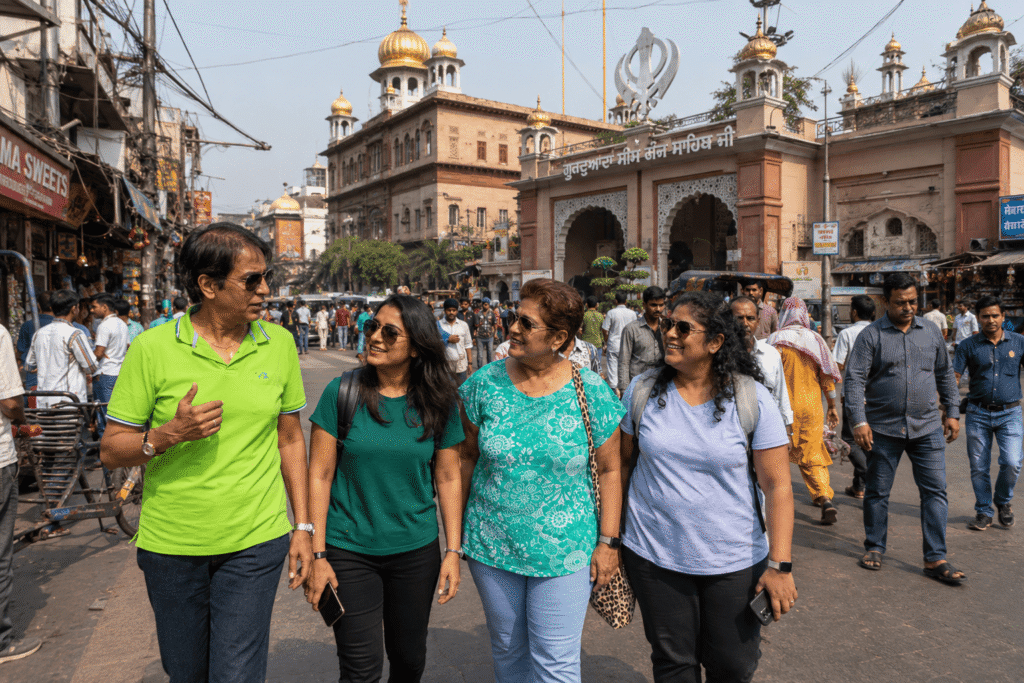
Immersing in the vibrant colors, scents, and sights on a private Old Delhi tour.
Stepping out from the Red Fort, we entered Chandni Chowk, the world-famous spine of Old Delhi. Originally designed by Shah Jahan’s favourite daughter, Princess Jahanara, the market was once bisected by canals that reflected the moonlight—giving the avenue its poetic name, “Moonlight Square.”
Today, Chandni Chowk is an energetic, vibrant river of life. Rich fabrics, shimmering bangles, antique brassware, and aromatic spices line every inch of the market. But beyond the bazaars lies another fascinating story—the remarkable coexistence of faith and history. Within these bustling streets stand a historic Jain temple, the Hindu Gauri Shankar Temple, Gurdwara Sis Ganj Sahib, and the beautiful Sunehri Masjid. Each has its own story, tradition, and place in the remarkable history of Shahjahanabad.
Harry skillfully navigated through the bustling crowds, introducing me to local shopkeepers whose families have operated their stalls for generations. Every turn revealed another story—of faith, trade, architecture, and people—adding a new layer to my Old Delhi Tour and showing why Chandni Chowk remains one of the most extraordinary living chapters of Delhi’s history.
See: Incredible India Shop ’til You Drop in the Heart of Delhi- Chandni Chowk
Gali Paranthe Wali: Old Delhi’s Delicious Food Tour
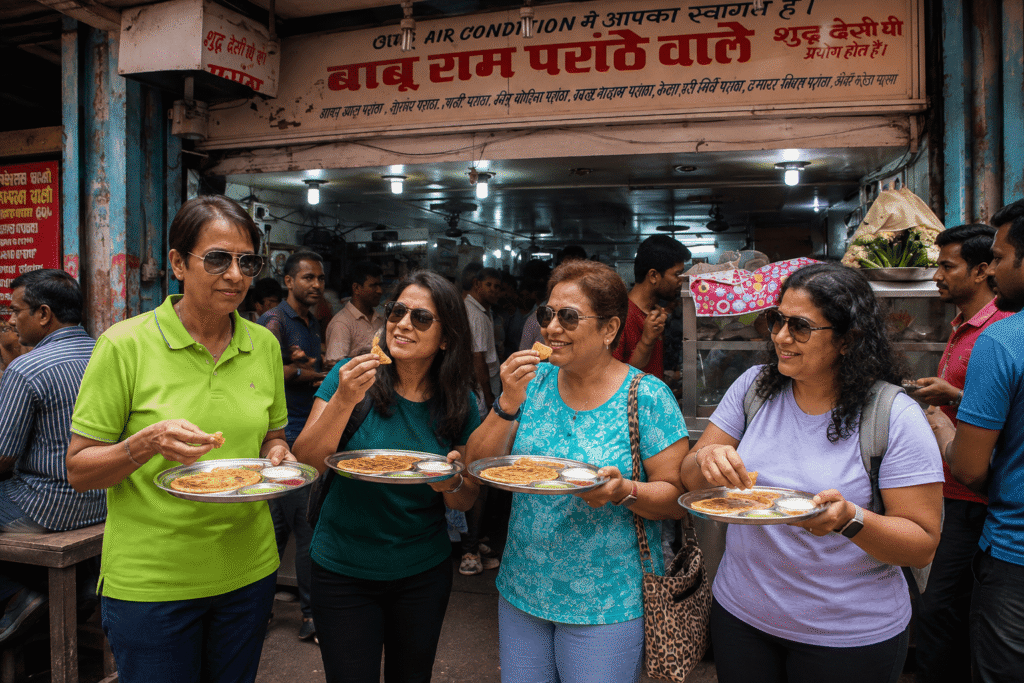
Old Delhi Tour is uncomplete without experiencing the stuffed parathas the legendary flavors of Gali Paranthe Wali.
No Old Delhi Tour is complete without indulging in the legendary local street food, and Harry saved the best culinary experience for Gali Paranthe Wali (the Lane of Parathas). Operating since the late 19th century, these iconic eateries have served generations of visitors, including historic leaders and celebrities.
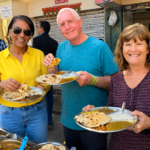
We sat inside a cozy, historic eatery as cooks expertly fried piping-hot, flatbreads filled with delicious fillings ranging from spiced potato (aloo) and paneer to exotic winter radish (mooli) and crushed almonds. Served alongside tangy tamarind chutney, mint dip, and creamy pumpkin curry, every bite was a celebration of flavor. Harry laughed as I sampled paratha after paratha, proving her point that food is the ultimate window into Delhi’s soul.
Town Hall and Company Bagh: Echoes of Old Delhi’s Colonial Past
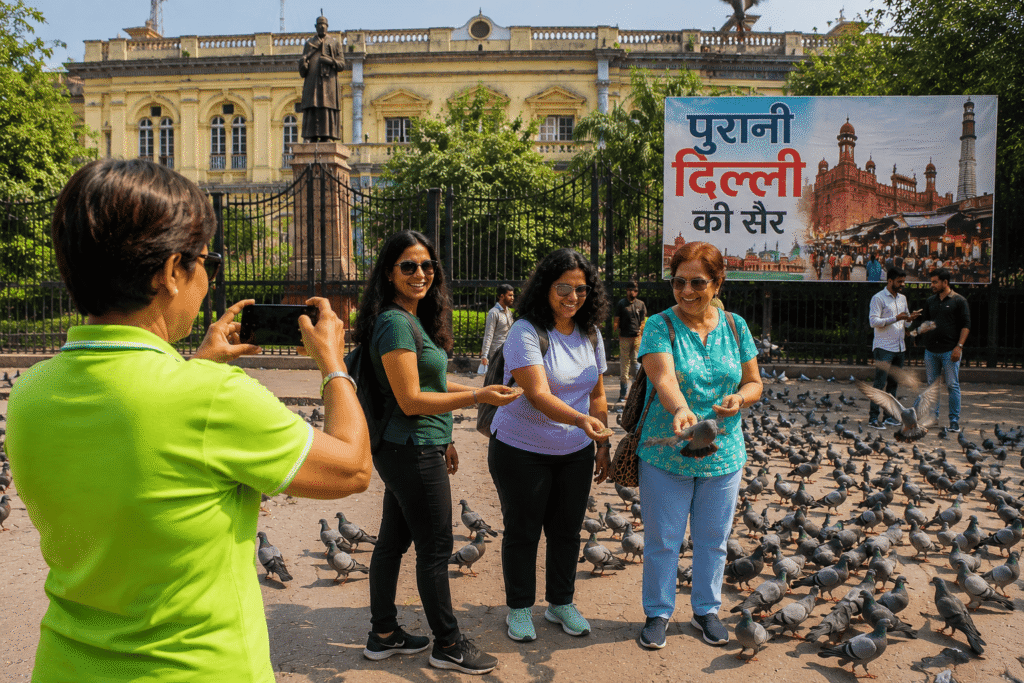
Capturing timeless memories in front of the historic Town Hall! Feeding pigeons was one of the most charming highlights of our Old Delhi tour with Harry.
Wiping our hands and thoroughly satisfied, we continued our walk toward the imposing historic structure of the Old Delhi Town Hall. Built in the 1860s during British rule, this yellow brick Victorian-style landmark stands as a bold monument to the colonial transition that reshaped Shahjahanabad in the 19th century. Harry pointed out the grand facade and shared a fascinating insider detail—that this former municipal center is set to be transformed into a heritage hotel and museum, bridging its colonial past with Delhi’s future.
Directly behind the Town Hall lies Company Bagh (originally known as Jahanara’s Bagh). Once an imperial Mughal garden laid out by Princess Jahanara, it was later redeveloped by the British into a public park. Harry pointed out how architectural styles shifted seamlessly across the street—from Islamic arches and Hindu havelis to British neoclassical facades. Having an expert tour companion helped me piece together how these dramatically different historical eras blended into a single cohesive city.
Spice Bazaar: The Most Fragrant Stop with Old Delhi Tour
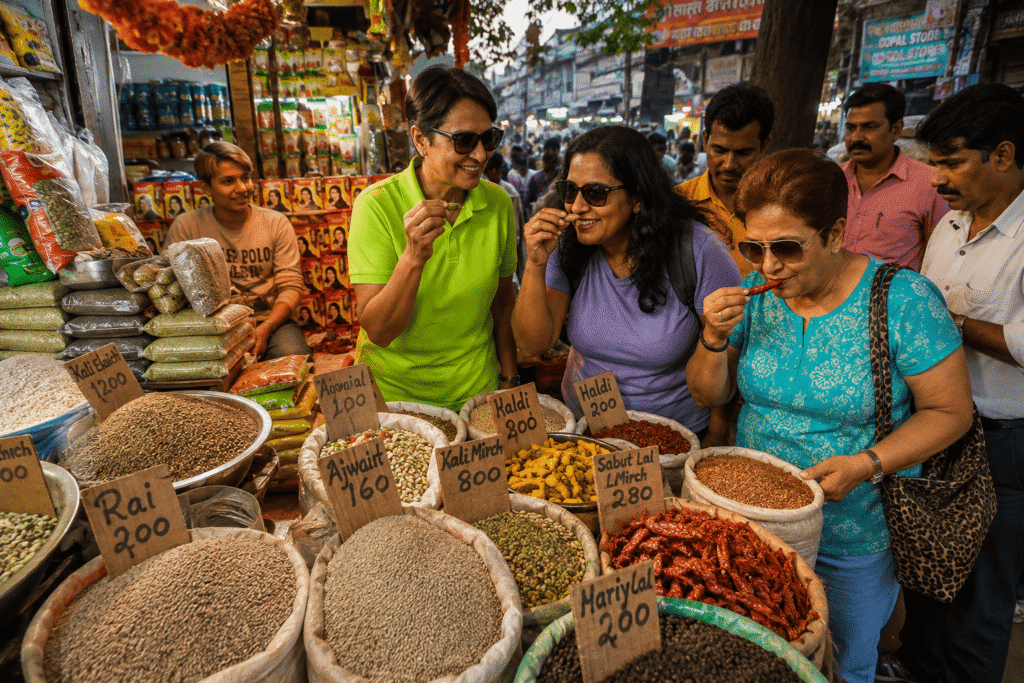
Exploring Asia’s largest spice market at Old Delhi Tour a rich heritage of Shahjahanabad
Stepping into Khari Baoli, Asia’s largest wholesale spice market, is an unforgettable sensory awakening. The vibrant air instantly fills with the rich aroma of hand-ground chili, cardamom, and saffron, carrying centuries of trade tradition rooted in the heritage of Shahjahanabad. As Harry led us through the bustling stalls, sharing insider insights about traditional spice blends and royal Mughal recipes, it quickly became clear why this fragrant enclave remains a beloved highlight for every traveler exploring Old Delhi’s historic lanes.
Old Delhi Railway Station: Where Every Old Delhi Tour Ends with Memories
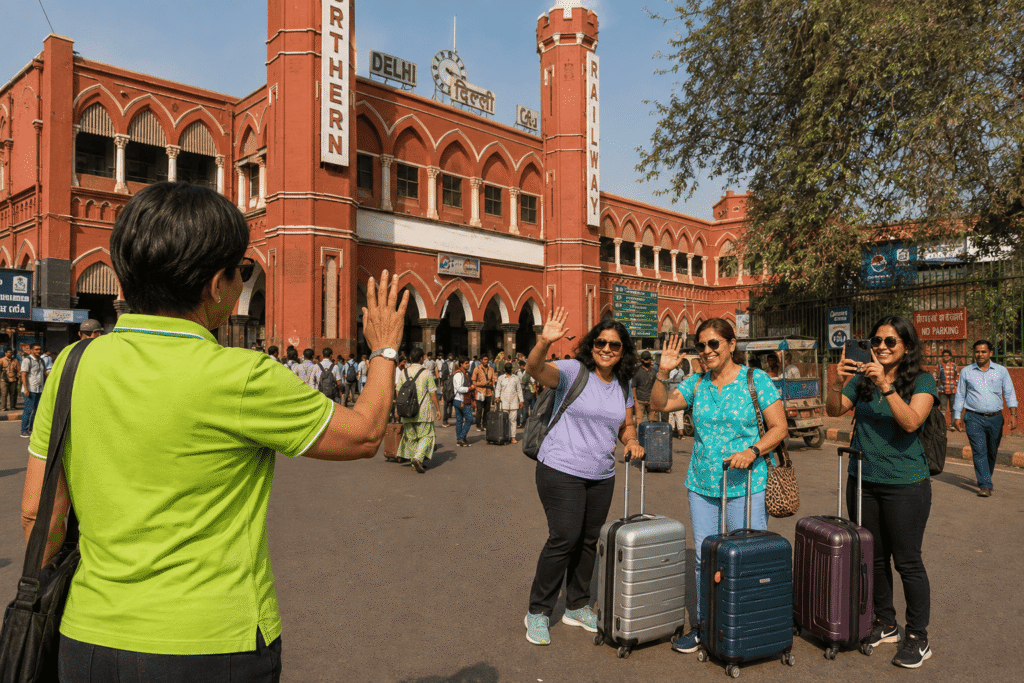
Goodbye to Old Delhi Tour Guide Harry at Old Delhi Railway Junction
Our final destination brought us to the grand facade of Old Delhi Railway Station (Delhi Junction). Built in 1903 with red brick architecture designed to mimic a historic fort, this bustling transport hub serves as the ultimate bridge between ancient heritage and modern mobility.
Standing near the bustling entrance with our suitcases in hand, waving a bittersweet goodbye to Harry felt less like leaving a tour guide and more like parting ways with a dear friend. From starting at Delhi Gate to navigating ancient bazaars and colonial landmarks, every step of our 3 hour Old Tour had been an unforgettable narrative woven into our hearts. As a small token of our deep gratitude for her warmth and dedication, my daughters and I handed her £20 each before stepping into the station—a humble thank you to Old Delhi Tour Guide for turning a simple visit to Shahjahanabad into a beautiful Old Delhi tour that our family will treasure forever…. Mellisa Kotta