If this is your first time in Delhi, welcome to one of the world’s oldest and most fascinating capitals. From the moment your aircraft lands at Indira Gandhi International Airport (IGI Airport), named after India’s first woman Prime Minister, you are stepping into a city where ancient history, vibrant culture, and modern life come together in remarkable harmony.
For many international visitors, Delhi is their first introduction to India. It’s perfectly natural to feel a mixture of excitement, curiosity, and even a little nervousness. Every week, I welcome travelers from Australia, the United States, Canada, Europe, Israel, and many other parts of the world. Almost everyone asks the same question:
“Harry, what will Delhi really be like?”
By the end of the day, that question is usually replaced with a smile, new friendships, and memories that last a lifetime.
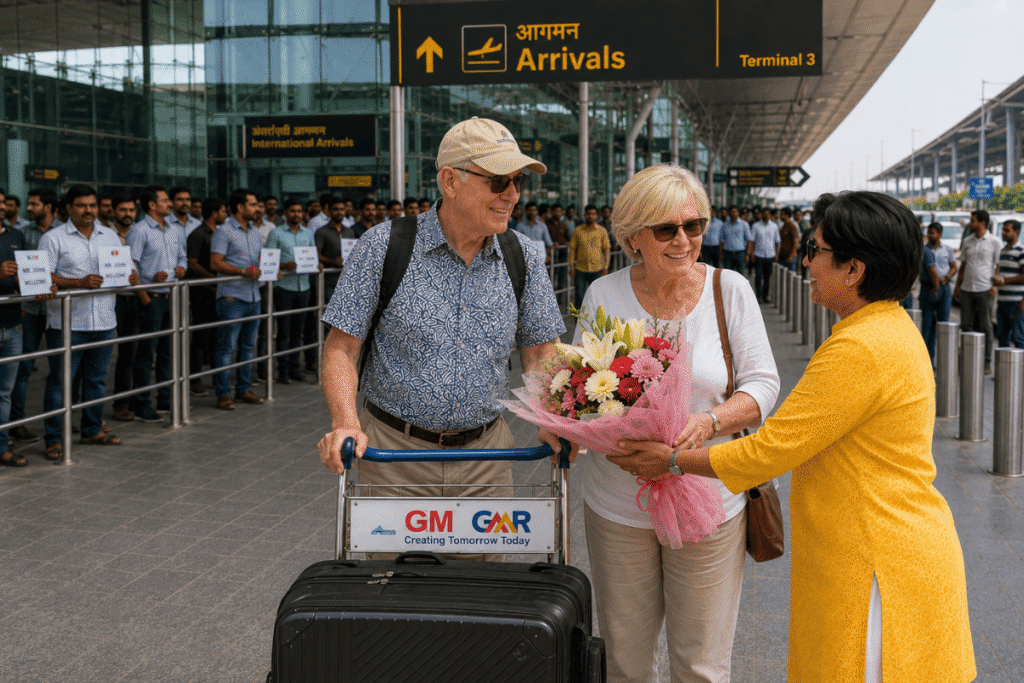
First Time in Delhi? Every unforgettable journey begins with a warm welcome. Meet your local Delhi Tour Guide at Indira Gandhi International Airport and start exploring the history, culture, and stories of India’s fascinating capital with confidence.
As your vehicle leaves the airport, you’ll pass through Delhi Cantonment, one of India’s largest military areas, before entering the National Capital Region (NCR). This vast metropolitan region includes New Delhi, the capital’s elegant administrative district, Gurugram (Gurgaon), one of India’s leading business and IT centres, and Noida, a rapidly growing city known for its technology parks, industries, and modern infrastructure.
Today, Delhi is home to more than 18 million people, with millions more living across the NCR. People from every state of India have made this city their home, bringing with them different languages, traditions, festivals, and cuisines. While Hindi is the most widely spoken language, English is commonly used in hotels, restaurants, museums, airports, and tourist attractions, making it easy for international visitors to communicate.
Before you begin exploring its monuments and markets, it helps to understand one important fact:
Delhi is not simply a city—it is a living museum where every generation has left its mark.
New Delhi and Old Delhi – Why First Time in Delhi Visitors Often Get Confused
One of the first questions I hear from first-time visitors to Delhi is, “What’s the difference between New Delhi and Old Delhi?” It’s a common question because many of Delhi’s most famous landmarks are spread across both areas, making it difficult for newcomers to understand where one begins and the other ends.
The easiest way to understand Delhi is to think of it as two distinct worlds within one historic city. There is no obvious boundary or sign telling you when you’ve left New Delhi and entered Old Delhi. As you travel through the city, the transformation happens naturally—from wide, tree-lined avenues, elegant colonial buildings, and modern government districts to bustling bazaars, centuries-old streets, magnificent Mughal monuments, and colourful local markets.
For a first-time visitor to Delhi, this gradual transition can be both fascinating and a little confusing. During a full-day Old and New Delhi Tour, your local Delhi tour guide brings this remarkable journey to life. Rather than simply driving from one attraction to another, you’ll discover how Rajput rulers, the Delhi Sultans, Mughal emperors, and the British each left their mark on India’s capital. By the end of the day, you’ll realise that Delhi is far more than a collection of monuments—it’s a city of remarkable tales, living history, and unforgettable stories waiting to be discovered.
👉 Read the real travel story of Rebecca Gosnell and her friend, first-time visitors from the United States, as they explored both Old and New Delhi with a local tour guide.
New Delhi
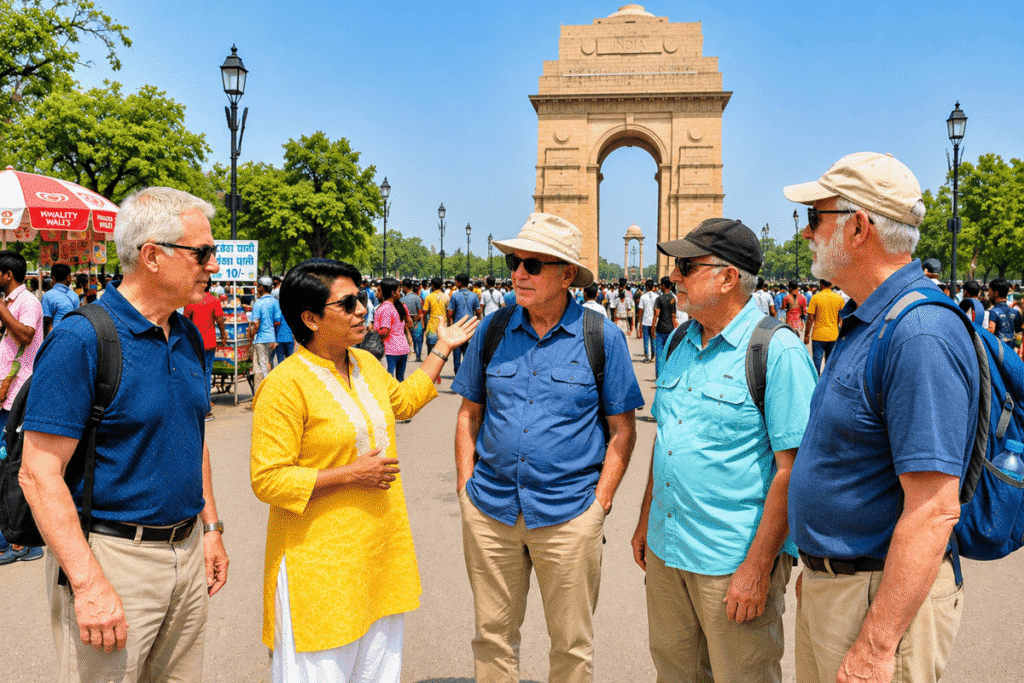
First Time in Delhi? Your local Delhi Tour Guide explains the difference between New Delhi and Old Delhi at India Gate, helping visitors understand the history, architecture, and unique character of India’s capital before exploring both worlds.
New Delhi is the newer part of the city, known for its wide tree-lined avenues, grand government buildings, gardens, and spacious layout. This is where you’ll find many of Delhi’s iconic landmarks, including:
India Gate
Rashtrapati Bhavan (President’s House)
Parliament House
Connaught Place
Humayun’s Tomb
Qutub Minar – the famous tall tower many visitors recognise
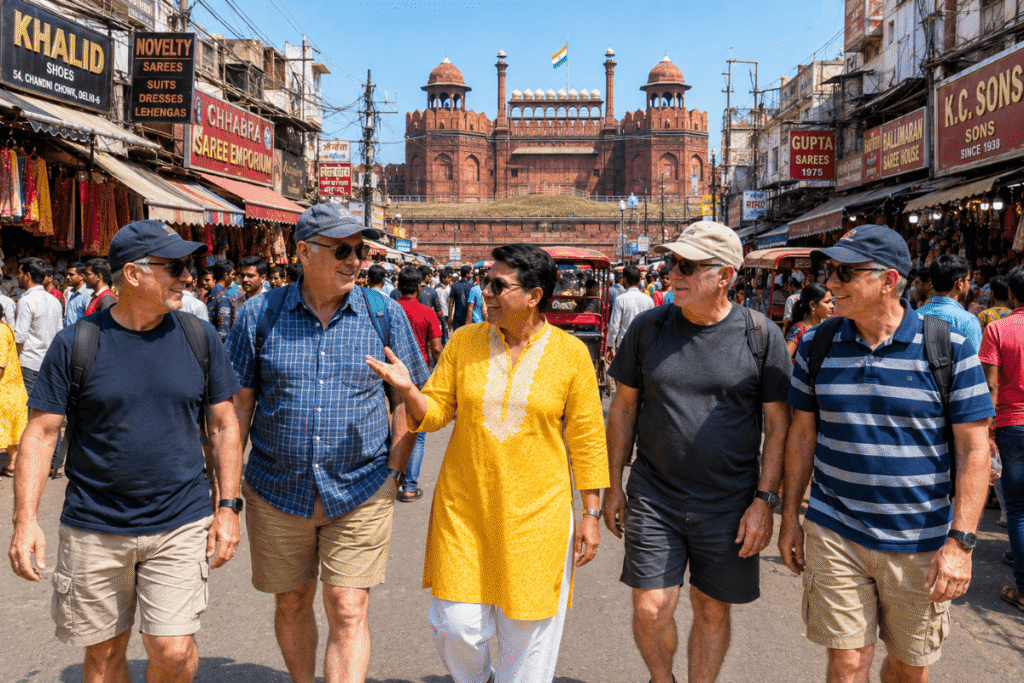
Old Delhi is where history comes alive. Walking through Chandni Chowk with a local Delhi Tour Guide, first-time visitors discover the legendary bazaars, the magnificent Red Fort, and the fascinating stories hidden in every lane of Shahjahanabad.
Old Delhi is the historic heart of the city, built during the Mughal era. It is famous for its lively streets, traditional markets, historic monuments, and authentic local food. Some of its best-known attractions include:
Red Fort
Jama Masjid (India’s largest mosque)
Chandni Chowk
Spice Market (Khari Baoli)
Jain Temple
Gurudwara Sis Ganj Sahib
👉 Read how our Old Delhi Heritage Walk introduces first-time visitors to the hidden stories, colourful bazaars, and magnificent monuments of Shahjahanabad.
Why Explore Delhi with a Local Guide?
Exploring Delhi with a local guide is about much more than visiting famous monuments. Delhi is one of the world’s oldest historic capitals, shaped by Rajput kings, the Delhi Sultans, Mughal emperors, and later the British colonial rulers. Every dynasty left behind magnificent forts, tombs, mosques, gardens, temples, and markets, making Delhi a living museum of India’s past. It is often said that every stone in Delhi has a story to tell, but for a first-time visitor, those stories can easily remain hidden. A knowledgeable local guide brings these places to life, helping you explore the city with confidence, comfort, and a deeper understanding of its remarkable history, culture, and traditions.
1. Skip the Guesswork
Instead of spending valuable time planning routes, buying tickets, or deciding what to visit next, you can simply enjoy your day while your guide takes care of the details. For example, Simran and Annett travelled from Canada on a tight business schedule and had just one day to experience both Old and New Delhi. Read how they made the most of their limited time on an Old and New Delhi Tour with a Local Guide.
2. A Storyteller, Not Just a Guide
Every monument has a story waiting to be discovered. From the rise of the Delhi Sultanate at Qutub Minar to the fascinating tales of the Mughal emperors in Old Delhi, a storyteller brings history to life in a way guidebooks never can. For solo travellers, a Delhi Tour Guide often becomes much more than someone who explains history—they become a trusted tour companion, sharing local insights, helping you feel comfortable, and making the journey enjoyable from start to finish. See how First time in city David, travelling alone in Delhi, discovered not just the city’s history but also the value of having a trusted Delhi Tour Guide and Tour Companion throughout his adventure.
3. Easy Navigation Around the City
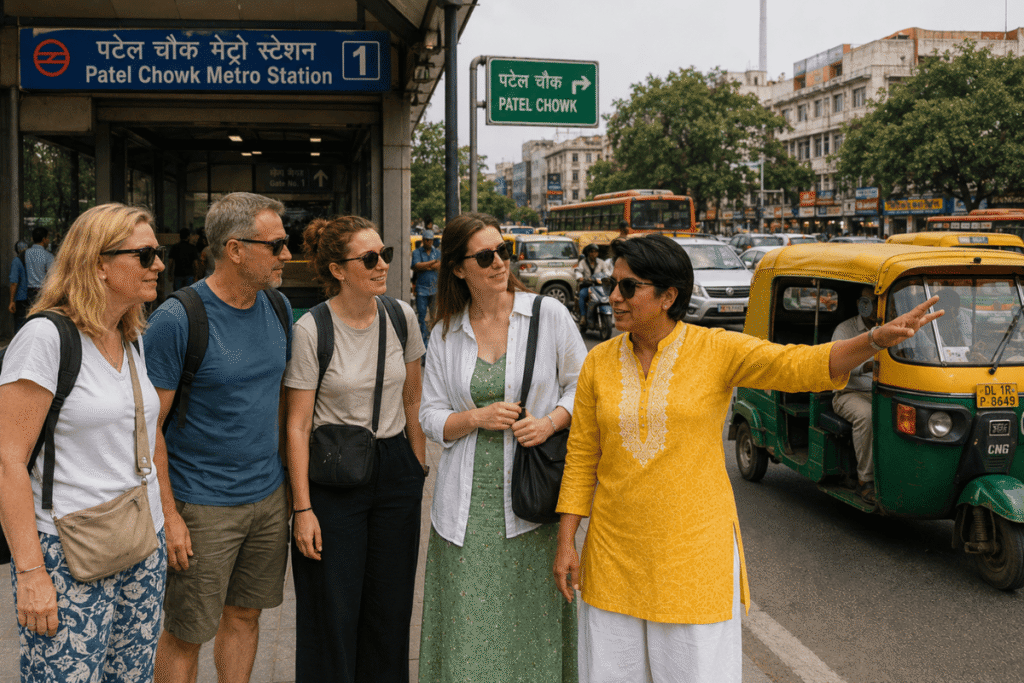
Delhi is a vast metropolitan city, and navigating it for the first time can be challenging. Your local Delhi Tour Guide helps visitors travel confidently using the Metro, local transport, and the city’s best routes, making sightseeing easy, comfortable, and stress-free.
Delhi is a large metropolitan city with attractions spread across different neighbourhoods, making it easy for first-time visitors to lose valuable sightseeing time. A knowledgeable local guide helps you travel efficiently, avoid unnecessary detours, and make the most of every hour. Licensed tourist guides recognised by the Ministry of Tourism, Government of India, undergo professional training and are authorised to conduct tours across India under a Pan India Tourist Guide Licence. If you’d like to know more about my experience, qualifications, and journey as a licensed storyteller, learn more about Harry.
4. Local Support When You Need It
Whether you need help communicating, finding an ATM, locating a pharmacy, or dealing with an unexpected situation, having a trusted local by your side provides reassurance, especially for first-time visitors. Your local tour guide often becomes much more than someone who explains monuments—they become a caring travel companion throughout your journey. From helping you communicate with local people to recommending reputable pharmacies or well-known hospitals such as AIIMS New Delhi if medical assistance is ever needed, an experienced guide offers practical support behind the scenes. These are the many unseen roles a local guide plays, allowing you to explore Delhi with greater confidence, comfort, and peace of mind.
5. Discover the Best Local Food
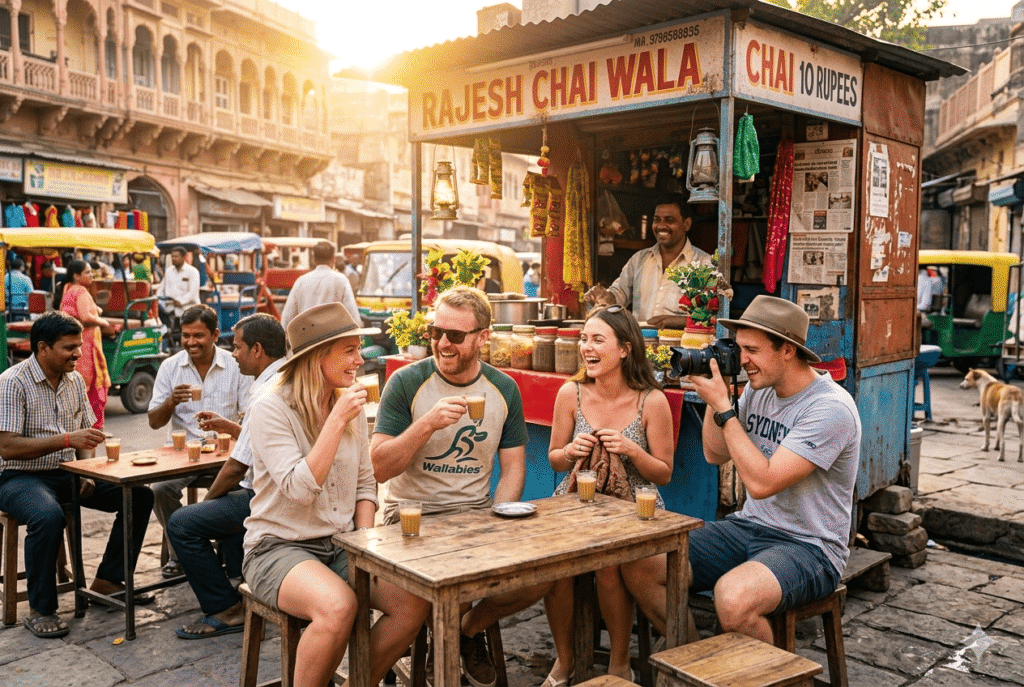
Delhi is a paradise for food lovers. Your local Delhi Tour Guide introduces first-time visitors to authentic street food, traditional chai, and legendary local flavours while sharing the fascinating stories behind every dish.
Delhi is famous for its incredible food, and every dish has a story behind it. From crispy samosas and sweet jalebis to aromatic biryani, spicy golgappas, and rich Mughlai delicacies, the city’s cuisine reflects centuries of cultural influences and royal traditions. A local guide can recommend clean, authentic eateries that suit your taste while introducing you to the history behind these iconic flavours. Better still, you’ll have the opportunity to watch many of these famous dishes being freshly prepared in Delhi’s bustling markets, making every bite part of the experience. **Discover Delhi’s famous street food with a local Guide.
6. Explore Markets Like a Local
From the colourful lanes of Chandni Chowk to its legendary bazaars, Old Delhi offers far more than shopping. These centuries-old markets are among the city’s must-visit attractions, where magnificent havelis, historic temples, mosques, hidden alleyways, and traditional businesses come together like a living mosaic of Delhi’s rich past. An experienced local guide helps you discover the stories behind every corner, introducing you to the people, heritage, architecture, and flavours that make Old Delhi so unforgettable.
See how our Old Delhi Heritage Walk brings Chandni Chowk’s hidden stories, historic landmarks, and vibrant bazaars to life.
Getting Around Delhi: Easy Travel Tips for First-Time Visitors
Delhi is a large metropolitan city, but getting around is easier than many first-time visitors expect. For quick and comfortable travel, download the Uberapp before arriving in India to book safe and reliable taxis. If you’d like to experience one of the world’s best public transport systems, explore the Delhi Metronetwork, download the official Metro map, and consider purchasing a Delhi Metro Smart Card for faster travel and shorter queues. These simple preparations will help you explore Delhi with confidence while saving both time and money.
Essential Hindi Greetings for First-Time Visitors to Delhi
Learning a few simple Hindi words can make your first trip to Delhi even more enjoyable. Don’t worry about perfect pronunciation—local people always appreciate the effort and will usually respond with a smile.
🇬🇧 English
🇮🇳 Hindi
🔊 Pronunciation
Hello
नमस्ते
Namaste
How are you?
आप कैसे हैं?
Aap Kaise Hain?
I am fine
मैं ठीक हूँ
Main Theek Hoon
What is your name?
आपका नाम क्या है?
Aapka Naam Kya Hai?
My name is…
मेरा नाम… है
Mera Naam… Hai
Please
कृपया
Kripaya
Thank you
धन्यवाद
Dhanyavaad
Thank you (Common)
शुक्रिया
Shukriya
Yes
हाँ
Haan
No
नहीं
Nahin
How much is this?
यह कितने का है?
Yeh Kitne Ka Hai?
Too expensive
बहुत महंगा है
Bahut Mehenga Hai
Delicious!
बहुत स्वादिष्ट!
Bahut Swadisht!
Goodbye
फिर मिलेंगे
Phir Milenge
Local Tip: English is widely spoken in Delhi, especially at hotels, airports, restaurants, and tourist attractions. However, greeting someone with a friendly “Namaste”, saying “Shukriya”, or asking “Yeh Kitne Ka Hai?” while shopping often creates a warm connection with local people and makes your Delhi experience even more memorable.
Practical Tips for Your First Visit to Delhi
A little preparation makes exploring Delhi much easier.
Currency
India uses the Indian Rupee (INR). Credit cards are accepted at most hotels, shopping malls, and larger restaurants, while local markets and small shops often prefer cash or digital payments.
Transport
Delhi offers excellent transport options, including the modern Delhi Metro, Uber, taxis, and auto-rickshaws. For visitors with limited time, a private vehicle with a local guide provides the most comfortable and convenient way to explore the city.
Mobile Connectivity
Buying a local SIM card at the airport or using international roaming allows easy access to maps, ride-sharing apps, and online payments throughout your stay.
Clothing for First Time in Delhi Tourists
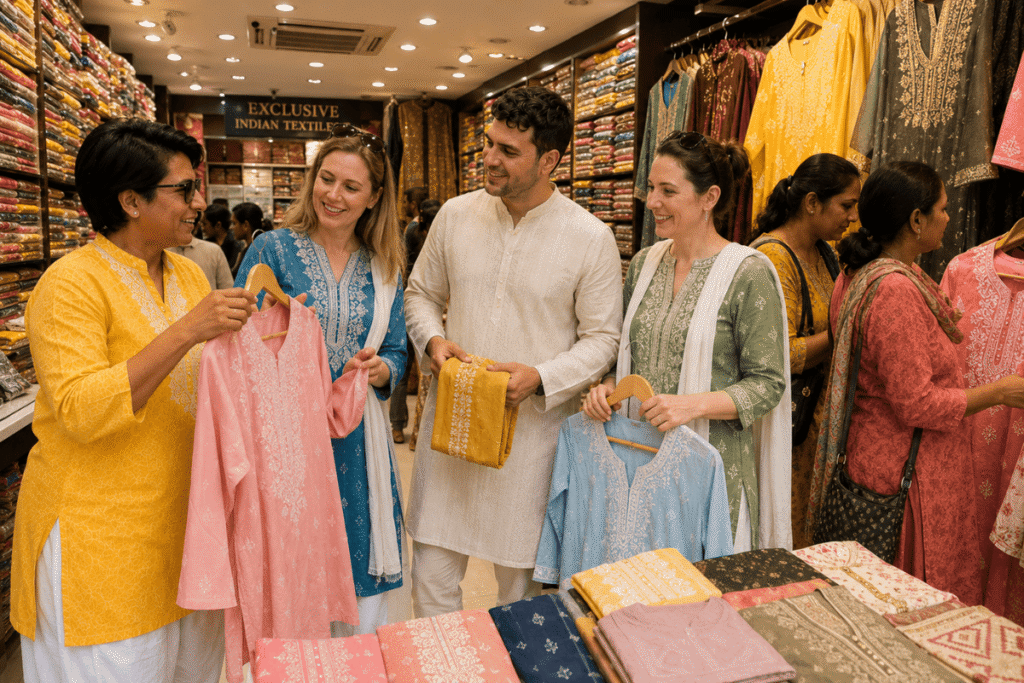
First Time in Delhi? Your local Delhi Tour Guide helps visitors choose comfortable and modest Indian clothing, making sightseeing and visits to temples, Gurudwaras, and heritage sites both respectful and enjoyable.
Delhi welcomes visitors from around the world, and comfortable clothing with good walking shoes is recommended for sightseeing. Men generally feel most comfortable wearing lightweight shirts or T-shirts with trousers, while women often prefer modest outfits such as dresses, trousers with a top, or the traditional Indian salwar kameez (salwar suit), especially during the warmer months. When visiting temples, mosques, Gurudwaras, and other spiritual places, modest clothing is appreciated, and shoes must usually be removed before entering. In some places, visitors are also asked to cover their heads. Your local Delhi tour guide will gladly help arrange a scarf, stole, or head covering where required, ensuring you can visit each sacred site respectfully and comfortably.
Weather
Delhi experiences four distinct seasons.
October to March offers pleasant temperatures and is considered the best time for sightseeing.
The summer months from April to June can be extremely hot, while July to September brings the refreshing monsoon season.
Is Delhi Safe for First-Time Visitors?
Many travellers ask this question before arriving.
Like London, Paris, New York, or any major international city, Delhi welcomes millions of visitors every year. Most tourists enjoy a safe and memorable holiday by following simple travel precautions.
Use registered taxis or trusted ride-sharing services, keep valuables secure, remain aware of your surroundings in crowded markets, and drink bottled water.
More importantly, approach Delhi with curiosity rather than fear.
One of the greatest surprises for many international visitors is the warmth of local people. Whether asking for directions, ordering food, or visiting a monument, you’ll often find friendly conversations waiting to happen.
Exploring with a knowledgeable local guide can also make your first visit more relaxed, helping you navigate the city confidently while discovering places and stories you might otherwise miss.
One Day or Two Days? Choosing the Right Delhi Experience
If you have only one day, focus on New Delhi’s iconic monuments, gardens, spiritual places, and colonial landmarks.
If your itinerary allows two days, spend the second day exploring Old Delhi’s fascinating heritage. Wander through Chandni Chowk, admire Jama Masjid, visit Red Fort, discover the Spice Market, and enjoy a traditional rickshaw ride through the bustling lanes of Shahjahanabad.
Together, these two experiences reveal the complete story of India’s capital—from the grandeur of the Mughal Empire to the energy of modern India.
Frequently Asked Questions
Is one day enough for Delhi?
Yes. A full day allows you to visit many of New Delhi’s highlights. However, two days provide a more relaxed experience and allow time to explore both New Delhi and Old Delhi.
What is the difference between Delhi and New Delhi?
Delhi is the entire metropolitan area, while New Delhi is the capital’s administrative district, designed during the British period.
Which language is spoken in Delhi?
Hindi is the primary language, while English is widely spoken in hotels, airports, restaurants, shopping centres, and tourist attractions.
What food should I try in Delhi?
Popular favourites include butter chicken, chole bhature, paneer tikka, samosas, jalebis, kebabs, masala chai, and mango lassi.
Do I need a local guide?
Although Delhi can be explored independently, a local guide helps you understand the city’s history, traditions, hidden gems, and fascinating stories, making your visit much more rewarding.
Looking for a Delhi Tour Guide?
If this is your first visit to Delhi, I hope this guide has answered many of your questions and helped you feel excited about exploring India’s remarkable capital.
Every traveller discovers a different Delhi.
Some fall in love with its magnificent monuments.
Others remember the vibrant markets, delicious street food, or peaceful spiritual places.
For many, however, the most lasting memories come from the people they meet and the stories they hear along the way.
Whether you’re planning to explore elegant New Delhi, wander through the timeless streets of Old Delhi, or simply experience the city through the eyes of a local, I hope your journey is filled with curiosity, meaningful encounters, and unforgettable moments.
Perhaps one day, our paths will cross, and I’ll have the pleasure of welcoming you to the city I proudly call home.
Welcome to Delhi—your adventure is just beginning.