Are you staying in Gurgaon and looking for a private 1-day Delhi tour? This guide is for you. For many business travelers, Gurugram is a fast-paced hub of modern skyscrapers, luxury hotels, and corporate boardrooms. While Cyber Hub serves as the energetic heartbeat of corporate Gurugram, the historic soul of India’s capital lies just across the border in Delhi.
When Annett and Simran arrived from Canada for a week of high-level meetings, their weekdays were packed. But by Sunday, they were ready to escape the conference rooms. Over coffee, they searched Google for a trusted Gurugram tour guide who could show them the authentic side of the capital.
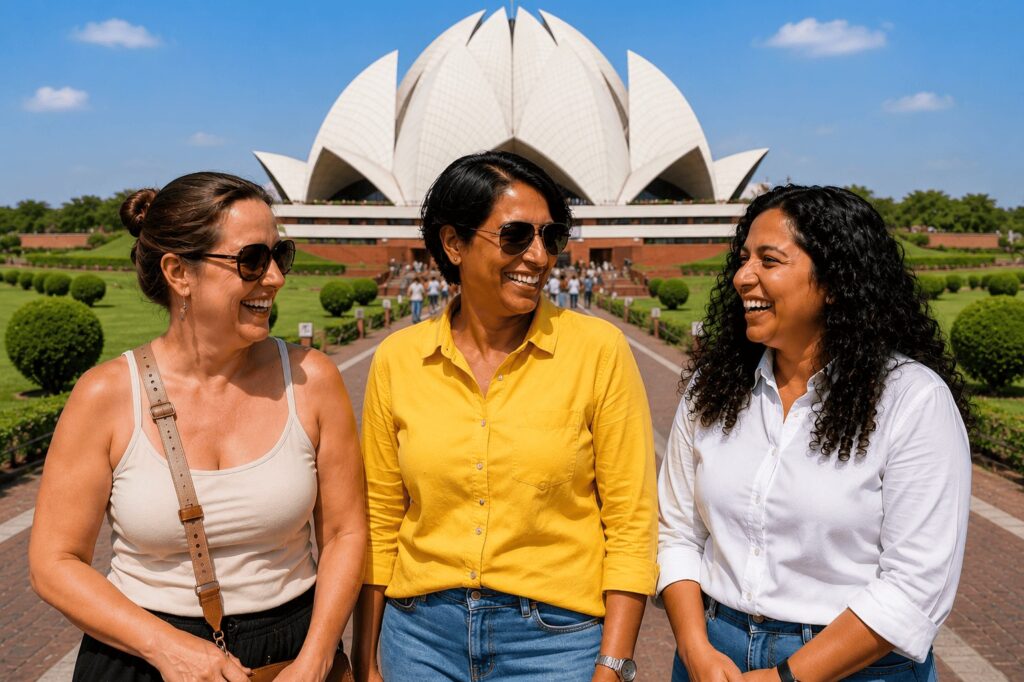
Exploring iconic Delhi landmarks on a private 1-day tour from Gurgaon. with Gurgaon Tour Guide
“Look, here’s Go with Harry. He offers a full private Delhi experience starting right from Gurgaon for just USD 95. Shall we book this?” Annett asked.
Simran nodded with a smile. That single click launched an unforgettable day trip from Cyber City straight into centuries of living history.
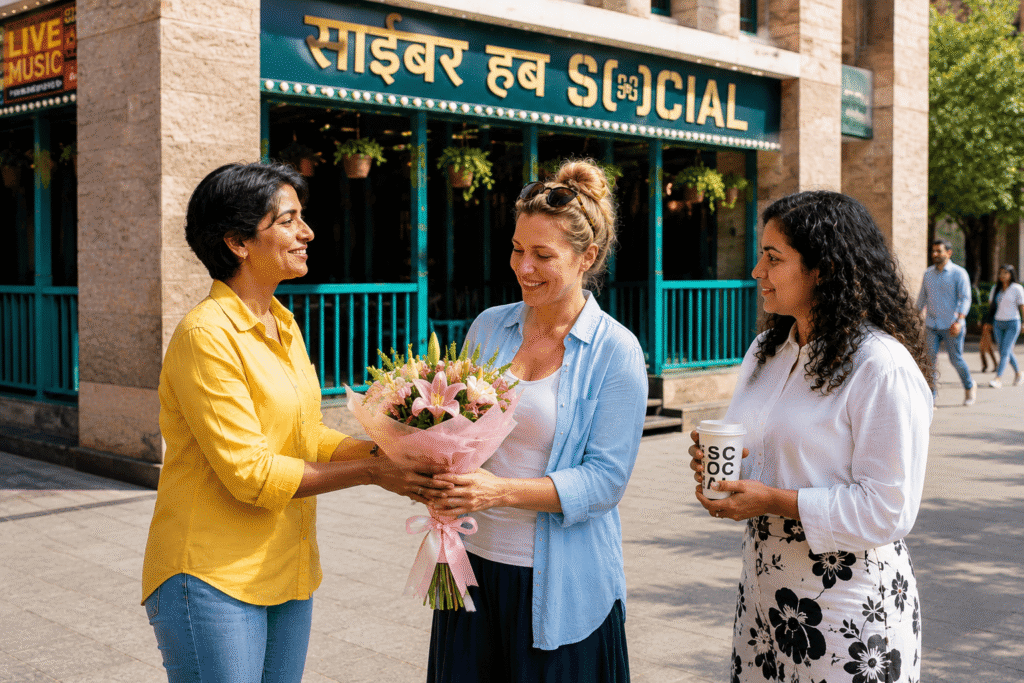
Meeting Your Gurgaon Tour Guide at Cyber Hub
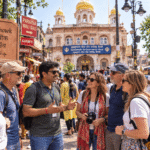
A warm welcome at Cyber Hub: Meeting our local Gurgaon tour guide before heading out for a day trip to Delhi.
Sunday morning brought clear blue skies. The meetup spot was Cyber Hub Social in Gurugram, where Harry greeted them with a warm smile. Waiting nearby was a air-conditioned Toyota Innova Crysta with a professional driver, ready for a full day of Delhi sightseeing.
As they drove through Ghitorni and Aya Nagar towards South Delhi, Harry began introducing the history of India’s capital—not by reciting dry dates from a textbook, but by painting vivid pictures of ancient sultans, Rajput warriors, and regional dynasties. See Location of Social Cyber Hub
Unlocking Qutub Minar History with a Gurgaon Tour Guide
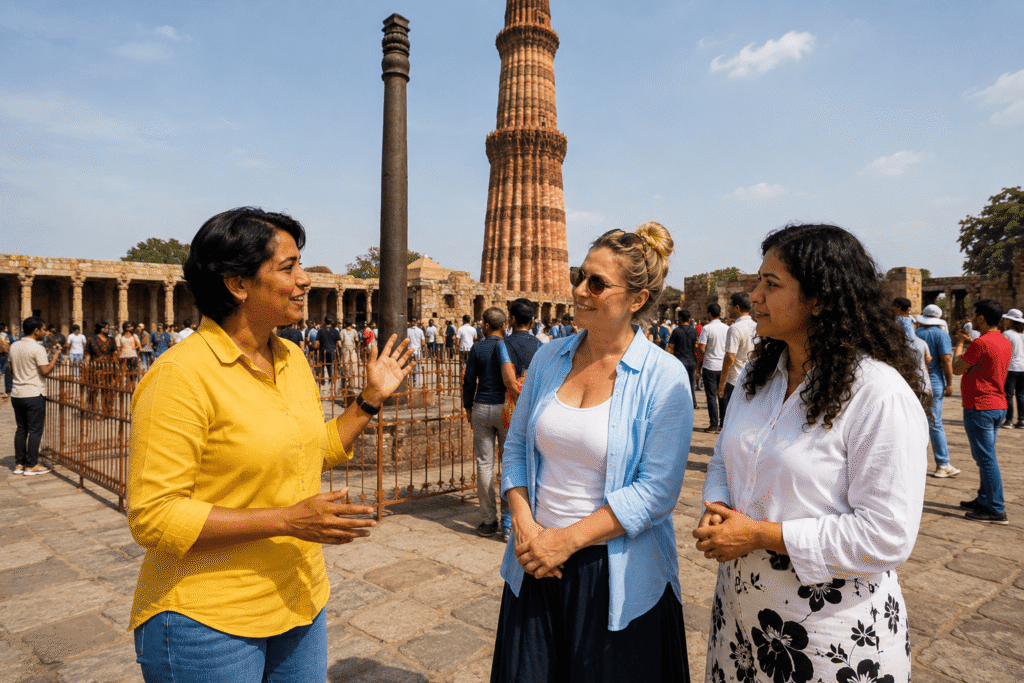
Bringing centuries of history to life under the sun! Exploring the magnificent Qutub Minar with smiles all around.
As our local Gurgaon tour guide, Harry pointed out the intricate Arabic calligraphy carved into the red sandstone and shared the fascinating history of Qutb-ud-din Aibak’s victory tower. For two executives accustomed to looking up at modern glass skyscrapers in Cyber City, gazing up at a 73-meter medieval monument offered a refreshing change of perspective—a moment of pure awe away from spreadsheets and schedules.
Stepping into the lush, open lawns of the Qutub Minar complex, the roar of Gurgaon’s corporate hustle instantly melted away. Standing beneath the world’s tallest brick minaret, Harry walked Annett and Simran through layers of 12th-century Afghan architecture and Rajput craftsmanship.
Humayun’s Tomb Relaxing & Storytelling with Gurgaon Tour Guide
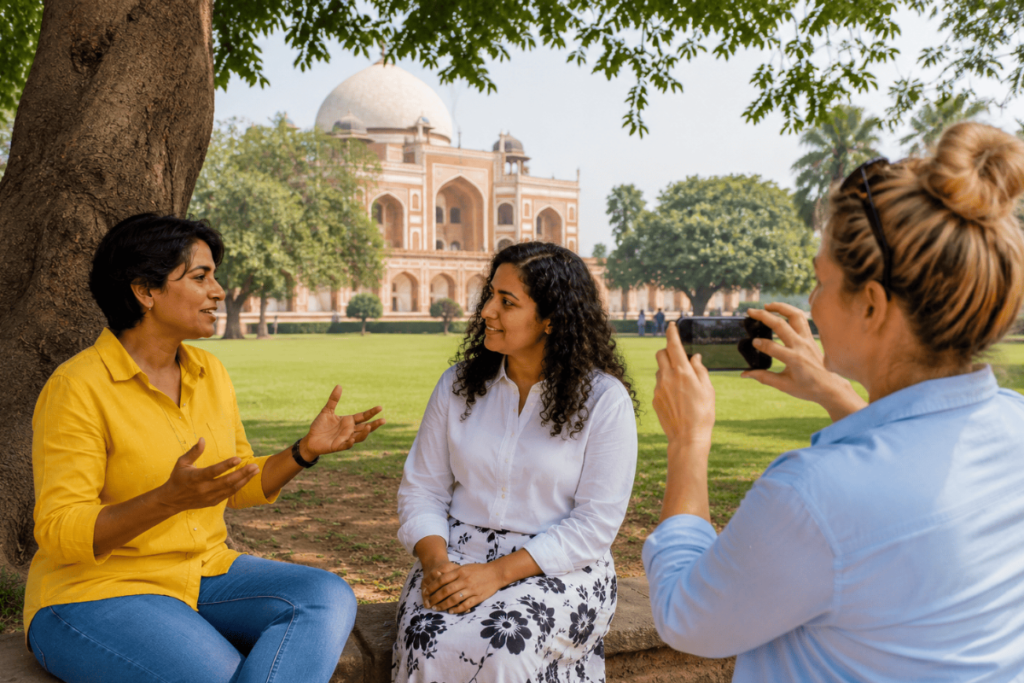
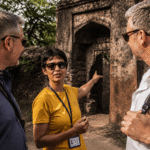
Capturing moments and uncovering history at Humayun’s Tomb with our favorite Gurgaon tour guide
Humayun’s Tomb Storytelling & Relaxing After Business Meetings Next, the journey brought us to the peaceful Charbagh gardens of Humayun’s Tomb—the Mughal masterpiece that inspired the Taj Mahal. After a busy week of back-to-back corporate meetings, the quiet symmetry of the water channels and shaded stone pathways felt like a breath of fresh air.
Here, Harry shifted into story mode, recounting the romantic history of Bega Begum, the emperor’s devoted wife who commissioned this grand tomb in the 16th century. Strolling along the archways in the soft afternoon light, Annett and Simran felt like free birds escaping the rigid confines of boardroom life. It wasn’t just a history lesson; it was a peaceful, romantic walk through time, proving that a private Delhi tour from Gurugram is the ultimate way for corporate travelers to unwind, recharge, and connect with India’s soul.
From Power Corridor to Local Joy: President’s House & India Gate with a Gurgaon Tour Guide
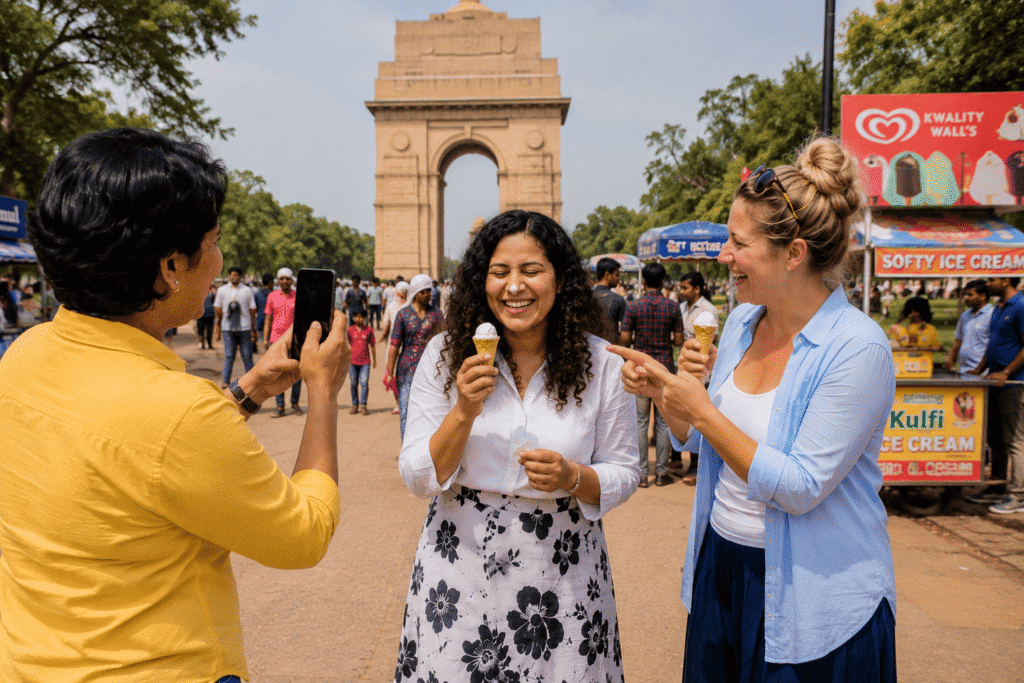
Ice cream, giggles, and iconic sights! Enjoying a sweet, candid moment in front of India Gate with Gurgaon Tour Guide.
Gliding down the grand boulevard of Kartavya Path, the contrast of Delhi’s living history came alive. Harry paused near the imposing gates of Rashtrapati Bhavan (President’s House), sharing how this magnificent 340-room sandstone palace—once the Viceroy’s House—stands as an architectural symbol of modern Indian democracy. Viewing the iconic dome against the open blue sky felt like stepping into the center of the nation’s civic power.
Just a short drive down the grand avenue brought us to India Gate, the grand 42-meter war memorial built to honor thousands of soldiers. But while the arch carries deep historical reverence, the lawns surrounding it were pulsing with pure local energy!
After days spent inside climate-controlled corporate offices in Gurugram, diving into the vibrant atmosphere at India Gate was pure magic. Harry guided Annett and Simran through the joyful, bustling crowd—buying sweet ice lollies from street vendors, watching children fly colorful kites, and posing for fun photos with friendly locals. From quiet, historical reflection to laughing and mingling with everyday Delhiites on the soft grass, it gave our busy business travelers a true, lighthearted taste of India’s warm hospitality before heading back to the hotel.
A Moment of Pure Serenity: Finding Peace at Gurudwara Bangla Sahib
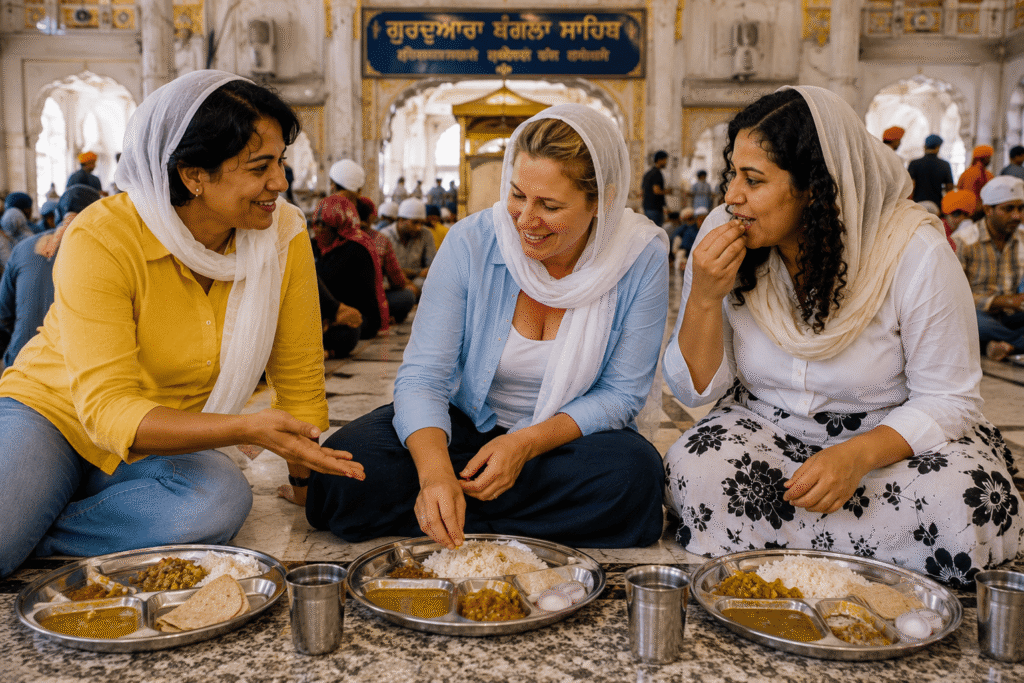
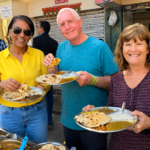
Experiencing true warmth and hospitality: Sitting together for a peaceful Langar meal at Gurudwara Bangla Sahib.
Walking past the soothing waters of the Sarovar (holy pond), Annett and Simran caught a glimpse of the Langar—the vast community kitchen serving free, hot meals to thousands of visitors every day, regardless of background or status. Watching volunteers cook with unconditional love and joy gave our travelers a profound, heartfelt connection to Delhi’s spirit of selfless service before continuing our journey.
Leaving the lively energy of India Gate behind, Harry led the way toGurudwara Bangla Sahib, one of Delhi’s most sacred Sikh shrines. After covering their heads with vibrant scarves and stepping through the cooling water pool at the entrance, the frantic pace of the corporate week completely vanished.
Inside, the soft, rhythmic chanting of hymns echoed around the shimmering golden dome, creating an atmosphere of deep tranquility. Harry shared the beautiful story of Guru Har Krishan Sahib, who stayed at this palace in the 17th century to tend to those suffering from illness, laying the foundation for the shrine’s legend of healing.
Timeless Majesty: Red Fort History with a Local Gurgaon Tour Guide
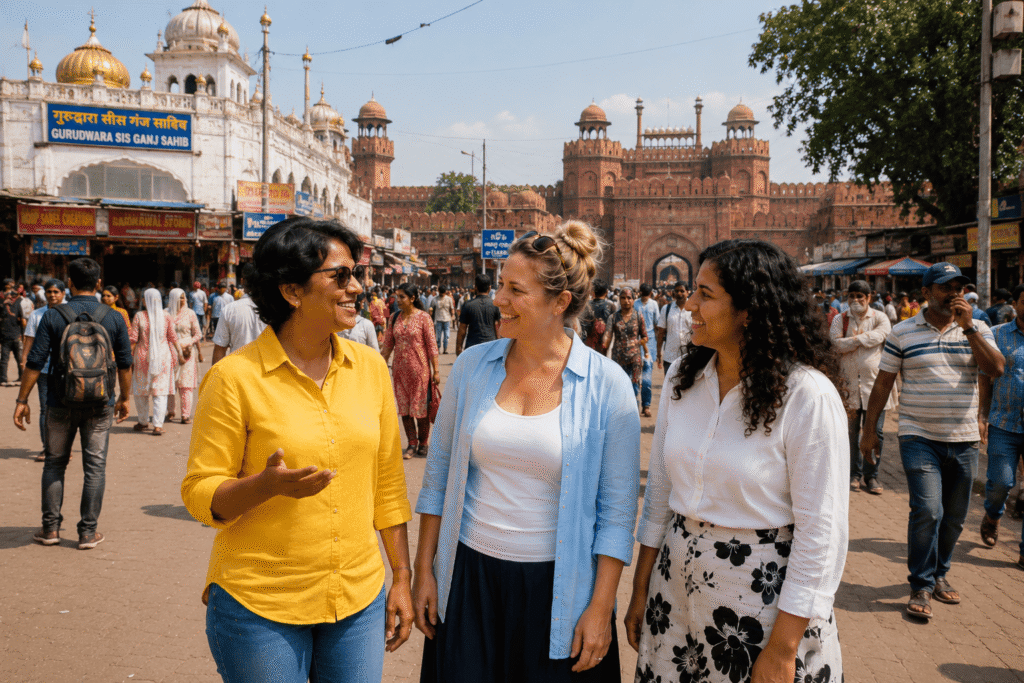
Where every corner tells a tale—soaking in the energy, heritage, and charm of Old Delhi with Gurgaon Tour Guide
Crossing into Old Delhi, the modern world fell away as the massive, soaring red sandstone walls of the Red Fort(Lal Qila) came into view. As our local Gurgaon tour guide, Harry stood with Annett and Simran at the historic Lahori Gate, bringing 17th-century Mughal empire grandeur back to life.
He shared stories of Emperor Shah Jahan, who constructed this iconic fortress as the seat of royal power. Gazing up at the colossal ramparts where India’s Prime Minister hoists the national flag every Independence Day, our corporate guests were captivated by how centuries of royal history still shape the nation’s modern identity today.
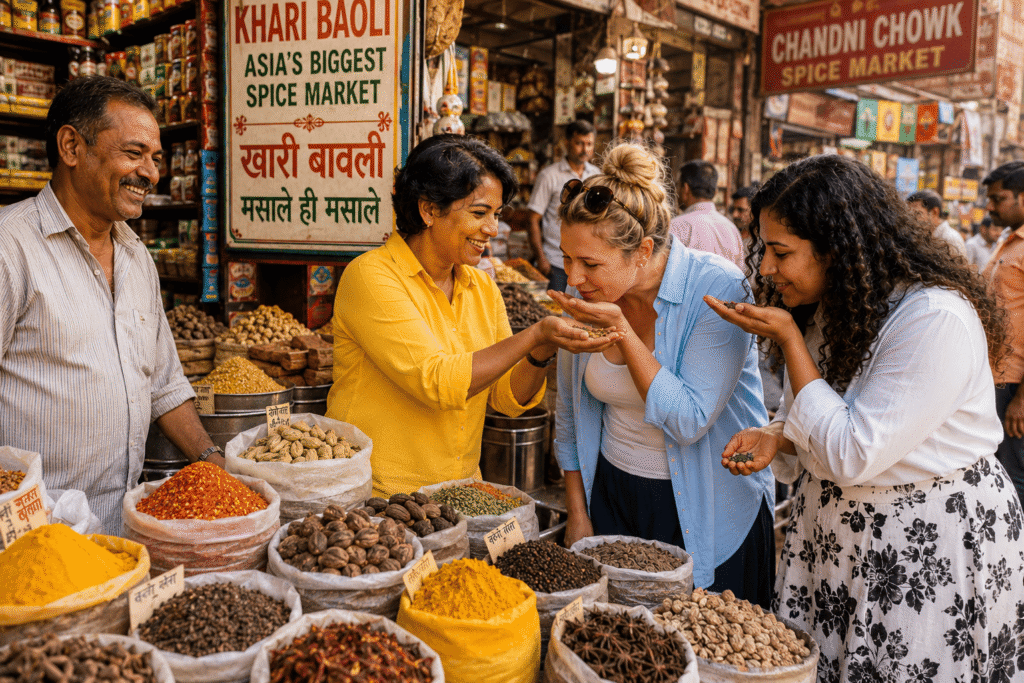
Spices, smiles, and rich aromas—soaking in the vibrant flavors of Khari Baoli with our local guide!
From imperial history, Harry plunged the story straight into the vibrant heart of Chandni Chowk. The air instantly filled with the irresistible aromas of roasting cumin, dried chilies, and sweet cardamom as we arrived at Khari Baoli—Asia’s largest wholesale spice market.
For business travelers used to pristine office buildings, walking through these bustling 17th-century trade routes was a thrilling sensory reset. Guided by a local expert who knew every secret alley, Annett and Simran sampled freshly roasted nuts, smelled rare aromatic spices, and shared laughs with generational spice merchants who have run their shops for centuries. See Location of Khari Baoli Google Map
Thrills in the Haveli Lanes: Private Cycle Rickshaw Ride Through Old Delhi
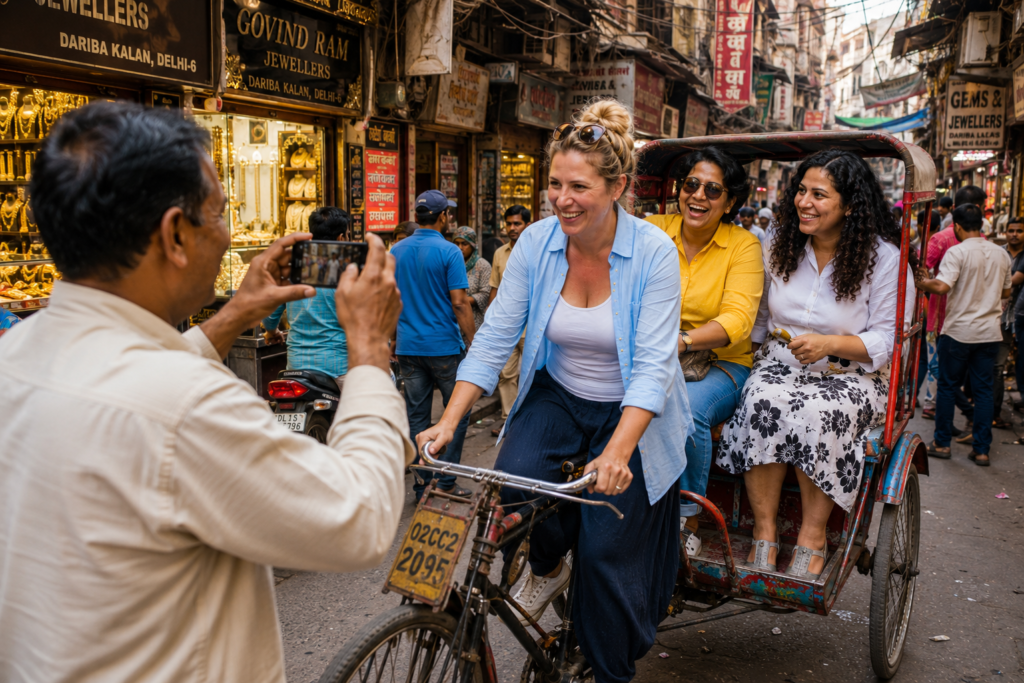
Taking the wheel—or pedals! A fun, candid moment navigating the silver and gold jewelry lanes of Dariba Kalan.
To top off the Old Delhi experience, Harry arranged a thrilling cycle rickshaw tour through the narrow, maze-like gullies (lanes) where no cars could ever fit. Swooping past tangled overhead wires, hidden havelis (historic mansions), and sweet shops sizzling with hot jalebis, the rickshaw ride was pure adrenaline and fun.
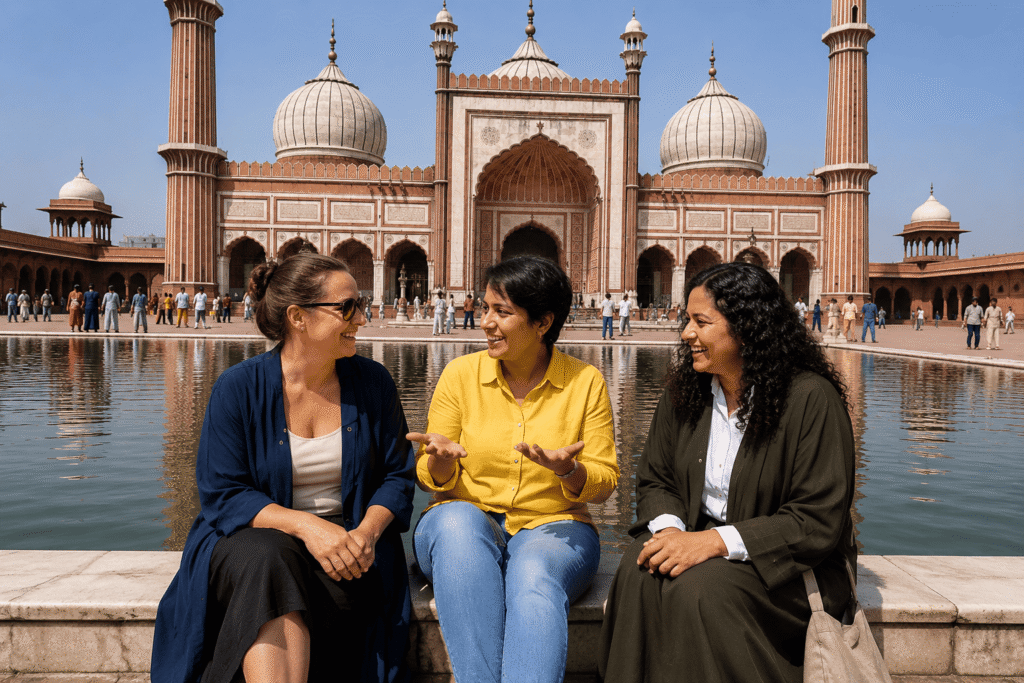
A quiet sanctuary in the heart of Old Delhi: Sitting beside the tranquil pool at Jama Masjid with Gurgaon Tour Guide
Gliding past ancient doorways and waving at cheerful locals, Annett and Simran laughed like kids on an adventure. It proved to be the ultimate highlight of their 1-day Delhi sightseeing tour from Gurgaon—a wild, colorful, unforgettable ride straight through the living soul of Old Delhi!
Stopping at Jama Masjid, India’s vast 1656 congregational mosque, the group sat quietly by the central pool, appreciating the quiet sanctuary inside the heart of Old Delhi.
Mahatma Gandhi & Hidden Stepwells on Returning to Gurugaon
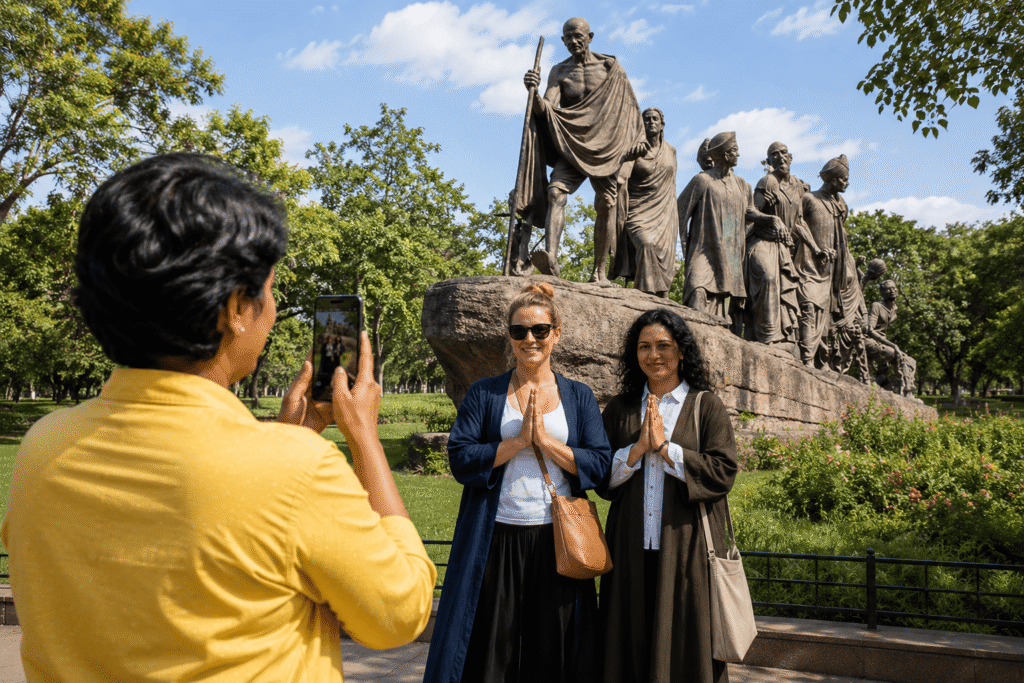
A silent tribute to peace with Gurgaon Tour Guide: Pausing at Mahatma Gandhi’s historic Salt March memorial in Delhi.
Before heading back to Gurugram, Harry added one final hidden gem: Agrasen Ki Baoli, a 14th-century stepwell tucked quietly among modern high-rises. Descending the ancient stone steps offered a quiet look into medieval rainwater harvesting engineering.
The drive back included a stop at the Mahatma Gandhi Salt March sculpture along Sardar Patel Marg, capping off a full-spectrum day trip from ancient sultans to modern Indian history. See Location 11 Murti on Google Maps
By the time the Innova pulled back into Cyber Hub, the trip had felt less like an official excursion and more like exploring with a knowledgeable local friend.
As they said their goodbyes, Simran smiled and asked one final question:
“So, Harry… are you married?”
Harry paused, smiled his familiar smile, and replied:
“Yes… and No.”
Leaving them with a laugh and a playful mystery, it was the perfect close to an unforgettable Delhi day trip from Gurgaon.
Official Website:Incredible India Top Sites in Delhi
Many thanks to our guide Junaid for showing all the main sites in Delhi and Yashwant for his professionalism and patience through the Delhi traffic jam 😎
Nikhil guide
During our stay in Delhi, we had a wonderful guide who was also very responsible and reliable.
He took us to see many special and interesting places and explained everything about each place we visited. He took care of everything we asked for and helped us understand the local customs and how to behave and get around properly.
We really enjoyed spending time with him. He was always welcoming, cheerful, kind, and friendly.
The shops he took us to were also of a high standard, with good-quality products, reliable service, and a sense of trust and responsibility.
So, if you are a foreign visitor coming to Delhi, I highly recommend having him as your guide! by
Harry
We had an amazing time exploring New Delhi with NIKHIL. He is knowledgeable, accommodating and friendly throughout our trip. Itinerary was organized and we were able to visit major attractions of the city comfortably.
Junaid was fantastic at looking after us & always looking out for our best interests, super informative & full of historical facts which was made very easy to understand, would strongly recommend him as a guide for anyone new to these areas. Our driver for the day was Rahul who not only got us to every place within any time frames but did it in comfort & made us feel not only safe but comfortable as well with air conditioning, drinds & snacks. All round a great day out made by a great team working towards oue best experience, thankyou.
**Amazing Old Delhi Experience with Nikhil!**
Hi Harry,
We had an incredible day exploring Old Delhi with Mr. Nikhil as our tour guide. His passion for Delhi's history was truly admirable, and his storytelling brought the city to life. Every monument and every street had an interesting story behind it.
We visited the Red Fort, Jama Masjid, walked through the vibrant lanes of Chandni Chowk, and explored the famous Spice Market. One of the highlights was tasting delicious local street food, which Nikhil recommended and explained along the way—it was absolutely awesome!
Thank you, Harry, for organizing such a wonderful experience. We highly recommend Team Go With Harry to anyone looking for a knowledgeable, friendly, and professional guide in Delhi.
Thank you once again!
Harry is a brilliant guide. He speaks from the heart and shares his knowledge and passion for India. Often a guide will overwhelm you with names and dates as they trot you through the venues. But Harry has mastered the art of preparing you to enjoy the setting and then steps away, leaving you alone to take it in on your own terms. It makes the experience memorable and transformative.
Amazing 2 days in Delhi. Came with my family from England.
Harry is Very knowledgeable. Time with a true Delhi native whose stories make you feel like Delhi history will not be forgotten. Walking through Lodhi Gardens felt like walking with him when he was a child with only happy memories.
Thanks Harry for 2 days of wonderful memories. It felt like we were spending time with a very close friend. Thanks for making us feel comfortable and safe. Looking forward to meeting you again on our next visit.
My husband and I spent a wonderful day touring with Harry yesterday. He is very knowledgeable about the sights and people of India and is enthusiastic about sharing the knowledge with others. This was our first time in India and the day with Harry gave us amazing insight into its ancient, complex and fascinating culture.
He picked us up with a car and driver at our hotel. We spent several hours at the huge National Museum where Harry used the collection there to illustrate the history of India. We had lunch at a local restaurant and afterwards visited the very interesting Qutub Minar complex in South Delhi. Then we spent the rest of the afternoon at the Mehrauli Archeological Park where we visited several sites.
Throughout the day Harry was a storyteller, bringing to life the history of India. He was a considerate and perceptive guide. I would strongly recommend his services to all visitors!
I recently joined a Delhi city tour alongside a wonderful group of international travelers, and it turned out to be an unforgettable experience. Our guide, Harry, had an incredible way of sharing historical insights and local anecdotes that made each site come alive. Looking forward to exploring more hidden corners of Delhi—especially Old Delhi—with Harry again soon!
I was with Harry two days on tour through Delhi, it was amazing! He has a great knowledge about the town, about the history and about the religions which are here. All people who are interested in such things should book him. He gave a lot of information which was really helpful.
Thanks a lot to Harry. I will book him again when I come back to India.
We were paired with Harry through Bout India, our tour company. In Delhi, we loved working with Harry. He was knowledgeable, experienced, and catered our time in Delhi to our every wish. One particular highlight was eating some delicious paranthas that Harry seemed to conjure from thin air amid the souk-like maze of Chowdi Chouk. Great day exploring the Red Fort, Jama Masjid, and more!
I had the opportunity to visit New Delhi for two days and Harry and Indy were excellent at providing timely itinerary visits, they both executed a very professional visit.
Harry provided a very comfortable mini SUV to pick me up at the airport, and a comprehensive city tour! He went above and beyond when I needed to buy a head torch which we were not able to find easily … he was able to find out in the 2nd day and return back to my hotel to gift it to me!
Feeling gratitude for a great visit thanks to Harry!
Indu was my guide in the 2nd date which we helping when attending female sections in religious sites - very knowledgeable about the sites visited!
Harry our tour guide was excellent
He was well informed
He was witty and well presented
All our tour guides booked through
Travel local have been excellent
Many thanks Nicola and Tony
Howdon
Excellent experience. Great driver made us feel very safe. Our guide Amil was very informative and helpful. Our vehicle was next level luxury with plush leather heated massage seats. We had a very full wonderful day.
Thank you Anil, we had a wonderful day with you today.
Anil made every effort to be so informative and interesting. We made several extra stops which made our day even better. Thank you Anil !
We recently had a trip to Delhi with Harry as our tour guide and it was an overall amazing experience. Harry showed us around all the magnificent sights of Old Delhi, from Humayan's Tomb and Red Fort, to the bustling excitement of Connaught Place and Janpath markets. His in-depth knowledge and engaging explanations about the history and significance of each of these places really enhanced our trip. The best part was Harry's passion for his city, which was infectious.
A truly memorable time with Harry and we highly recommend him!
We spent 3 days with Harry as our guide in Delhi. Our experience was much enriched due to Harry's knowledge, life experiences, and his thoughtfulness. He breathed life into the information we had researched and read about before arriving in Delhi.
Excellent Tour Guide!
Harry's guided tour of Delhi's Sufi shrines was a truly soulful and peaceful experience. His deep knowledge and insightful commentary brought the history and spirituality of these sacred sites to life. I highly recommend Harry as a tour guide for anyone interested in exploring Delhi's rich cultural heritage.
I have had the pleasure of being looked after by Harry on an organized group tour and, more recently, on a private tour. Harry was an outstanding guide for our 10 day visit to Delhi, Agra, Jaipur and Udaipur. His English is exceptional as is his knowledge of history, religion and political background of the sites visited ensured we appreciated what we saw. He was open to meeting our expectations to include additional cultural sites and experiences. We left India 🇮🇳 feeling we had truly “seen” the beautiful country it is. I wouldn’t hesitate in recommending him.
Harry Ji is such a passionate and knowledgeable guide. He is well spoken and took time to explain and answer any questions I had. From the time he picked me up from the airport I knew I was in good hands. Thank you so much, Harry Ji for making my visit to Delhi extra special by your warmth, charm and humour. I learned so much from you. Looking forward to visiting again in the near future. Delhi dil mein bas gayi hai aap ki wajah se 🩷🩷🩷
Harry was truly a phenomenal tour guide. He's friendly, knowledgeable and trustworthy. From the first moment we met this morning through the end of the tour, he was eager to show us all of Delhi. He gave great insight into everywhere we went, including spots we were driving by that perhaps others may ignore. We shared a lot of laughs along the way as well. We're quite thankful to have met him and are so thankful to have been introduced to India in such a wonderful way. 10 stars!
Harry is the best tour guide around! He is so knowledgeable is all of the Delhi’s long and beautiful history! He really caters to your needs and delivers what you want. Would recommend Harry to anyone visiting Delhi
We had a great time with Harry during our tour in Delhi. Harry was knowledgeable, personable and we really enjoyed his company. Harry took an effort to modify the itinerary to meet our specific needs, which made our experience even better. During our tour we had an opportunity to visit a local market and sample local cuisine, which was a great opportunity to learn about a vibrant part of North Indian culture. We also enjoyed spending time together at the red fort and saw a historical light show that we highly recommend to anyone visiting Delhi. Overall we had a great time and could not have asked for more. Harry is really passionate about his profession and is a perfect guide for the city.
Our small group of 20-30 year olds from Australia had Harry for our 3 days in New Delhi as part of our Bout India tour and he was an absolute gem!
He made us feel very welcome to the city and shared an immense amount of information about its history, culture, and lifestyle.
Our highlights were him taking us to many hidden food gems around the city (chai, safe DELICIOUS street food, lots of somosas and much more), and him introducing us to the Holi festival customs and how to spread the colour! He was also really happy to adapt his tour based on your requests, you only need to ask!
Thanks again Harry it was a whirlwind 3 days!
My daughter and I visited Delhi in March 2024 and had the pleasure of having Harry Singh as our tour guide for the duration of our stay.
Harry provided exceptional service, was very knowledgeable in regard to every facet of this wonderful city.
And - he was good company.
Highly recommended
We had a wonderful tour of Delhi with Harry. He is a very knowledgeable guide and answered all my husbands numerous questions about the history, religions, and politics of India. We learned a lot and saw the amazing sights of Delhi. We enjoyed a rickshaw ride through the old part of Delhi and a tuktuk ride through the busy streets. It was a memorable day!
Embarking on a stroll through Delhi's Rose Garden with Harry was an absolute delight. Harry not only proved to be a wonderful companion but also exhibited a remarkable ability to engage in insightful conversations on politics, religion, and history. Her knack for storytelling made the walk a truly enriching experience, turning each step into a journey through captivating narratives. I am grateful for the opportunity to explore with such an informed and engaging guide, and my walk with Harry remains a cherished memory of a delightful day in Delhi.
Harry is a truly outstanding Delhi guide, one we cannot recommend enough! Expertise, wisdom, excitement, and love of beautiful multi-faceted Delhi combines with insightful historical storytelling, wit, and levity... what's not to love?? Go with Harry to experience, learn, and have a ball. Harry's time is a gift. Gretchen & Glenn, USA ❤️
We had a wonderful 2 day tour with Harry during October. It included a drive through New Delhi - taking in all the sights and historic places. He helped to find the World Cup cricket box office to pick up tickets. Recommended and booked lunch for us.
He was extremely knowledgeable about India and its various transformations across the centuries. Gave us insights to the current political climate and the changes since independence. Influence of Gandhi is still all around.
Harry was very friendly and we would highly recommend him.
Rarely you come across a guide who is truly in love with his job. For Harry, being a tour guide is just not a profession but I would rather say, it is his passion. Harry was very informative and patient with us. He would crack us up with his jokes and at the same time give us an insight into the history of the monuments and the city. He would insist on spending time at each site and soak in the beauty and the splendor of the monuments and its surroundings before we moved on. Harry made our September - October 2023 trip to Delhi memorable.
What Happy Travelers Say About Their Day Trip
1. Corporate Executive from Canada
⭐⭐⭐⭐⭐
“Best 1-Day Escape from Cyber City!”
“I was in Gurgaon for a week of corporate meetings near Cyber Hub and had only one Sunday free before flying back to Toronto. Booking Harry as our Gurugram tour guide was the best decision! He picked us up directly from our hotel, brought Old Delhi’s history to life, and made the entire 1-day Delhi sightseeing tour smooth and safe. Flying through the narrow lanes of Chandni Chowk on a rickshaw was unforgettable!”
— Annett M., Toronto, Canada
2. Business Traveler from the USA
⭐⭐⭐⭐⭐
“Top-Notch Private Delhi Tour from Gurgaon”
“If you are staying in Gurgaon and looking for a private 1-day Delhi tour, look no further. Harry is an incredible local guide—knowledgeable, punctual, and very attentive. We went from the quiet gardens of Humayun’s Tomb to the peaceful grounds of Bangla Sahib without feeling rushed. It was the perfect break from work!”
— David L., Chicago, USA
3. Solo Travel Executive from the UK
⭐⭐⭐⭐⭐
“Hassle-Free Sightseeing for Gurgaon Visitors”
“Navigating Delhi from Gurgaon can feel overwhelming, but Harry made it completely stress-free. As a local Gurgaon tour guide, he knows all the best spots, timing, and local street eats. The spice market tour at Khari Baoli and seeing Qutub Minar were major highlights. Highly recommended for any business traveler with a day off!”