There are many historical monuments in Delhi, but few feel as mysterious as Feroz Shah Kotla Fort.
During the day, it appears to be a collection of ancient ruins, mosques, courtyards and crumbling walls. But as you walk deeper inside, the atmosphere changes. Delhi’s noise seems to fade, the shadows grow darker, incense hangs in the air, and faded letters cover the walls.
The fort was built in the 14th century by Sultan Feroz Shah Tughlaq. Today, however, it is equally famous for the belief that jinns inhabit its ancient ruins.
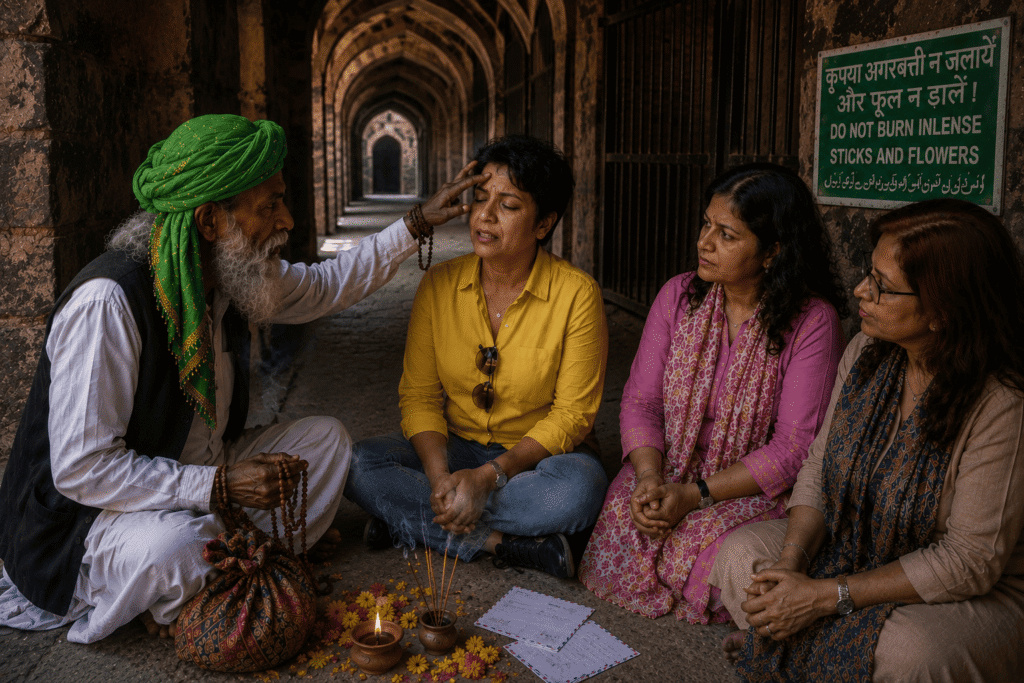
Visitors come with petitions, photographs and personal prayers. Some believe the jinns listen to their problems and help fulfil sincere wishes.
The most mysterious part of the story is that, according to local belief, the jinns hold their own court at midnight.
Whether you believe the legend or not, the Feroz Shah Kotla Fort Haunted Story makes this historic monument an unforgettable place to explore.
Entering Feroz Shah Kotla: Where History Meets Mystery
From outside, the fort appears surrounded by the ordinary movement of Delhi. Traffic passes, people walk by and the modern city continues its daily routine.
Then you enter.
The massive ruins rise around you. Old stone walls create deep shadows, while narrow passages lead towards courtyards and forgotten corners. Above the complex stands the enormous Ashoka Pillar, like a silent watchman from another age.
As you walk further, you notice that the walls are covered not only with ancient stone but also with letters, photographs and petitions.
Some visitors have come to ask for help. Others have come to pray. Many believe they are leaving their problems with supernatural beings who live inside the fort.
This is where the history of Feroz Shah Kotla begins to merge with its mysterious reputation.
Feroz Shah Kotla Fort: A 14th-Century Delhi Mystery
Feroz Shah Kotla was built in 1354 by Sultan Feroz Shah Tughlaq, who ruled Delhi from 1351 to 1384.
The fort formed part of Firozabad, one of the cities established by the Tughlaq ruler. Its location beside the Yamuna was important because water was a major concern in medieval Delhi.
Feroz Shah Tughlaq invested in city planning, gardens, roads, buildings and water systems. The fortified complex once contained palaces, mosques, gardens and other royal structures.
Kings walked through these courtyards. Royal families lived here. Prayers were offered in the mosque, and Firozabad was once a flourishing centre of power.
Today, much of that world has disappeared. Only fragments remain, and those fragments have become the setting for one of Delhi’s strangest legends.
If you enjoy exploring lesser-known stories of Delhi, aDelhi Tour Companioncan help you discover the city’s medieval heritage through the people, legends and events behind its monuments.
Why Is Feroz Shah Kotla Considered Haunted?
The reputation of Feroz Shah Kotla is not based on one single ghost story. It is a collection of beliefs that have developed around the fort over many years.
According to local tradition, jinns live within the ruins.
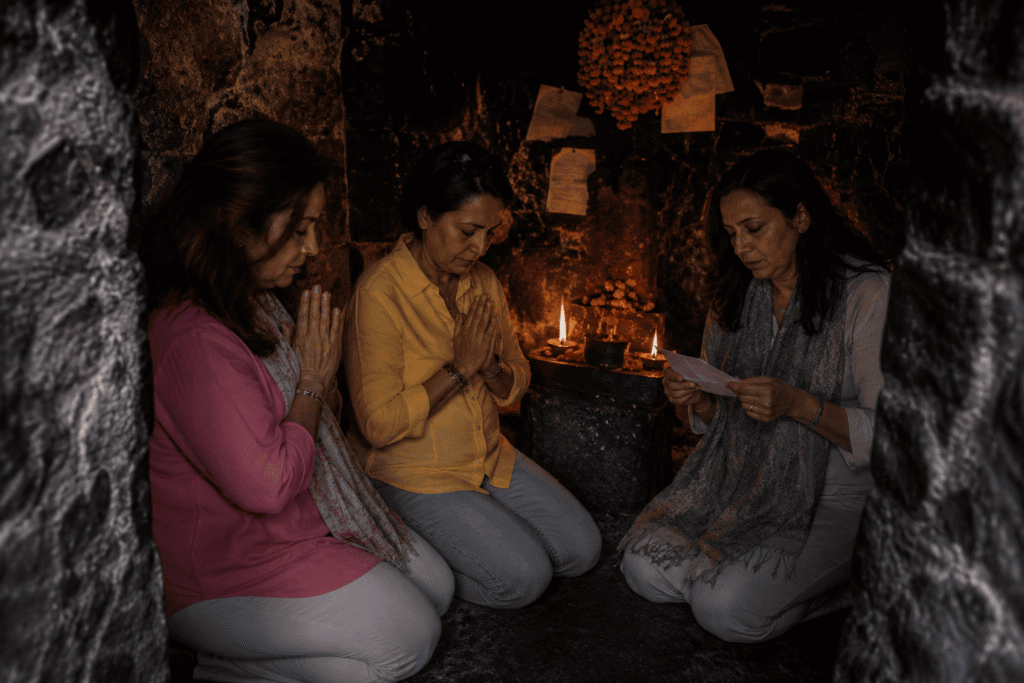
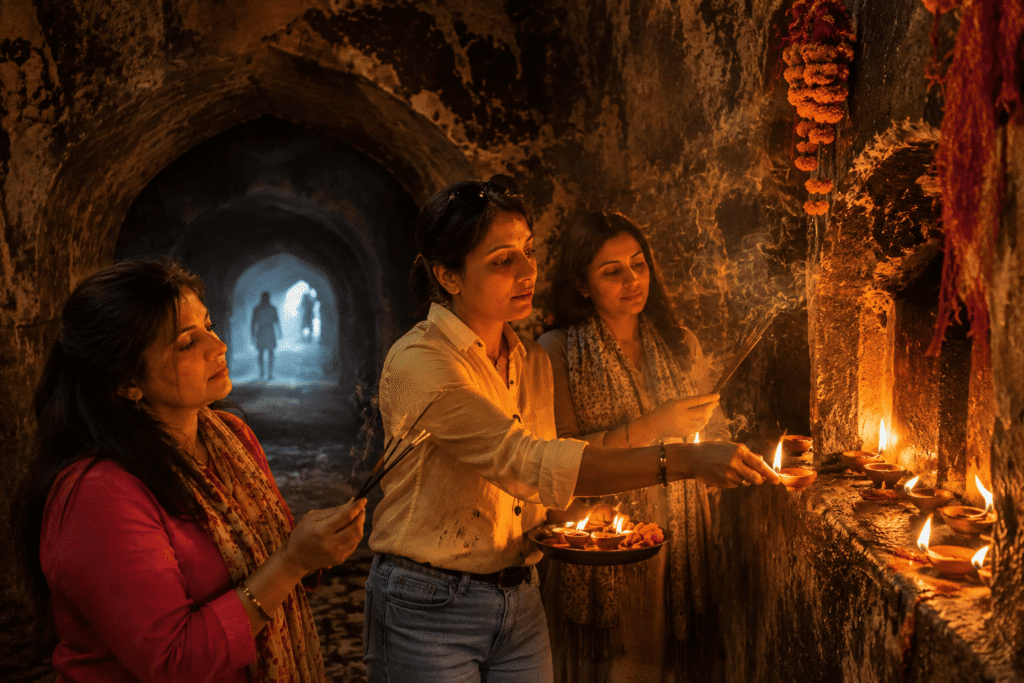
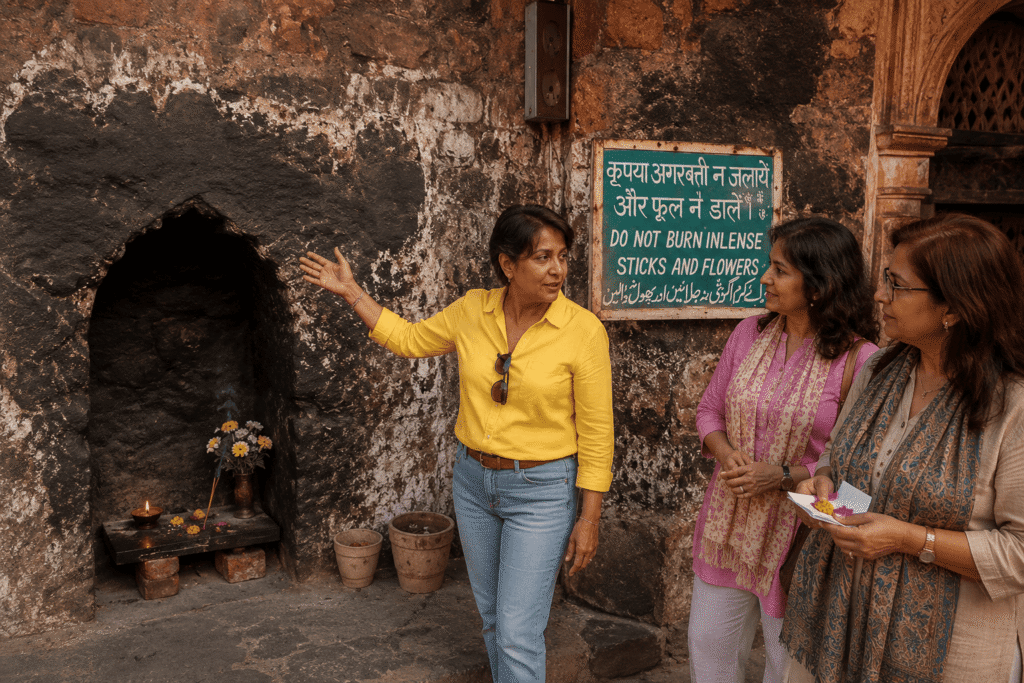
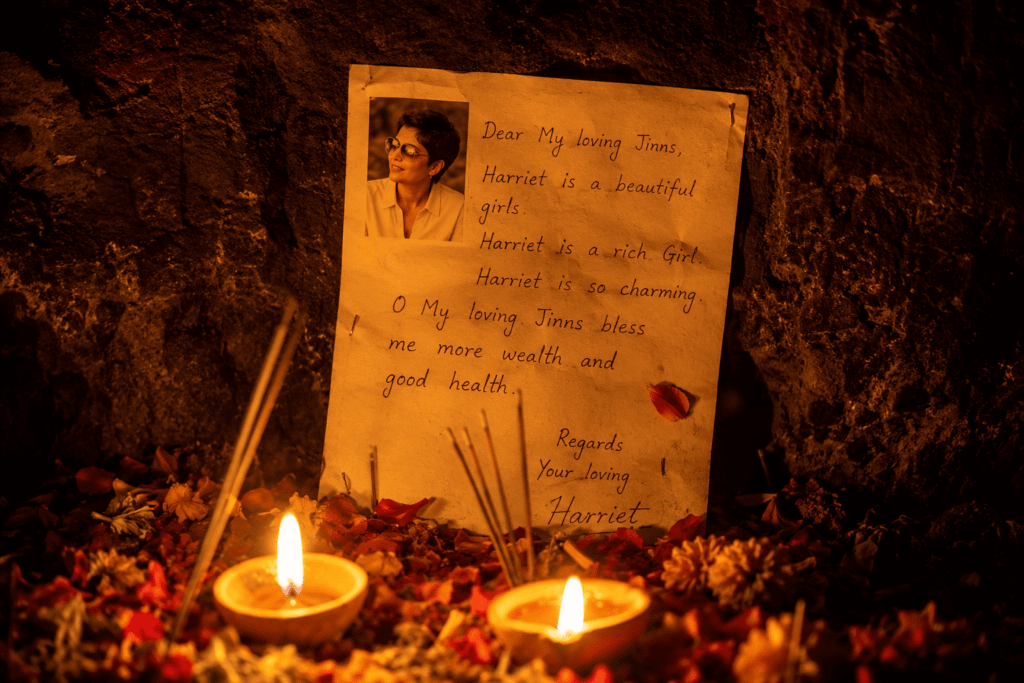
People visit the fort to write petitions explaining their problems and asking for help. Some leave letters, photographs, candles, incense and other offerings.
Thursday is considered especially important. Believers say the jinns are more active on this day, making the fort busy with people seeking protection, answers or the fulfilment of wishes.
While many historic monuments become quiet after sunset, Feroz Shah Kotla has a different reputation. Its ruins are believed to remain occupied—not by kings or soldiers, but by invisible beings.
The Jinns of Feroz Shah Kotla
The idea of jinns is deeply connected with Islamic tradition. According to Islamic belief, jinns are supernatural beings created from smokeless fire. Like humans, they are believed to have the ability to choose between good and evil.
The legends surrounding Feroz Shah Kotla go further. Stories claim that some jinns have lived for extraordinarily long periods and possess supernatural abilities. They are said to move quickly, change their appearance and interact with humans.
Some legends also describe powerful or dangerous jinns hidden beneath the mosque and underground sections of the fort.
These are folklore and beliefs rather than historically proven events, but they remain an important part of the monument’s atmosphere. Among ancient ruins, dark chambers and centuries-old stones, it is easy to understand why such stories have survived.
The Mysterious Jinn Ministry
Perhaps the strangest legend associated with Feroz Shah Kotla is the story of a jinn ministry.
According to believers, the supernatural world inside the fort operates almost like a government office. Different jinns are believed to deal with different problems.
Visitors write down their troubles in petition letters and provide their names, addresses and sometimes photographs. The petitions are then left inside the ruins.
A government office normally has files, applications and departments. Here, according to the legend, the ancient ruins have their own invisible administration—without counters, clerks or opening hours.
There are only old stone walls and people waiting for an answer.
The Midnight Court of the Jinns
According to the legend, the jinns hold court at midnight. It is said that petitions are discussed before the wishes of sincere visitors are considered.
Imagine the fort after dark. The city outside has gone quiet, the ancient stones are barely visible, and somewhere inside the ruins an invisible court is meeting.
Nobody can prove that such a court exists. But that uncertainty is what makes the story so fascinating.
You are left with one question:
What if the stories are true?
The Story of Ludo Shah and the Jinns
According to stories associated with the site, the modern wave of belief became particularly visible after the Emergency in 1977.
An elderly man named Ludo Shah is said to have moved to Feroz Shah Kotla and told followers about a jinn who could grant wishes.
As word spread, more people began visiting the ruins. The fort slowly developed a new identity. It was no longer only an archaeological monument; it became a place where people came to pray, leave petitions and seek solutions to personal problems.
Thursday became especially important, and visitors began arriving with letters, candles, incense, sheets and other offerings.
The ancient fort became a place where people brought their most private hopes and fears.
The Letters on the Walls
The letters are one of the most atmospheric parts of a visit to Feroz Shah Kotla.
As you move through the ruins, you may notice faded photocopies, handwritten petitions and passport-sized photographs attached to the ancient stone.
The contrast is striking. Fourteenth-century architecture surrounds modern pieces of paper, personal problems and supernatural beliefs.
Some petitions are simple, while others are deeply personal. For the people who leave them behind, these are not decorations. They represent genuine hopes and prayers.
Standing among the ruins, you may wonder what the visitors were asking for, what they feared and whether their wishes came true.
No one can answer those questions.
Lath Wale Baba and the Ashoka Pillar
Lath Wale Baba is believed by devotees to be one of the most important jinns associated with the fort.
The name is connected with the Ashoka Pillar, with “lath” referring to the pillar. According to the legend, Lath Wale Baba resides around it, and visitors leave petitions nearby in the hope that their wishes will reach him.
Some stories even claim that touching the pillar can help fulfil a wish.
Whether you accept the legend or not, the pillar itself is extraordinary.
The Ancient Ashoka Pillar
The mysterious reputation of the fort should not overshadow the remarkable history of the Ashoka Pillar.
The sandstone pillar is one of the most impressive features of the complex. Feroz Shah Tughlaq had the ancient monument transported and installed at Feroz Shah Kotla. A special structure was built to help raise it into position.
Standing beneath it today, you can appreciate the enormous engineering challenge involved in moving such a monument in medieval India.
The pillar rises above the ruins like a silent monument from another age. It is ancient even compared with the fort itself.
Kings have disappeared. Cities have changed. Empires have fallen.
But the pillar remains.
Jama Masjid: Another Layer of Mystery
The Jama Masjid is another important part of the Feroz Shah Kotla complex.
Its large courtyard and imposing Tughlaq architecture provide a reminder of the royal city that once stood here. The mosque would have been an important place of worship during the fort’s active years.
Today, its arches, courtyards and deep shadows add to the unusual atmosphere of the ruins. History and legend seem to overlap at every turn.
If you are exploring Delhi’s heritage, you can continue your journey with aguided visit to Jama Masjid in Old Delhi, where the atmosphere changes from mysterious ruins to lively streets, markets and neighbourhoods.
The Dark Underground Chambers
Feroz Shah Kotla also contains underground and restricted areas that have added to its mysterious reputation.
According to local legends, some of the most dangerous jinns are believed to be confined in chambers beneath the mosque. These stories have passed from one visitor to another, while the darkness below the ancient structures naturally encourages the imagination.
Visitors should not enter closed sections or explore unsafe ruins. Sometimes the imagination is more powerful than seeing what lies behind a locked entrance.
The Baoli: A Forgotten World Beneath the Fort
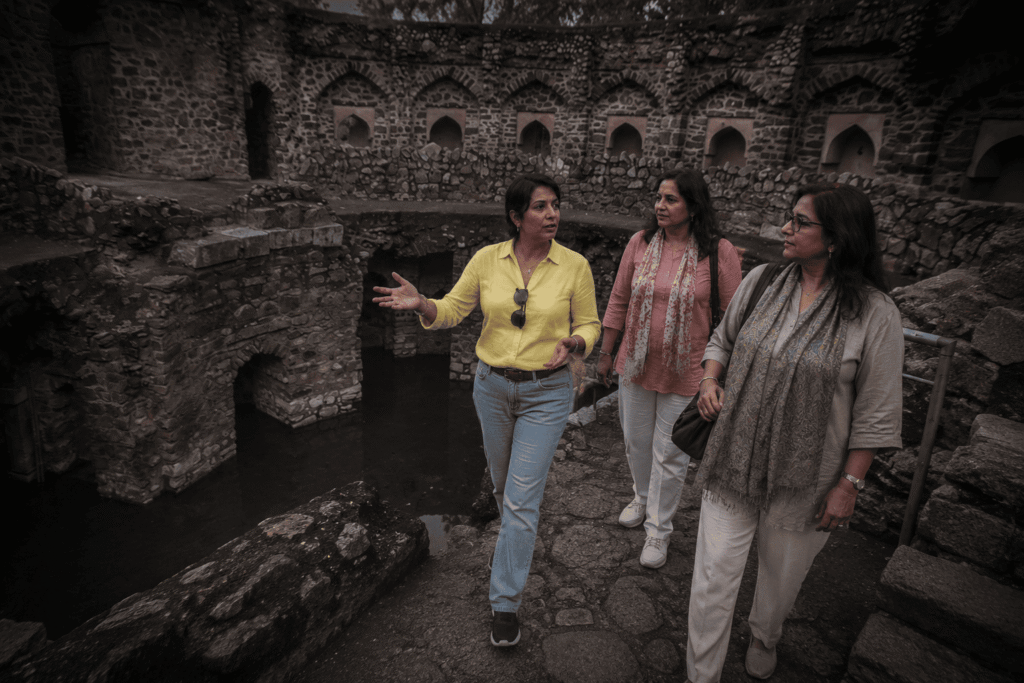
Another fascinating feature of Feroz Shah Kotla is its baoli, or stepwell.
Feroz Shah Tughlaq invested in water systems, and the stepwell formed part of the fort’s infrastructure. Located near the Ashoka Pillar and gardens, it adds another dimension to the complex.
Stone steps once led visitors down towards the water. Today, access to parts of the baoli is restricted for safety reasons.
Standing nearby, you can imagine medieval Delhi: people descending the steps, drawing water and moving through the royal complex centuries ago.
Why Thursday Feels Different at Feroz Shah Kotla
If you visit Feroz Shah Kotla on Thursday, you may notice a different atmosphere.
Believers gather with petitions and offerings. Incense fills parts of the complex, people pray quietly, and letters are placed around the ruins. Photographs appear among the ancient stones.
You may not believe in jinns and may consider the stories folklore, but seeing so many people take the tradition seriously makes the atmosphere difficult to ignore.
That is the real mystery of Feroz Shah Kotla. The supernatural story does not exist only in books; it remains part of the living experience of the place.
Is Feroz Shah Kotla Really Haunted?
There is no scientific evidence proving that jinns live inside the fort. However, the stories are real as folklore.
For generations, people have believed that supernatural beings inhabit these ruins. Visitors continue to come with petitions, and Thursday remains associated with the jinn legends.
A believer may see the fort as a place where supernatural help is possible. A sceptic may see it as an example of how legends become part of a city’s living heritage. A traveller may simply enjoy the mystery.
You do not need to decide which explanation is correct. Walk through the ruins, look at the old walls, notice the letters and stand beneath the Ashoka Pillar.
Then decide for yourself.
Feroz Shah Kotla and Tughlaqabad Fort: Two Stories from Medieval Delhi
If the story of Feroz Shah Tughlaq has made you curious about Delhi’s Tughlaq history, Tughlaqabad Fort is another fascinating place to explore.
Both sites reveal a different side of Delhi. While famous monuments often tell stories of emperors and grand ceremonies, Tughlaq monuments reveal ambitious rulers, enormous fortifications, abandoned cities and the harsh realities of medieval Delhi.
Visiting both gives you a better understanding of the world in which Feroz Shah Kotla was created.
A Delhi Tour Companion can help connect these monuments with the stories, legends and characters behind them.
Feroz Shah Kotla for Young Travellers and Students
For students and young travellers, Feroz Shah Kotla can turn an ordinary sightseeing day into an adventure.
You get history, architecture, photography opportunities and one of Delhi’s strangest legends. Instead of simply reading a date on a signboard, you can explore the atmosphere for yourself.
Walk through the ruins, look for the petitions, see the Ashoka Pillar, explore the mosque complex and listen to the stories of the jinns.
If you are interested in Delhi’s hidden and unusual side, continue your journey through an Old Delhi Heritage Walk, where centuries of history remain alive in the streets, markets, mosques and old neighbourhoods.
How to Reach Feroz Shah Kotla Fort
Feroz Shah Kotla Fort is located in central Delhi.
The nearest Delhi Metro station is ITO on the Violet Line, from where the fort can be reached easily. Buses, taxis, auto-rickshaws and other local transport are also available.
Carry drinking water, especially during Delhi’s hotter months. Local snacks and street food are available nearby.
Address: Balmiki Basti, Vikram Nagar, New Delhi, Delhi.
Feroz Shah Kotla Fort Timings
The fort is generally visited during daylight hours, from sunrise towards sunset. Check the latest official timings before visiting because opening hours can change.
Daytime is the safest and most comfortable option. Thursday is traditionally associated with the jinn legends, but visitors should never enter restricted areas or remain inside after permitted hours.
Feroz Shah Kotla Fort Ticket Price
The original information for this article lists an entrance fee of approximately ₹30 for Indian visitors and ₹500 for foreign visitors.
Because monument fees can change, check the latest official information before your visit.
A Final Walk Through the Haunted Ruins
Feroz Shah Kotla does not need a ghost to frighten you. It has something more powerful:
Atmosphere.
Imagine standing among ruins more than six centuries old. The evening light is fading, the Ashoka Pillar rises above you, old petitions move in the breeze and incense hangs in the air.
Somewhere nearby, someone whispers a prayer.
You look into a dark passage. Nothing is there—or perhaps you simply cannot see what is there.
That is when the stories begin to work on your imagination. You remember the jinns, the midnight court, the petitions, Lath Wale Baba and the underground chambers.
Suddenly, the old stones do not seem quite so empty.
Maybe Feroz Shah Kotla is haunted. Maybe it is not. Perhaps the truth is less important than the experience.
When you leave the fort and return to the noise of modern Delhi, one thought may stay with you:
What if the stories were true?
That is why Feroz Shah Kotla remains one of Delhi’s most mysterious and unforgettable places.
Frequently Asked Questions About Feroz Shah Kotla Fort
Is Feroz Shah Kotla Fort really haunted?
There is no scientific evidence proving that the fort is haunted. However, it has a long-standing reputation for being inhabited by jinns, and many visitors continue to come because of these beliefs.
Why is Feroz Shah Kotla famous for jinns?
Local tradition holds that jinns live among the ruins and can help people with their problems. Visitors leave petitions, photographs and offerings as part of this tradition.
Why do people visit Feroz Shah Kotla on Thursdays?
Thursday is traditionally considered important for the jinns associated with Feroz Shah Kotla. Believers visit to pray, leave petitions and seek help.
Who is Lath Wale Baba?
Lath Wale Baba is a legendary jinn associated with the Ashoka Pillar. Devotees believe that petitions addressed to him may help fulfil their wishes.
Can students visit Feroz Shah Kotla?
Yes. It is an interesting place for students and young travellers who enjoy history, architecture, photography and unusual stories about Delhi.
What is the best way to experience Feroz Shah Kotla?
Take your time exploring the ruins. Look at the Ashoka Pillar, Jama Masjid, baoli and ancient structures, and learn about the jinn legends that have become part of the fort’s modern identity.