Annett and Simran arrived in Gurugram, India, from Canada for an important business trip. Their weekdays were filled with office meetings, presentations, fine dining, and late evenings back at the hotel. Like many international business travelers, they experienced Gurugram’s modern skyline, luxury hotels, shopping malls, and corporate lifestyle—but they had not yet discovered the historic soul of Delhi.
Their office was located in Cyber Hub, often called the heartbeat of modern Gurugram, surrounded by multinational companies, restaurants, and one of India’s busiest business districts.
When Sunday finally arrived, they decided it was time to escape the meeting rooms and explore Delhi.
Sitting together over coffee, they searched Google for a local guide who could show them more than just famous monuments.
Annett smiled and said,
“Look, here’s Go with Harry. He’s showing the real Delhi for just USD 95. Shall we book this tour?”
Simran looked at Harry’s photograph, read a few traveler stories, and quietly nodded her head with a smile.
That one click became the beginning of an unforgettable journey through the history, culture, and hidden stories of Delhi.
Meeting Our Gurugram Tour Guide at Cyber Hub
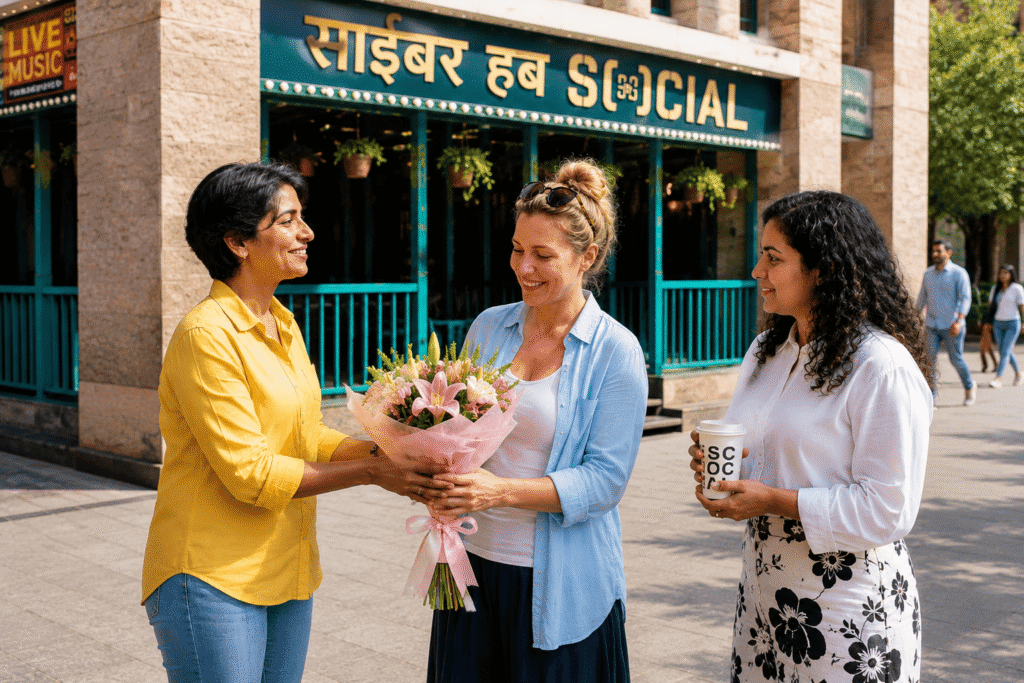
Sunday morning arrived with clear blue skies as we reached Cyber Hub Social, our meeting point in Gurugram.
Waiting outside was Harry with a warm smile, looking exactly as we had imagined from his website. Parked nearby was a comfortable Toyota Innova Crysta with a professional driver, ready for a full day of exploring Delhi.
From the very beginning, the journey felt less like hiring a tour guide and more like meeting a local friend.
As we drove through the suburbs of Delhi, passing Aya Nagar and Ghitorni, Harry introduced us to the fascinating history of India’s capital. Instead of reciting dates from a guidebook, he painted vivid pictures of ancient kingdoms, powerful sultans, and legendary warriors.
Arrived at Qutub Minar
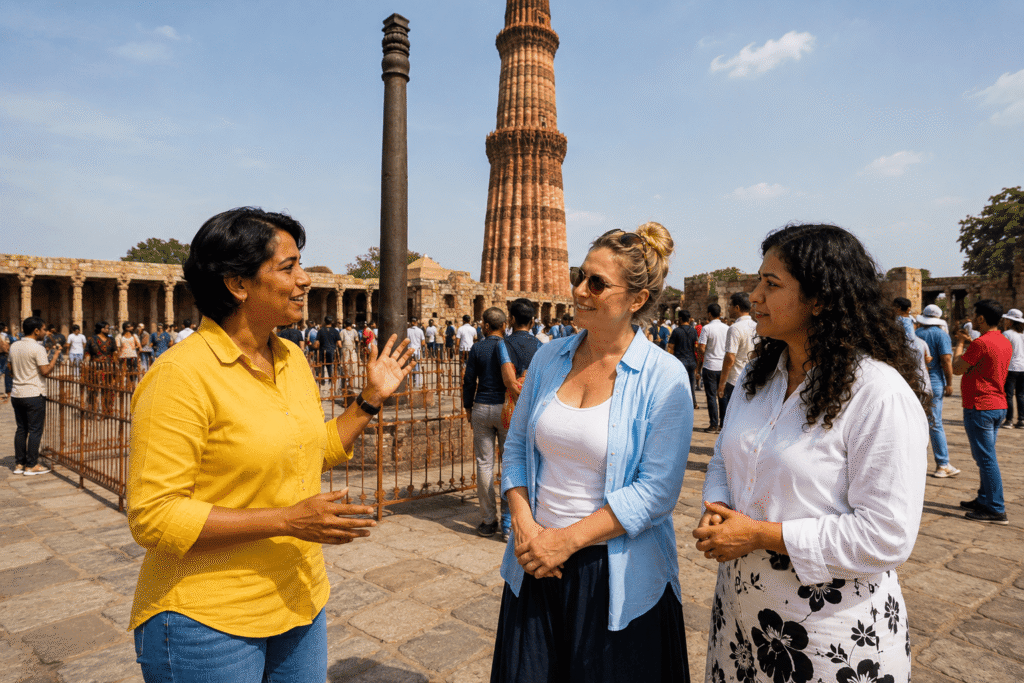
Before we knew it, we had arrived at Qutub Minar, Delhi’s magnificent UNESCO World Heritage Site and the first stop on our adventure.
Harry began explaining how the victory of Muhammad Ghori over Prithviraj Chauhan in 1192 AD changed the course of Indian history. His storytelling was unlike anything we had experienced before.
As he spoke, it almost felt as though we could hear horses galloping across the battlefield, swords clashing, thunder rolling overhead, and brave warriors charging from both sides. History suddenly became alive.
For nearly forty minutes, we were not simply visiting a monument—we were travelling back in time.
That was the moment we realised this was not going to be an ordinary sightseeing tour.
Humayun’s Tomb
As we continued our journey, Harry kept sharing stories not only about Delhi’s history but also about its modern life. While passing AIIMS Hospital, he explained how the healthcare system works in India and how Delhi has become an important destination for medical tourism. We had never thought about Delhi in that way before, so it was fascinating to learn something so practical from a local guide.
When we reached Humayun’s Tomb, another UNESCO World Heritage Site in Delhi, we were once again amazed by the beauty of the monument. Standing in front of this magnificent structure, we could only say, “Wow.”
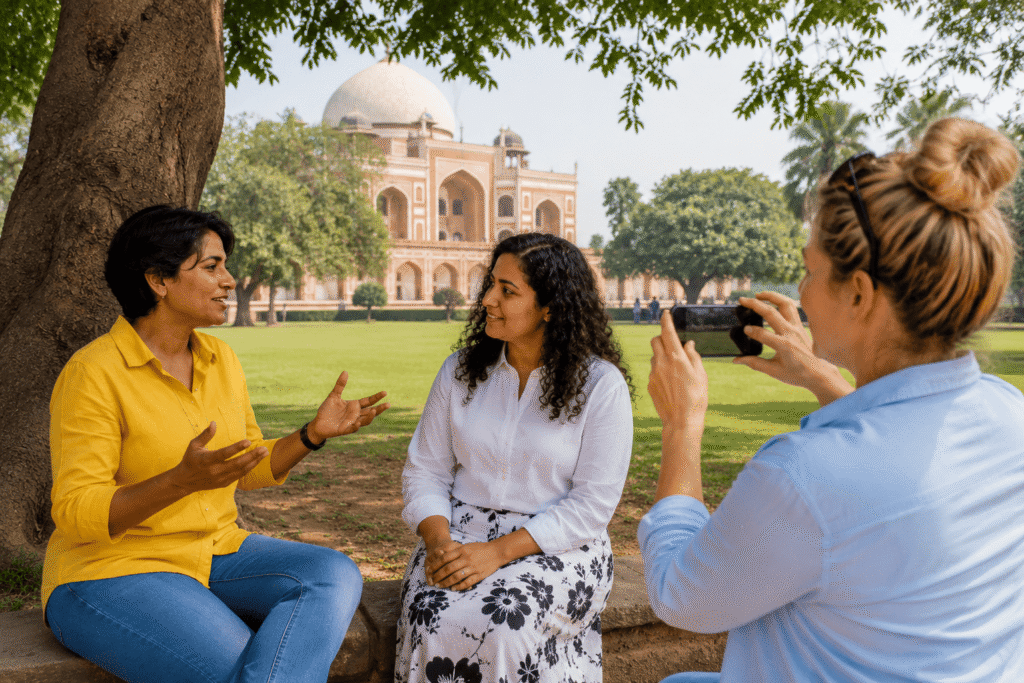
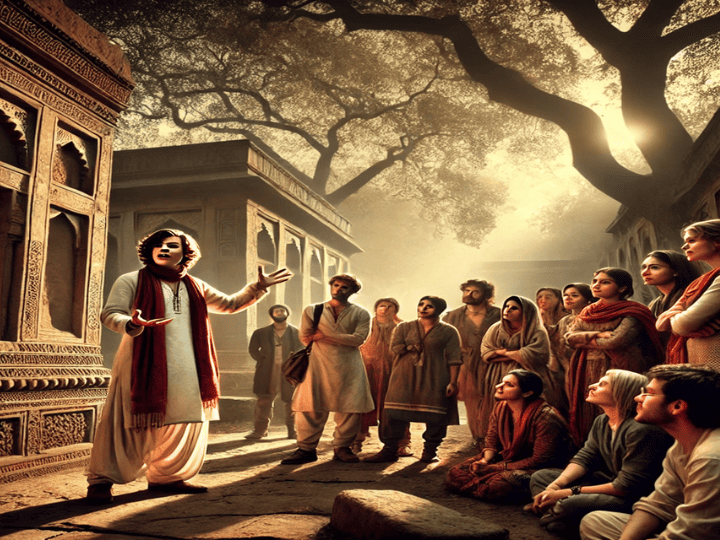
Harry and Simran sat under the shade of a tree while I took a few quick photos. Then Harry began telling the story of the tomb in his own memorable style. He explained that this magnificent monument was built in 1570 AD by Bega Begum, the wife of Emperor Humayun of the Mughal dynasty. He also spoke about Humayun’s long struggle before regaining power in Delhi and building the city of Dinpanah.
What made the moment special was the way Harry connected history with a story we could relate to. He compared it to the Canadian love story Vivian Keeler & Billy White, and suddenly the monument felt even more personal and alive. We were surprised by how naturally he brought everything together—history, emotion, and storytelling in one beautiful experience.
That was the magic of travelling with Harry. He did not just show us monuments; he made us feel their stories.
New Delhi: India Gate, Rashtrapati Bhavan and the Colonial Charm
Leaving Humayun’s Tomb behind, our Delhi tour continued into the elegant heart of New Delhi. The atmosphere changed completely. We drove along wide tree-lined avenues, beautifully landscaped roundabouts, and majestic boulevards that reflected the city’s colonial architecture.
Our first stop was the magnificent Rashtrapati Bhavan (President’s House), one of the largest official residences of any head of state in the world. Standing before its grand sandstone façade, we could immediately appreciate the scale and beauty of the building. Nearby stood the impressive Parliament House, the centre of India’s democracy.
Harry shared an interesting comparison that immediately caught our attention.
“Just as Ottawa was chosen as the capital of Canada by Queen Victoria, King George V announced the transfer of India’s capital from Calcutta to Delhi in 1911. The famous British architect Sir Edwin Lutyens, together with Herbert Baker, designed much of New Delhi, giving it the magnificent colonial character you see today. Today, this is where the Government of India governs the nation.”
We paused for a few memorable photographs before the security personnel politely signalled that it was time to move on.
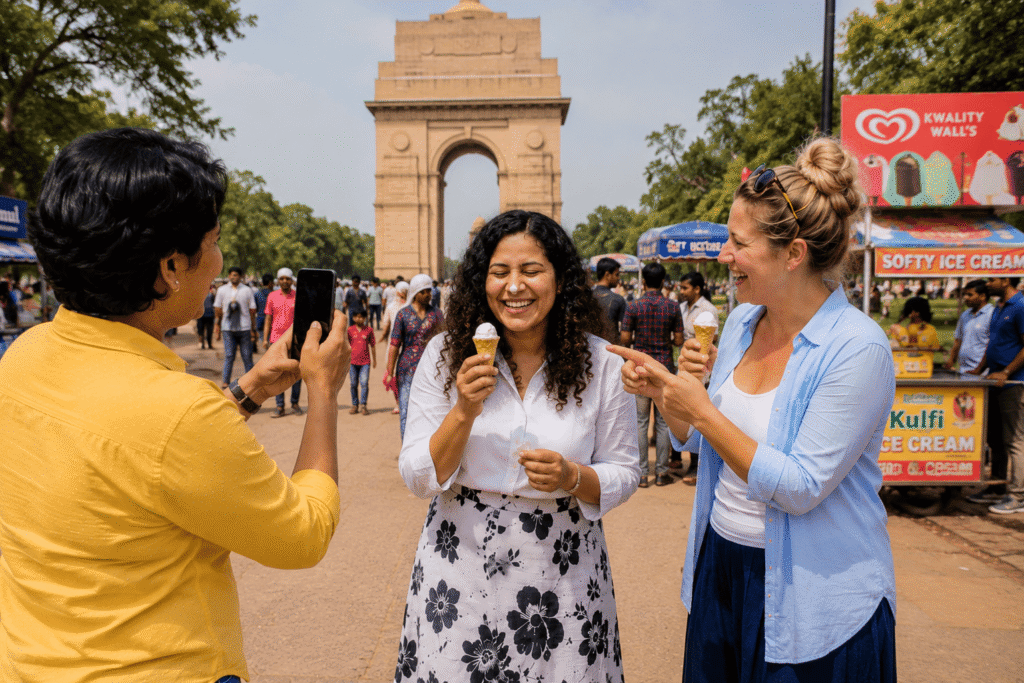
Just a few minutes later, we arrived at India Gate, Delhi’s most recognisable landmark. Standing nearly 42 metres tall, the iconic war memorial was alive with energy. Hundreds of visitors, street vendors, photographers, balloon sellers, and families created a lively atmosphere that made the place feel truly vibrant.
Harry explained that India Gate honours more than 70,000 Indian soldiers who lost their lives during the First World War and the Third Anglo-Afghan War. Although surrounded by cheerful crowds, the monument itself stands as a silent tribute to their courage and sacrifice.
Like the locals, we couldn’t resist buying an ice cream. Sitting near the lawns, chatting with photographers, smiling at friendly vendors, and watching families enjoy their Sunday evening gave us a glimpse of everyday life in Delhi. It wasn’t just another sightseeing stop—it was one of those simple travel moments that made us feel connected to the city and its people.
Gurudwara Bangla Sahib: A Peaceful Spiritual Experience in Delhi
After exploring the grand monuments of New Delhi, our Gurugram Tour Guide took us to one of the most peaceful places in the city—Gurudwara Bangla Sahib, the most famous Sikh temple in Delhi.
Before entering the Gurudwara, Harry kindly helped us cover our heads with traditional stoles as a mark of respect. He explained the basic beliefs of the Sikh faith and the simple customs every visitor should follow before stepping inside.
As we entered the prayer hall, the atmosphere immediately changed. The soothing sound of Gurbani Kirtan (devotional hymns) filled the air, creating a feeling of peace and devotion. Harry showed us the beautiful golden canopy beneath which the Guru Granth Sahib, the holy scripture of Sikhism, is respectfully placed. He explained that the sacred book contains the teachings of the ten Sikh Gurus along with the writings of several saints and Sufi poets, spreading a universal message of equality, compassion, and humanity.
After offering our prayers, we walked around the holy Sarovar (sacred water reservoir), where many devotees sat quietly in meditation. The calm surroundings offered a welcome break from the busy streets of Delhi.
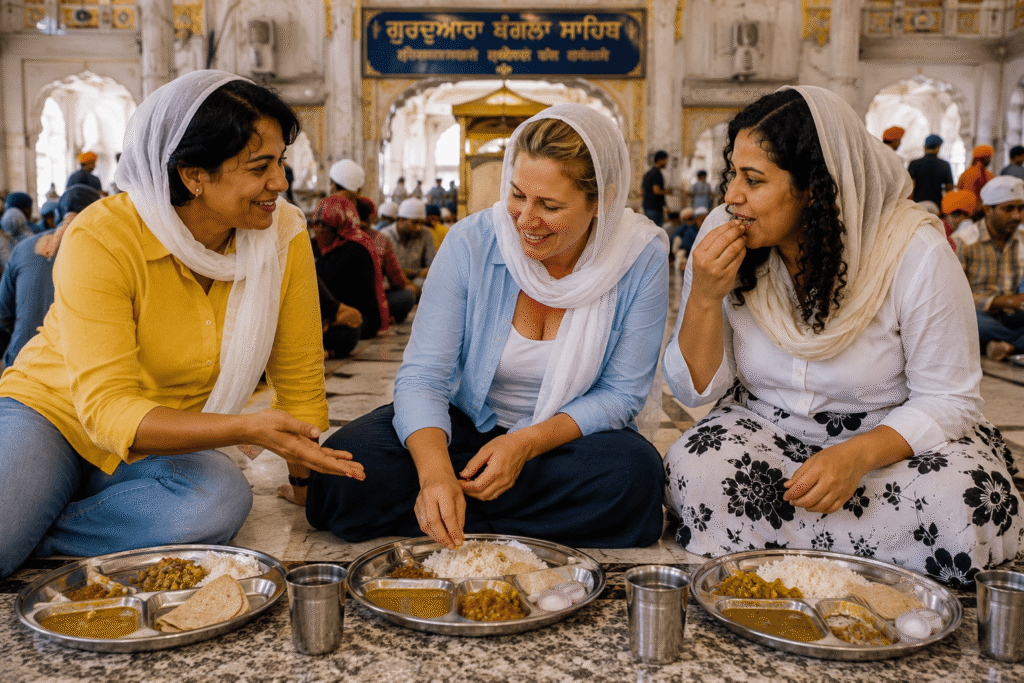
Our next stop was the famous Langar Hall, the community kitchen that serves thousands of free meals every day. We were amazed to see local volunteers preparing fresh food with such dedication and serving every visitor with warmth and respect.
Harry explained that the tradition of Langar was started by Guru Nanak Dev Ji in the late 15th century to promote equality, humility, and selfless service. Regardless of religion, nationality, or social background, everyone sits together on the floor and shares the same meal.
We joined the devotees, enjoyed the freshly prepared food, and experienced the true spirit of Sikh hospitality. It was more than a meal—it was a lesson in kindness, equality, and community. As we left Bangla Sahib, we carried with us a sense of peace and positive energy that remained with us throughout the rest of our Delhi sightseeing tour.
Old Delhi Tour: Red Fort, Chandni Chowk, Spice Market and Jama Masjid
Leaving the wide boulevards of New Delhi, our Gurugram Tour Guide took us into a completely different world. Passing through the historic Delhi Gate, we entered the famous Walled City of Old Delhi, where centuries of history still live among bustling markets, narrow lanes, and magnificent Mughal monuments.
Our first stop was the magnificent Red Fort (Lal Qila), another UNESCO World Heritage Site and one of the greatest symbols of India’s rich heritage. Walking through its massive red sandstone walls, we immediately understood why it remains one of the most important landmarks in Delhi.
Harry explained that every 15th August, the Prime Minister of India hoists the national flag from the Red Fort, continuing the tradition begun by Jawaharlal Nehru after India’s Independence in 1947.
As we explored the fort, Harry guided us through the beautiful Meena Bazaar, once reserved for the royal ladies of the Mughal court, the impressive Diwan-i-Aam (Hall of Public Audience) where Emperor Shah Jahan met his subjects, and the luxurious Royal Hammam, the private bathhouse of the Mughal emperors.
His storytelling made us feel as though he had personally lived inside the fort. He described how Emperor Shah Jahan built the magnificent city of Shahjahanabad in 1648, with the Red Fort, Jama Masjid, and the bustling Chandni Chowk forming the heart of his new imperial capital. He spoke about the emperor’s royal court, thousands of servants, skilled craftsmen, soldiers, and the vibrant life that once surrounded the Mughal palace.
By the time we left the fort, we no longer saw it as just another monument—we saw it as the centre of an empire that once ruled much of the Indian subcontinent.
Chandni Chowk Spice Market Walking Tour
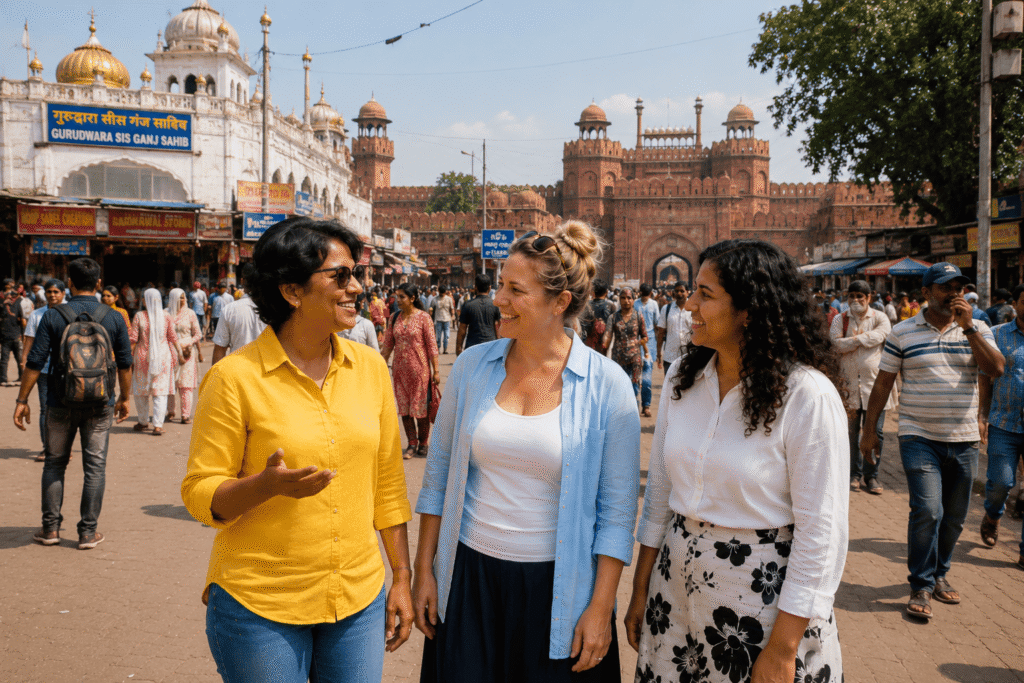
Our journey continued into the legendary streets of Chandni Chowk, one of the oldest and busiest markets in India. Harry explained that this historic marketplace was designed by Jahanara Begum, the beloved eldest daughter of Emperor Shah Jahan.
Every street had its own identity. One specialised in silver jewellery, another in textiles, another in gold ornaments, while countless shops displayed sweets, dry fruits, and traditional Indian goods. The old-world charm of Chandni Chowk was unlike anything we had experienced before.
As we walked through the lively lanes, we passed the historic Gurudwara Sis Ganj Sahib, an important Sikh shrine that beautifully reflects Delhi’s religious diversity.
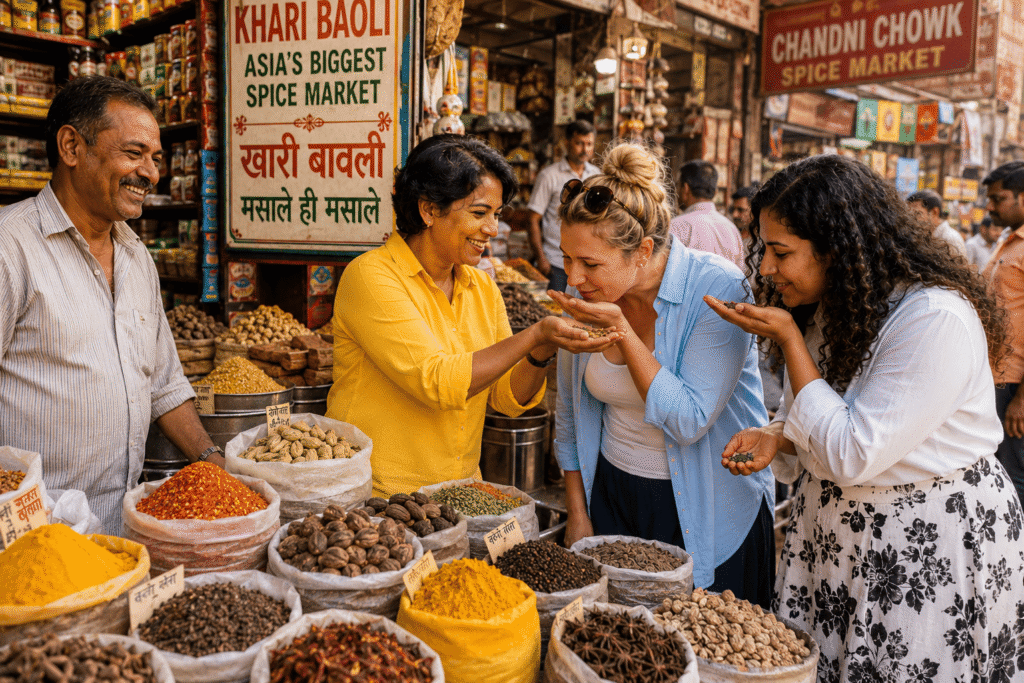
Soon we reached Khari Baoli, Asia’s largest wholesale spice market. The air was filled with the rich aroma of cardamom, cinnamon, cloves, saffron, dried chillies, turmeric, and dozens of spices we had never seen before. Every shop seemed more colourful than the last.
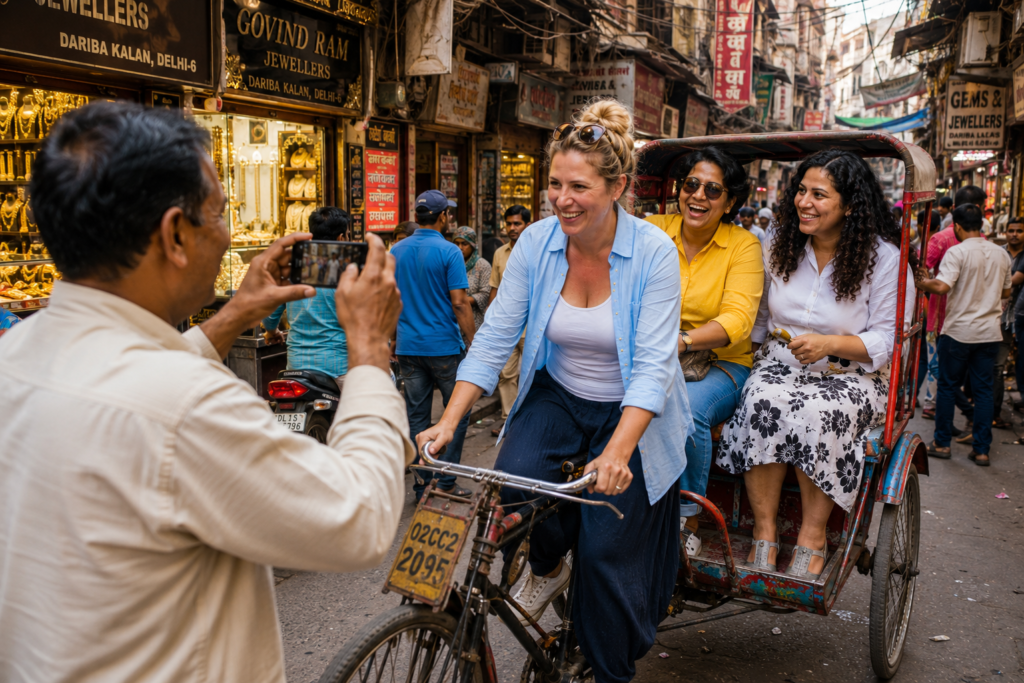
After enjoying a delicious cup of traditional masala chai, Harry surprised us with another unforgettable experience—a classic cycle rickshaw ride through the narrow streets of Old Delhi.
As our rickshaw gently navigated through the crowded lanes, passing the Silver Market, heritage havelis, colourful shops, and busy local life, we couldn’t stop smiling. It was exciting, chaotic, and completely unforgettable.
Jama Masjid: The Spiritual Heart of Old Delhi
Our rickshaw stopped at Gate No. 3 of Jama Masjid, India’s largest historic mosque and one of the architectural masterpieces of the Mughal Empire.
Before entering, Harry helped us wear traditional gowns and respectfully remove our shoes, ensuring we followed the customs of this sacred place.
Standing inside the vast courtyard, we were amazed by the sheer scale and beauty of the mosque. Harry explained that Emperor Shah Jahan completed Jama Masjid in 1656, and for centuries it has silently witnessed the rise and fall of Mughal emperors, foreign invasions, British colonial rule, India’s Independence, and modern Delhi.
He led us to the main prayer hall, pointing towards the grand arch that faces Mecca, the holiest city in Islam. Later, he showed us a special chamber where sacred relics associated with Prophet Muhammad are preserved with great respect. Seeing these precious relics made the visit even more meaningful.
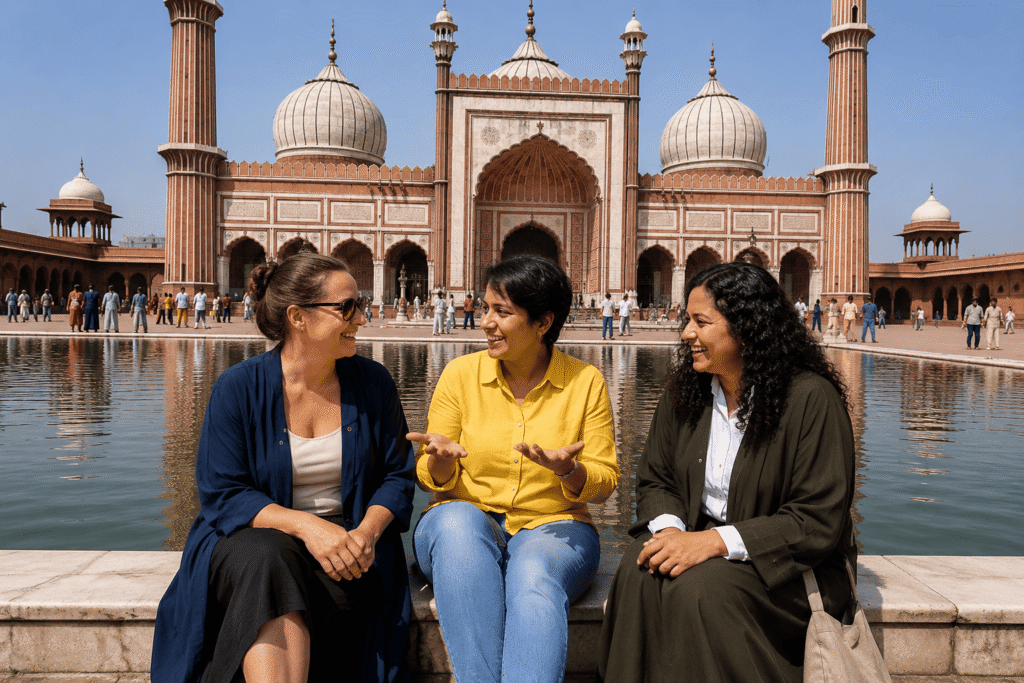
Before leaving, we sat quietly beside the central ablution pool, watching local families, children, and worshippers gather for prayer. After the excitement of Chandni Chowk, the peaceful atmosphere inside Jama Masjid offered the perfect ending to our unforgettable Old Delhi walking tour.
That was the moment we truly understood why so many travellers describe Go with Harry as more than a sightseeing experience. It felt like walking through history with a local friend who genuinely loved sharing the stories of his city.
Coming to the End of Our Delhi Tour with a Gurugram Tour Guide
As our unforgettable Delhi tour slowly drew to a close, Harry surprised us with one final hidden gem before returning to Gurugram.
Our last historical stop was Agrasen Ki Baoli, a mysterious 14th-century stepwell tucked away in the heart of New Delhi. Descending its ancient stone steps, we found ourselves surrounded by silence—a remarkable contrast to the lively streets we had explored throughout the day.
Harry explained how ancient Indian communities designed stepwells to collect, conserve, and naturally cool rainwater, making them an ingenious source of drinking water long before modern technology. It was fascinating to discover yet another chapter of Delhi’s remarkable history.
“Delhi has so many stories,” Harry smiled. “One day is never enough.”
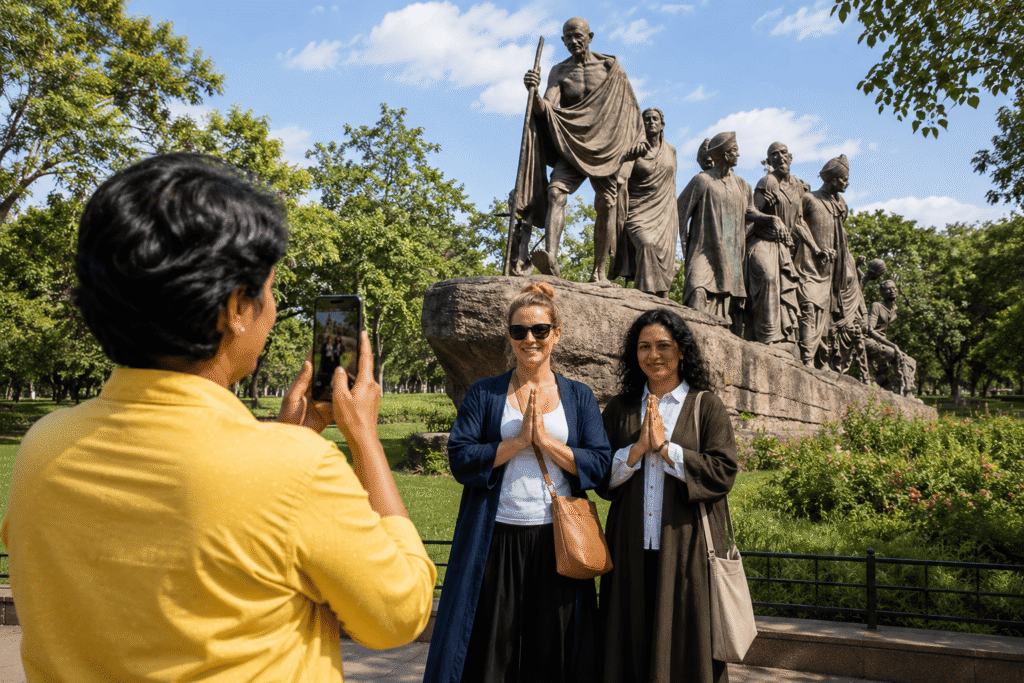
On our drive back towards Cyber Hub Gurugram, Harry made one final stop beside the moving sculpture of Mahatma Gandhi leading the famous Salt March (Dandi March). Standing quietly before the statue, we paused for a few photographs and paid our silent respects to the man whose message of peace and non-violence inspired millions around the world.
As the evening light softened the city, we passed the peaceful Malcha Forest and the elegant Taj Palace Hotel, reflecting on everything we had experienced that day—from UNESCO World Heritage monuments and colourful bazaars to spiritual temples and the warm smiles of local people.
By the time we reached Cyber Hub, it no longer felt as though we had spent the day with a tour guide.
It felt as though we were saying goodbye to a friend who truly loved sharing his city.
We thanked Harry for his passion, knowledge, and infectious enthusiasm for Delhi. Without hesitation, we agreed that Go with Harry would be our first recommendation to anyone visiting Gurugram for business and looking to make the most of one free day in Delhi.
As we prepared to say goodbye, Simran smiled and asked one last question.
“So, Harry… are you married?”
Harry paused for a moment, smiled his familiar smile, and simply replied,
“Yes… and No.”
For a second, we looked at each other in complete surprise before bursting into laughter.
Some mysteries, Harry said, are best discovered on your next tour.
And somehow, that felt like the perfect ending to a perfect day.