Planning to visit Safdarjung Tomb in Delhi? Exploring this magnificent Mughal monument with a knowledgeable Safdarjung Tomb tour guide transforms a simple visit into a fascinating journey through history, architecture, and forgotten stories. During my guided tours, I share why Safdarjung Tomb is considered the last grand garden tomb of the Mughal Empire, explain the symbolism behind its Persian-inspired Charbagh gardens, and reveal architectural details that many visitors overlook. Whether you’re passionate about history, photography, or discovering Delhi beyond the usual tourist trail, this guide will help you experience one of the city’s most elegant monuments. See Location on Google Map
Discover the fascinating history, Mughal architecture, and hidden stories of Safdarjung Tomb with Harry, your licensed Delhi tour guide.
Why Visit Safdarjung Tomb with a Tour Guide?
Many visitors spend less than thirty minutes at Safdarjung Tomb because they see only a beautiful monument. A guided visit reveals much more. As a Delhi tour guide, I explain how this mausoleum reflects the gradual decline of the Mughal Empire, why its architecture resembles Humayun’s Tomb yet has its own unique identity, and how Persian design influenced every corner of the complex. I’ll also point out details that are easy to miss, from delicate floral decorations to hidden viewpoints that offer the best photographs of the central dome and gardens.
Safdarjung Tomb Delhi Tour Guide: The Fascinating History
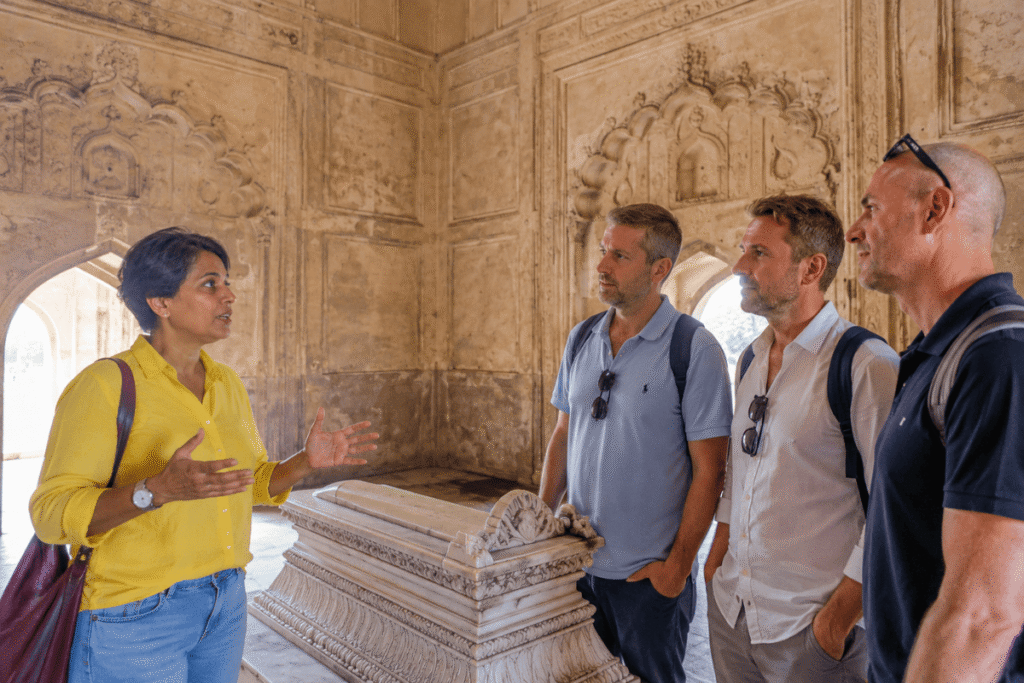
Harry, a licensed Safdarjung Tomb Tour Guide, sharing the fascinating history of Safdarjung Tomb beside the marble cenotaph inside the main mausoleum.
The story of Safdarjung begins far from Delhi, in Persian lands, where Abul Mansur Mirza Muhammad Muqim Ali Khan, later known as Safdarjung, was born in 1708. A descendant of the Kara Koyunlu dynasty, he migrated to India in 1722, gradually rising to prominence under the Mughal Empire. By 1748, Safdarjung had become the Wazir ul-Mamalik-i-Hindustan (Prime Minister of India) under Emperor Ahmad Shah Bahadur. His political journey was marked by power, influence, and, eventually, exile – all of which shaped his legacy.
After his death on October 5, 1754, Safdarjung’s son, Nawab Shuja-ud-Daula, sought to honor his father with a mausoleum in Delhi. The result was the creation of Safdarjung Tomb, a structure blending the grandeur of Mughal imperial style with a distinct, independent architectural identity. Often compared to Humayun’s Tomb, it incorporates a central dome, octagonal cenotaphs, and the iconic charbagh garden layout, offering a serene space for reflection amidst history.
Safdarjung Tomb Tour Guide – Architecture
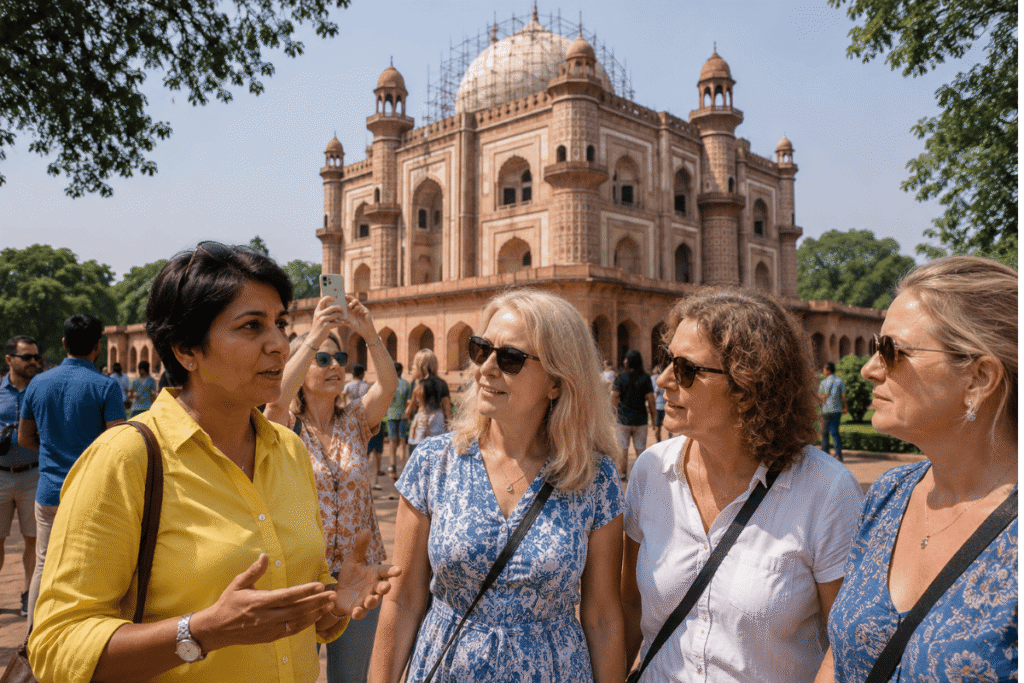
Harry, a licensed Safdarjung Tomb Tour Guide, explaining the magnificent Mughal architecture, Persian Charbagh gardens, and architectural highlights of Safdarjung Tomb in Delhi.
Architecture of Safdarjung Tomb
The Safdarjung Tomb architecture reflects the classical Mughal garden tomb style. Designed by the Ethiopian architect Bilal Muhammad Khan, the mausoleum was constructed at a cost of 325 lakh rupees, marking it as the last grand garden tomb of the Mughal era. The design incorporates red and brownish-yellow sandstone, with white marble elements sourced from earlier monuments.
Safdarjung Tomb Tour Guide- The Gardens and Charbagh Layout
The tomb sits on an elevated platform, overlooking a sprawling square garden divided into four symmetrical sections by water channels and walkways. The charbagh style symbolizes paradise, providing both aesthetic beauty and spiritual calm for visitors. Within these gardens, you’ll also find a three-domed mosque and protective walls that define the sacred complex.
During spring and winter mornings, the gardens are especially peaceful, making them one of my favourite places in Delhi to introduce visitors to Mughal landscape design before we continue to nearby Humayun’s Tomb or Lodhi Garden.
Safdarjung Tomb Tour Guide- The Grand Entrance and Facades
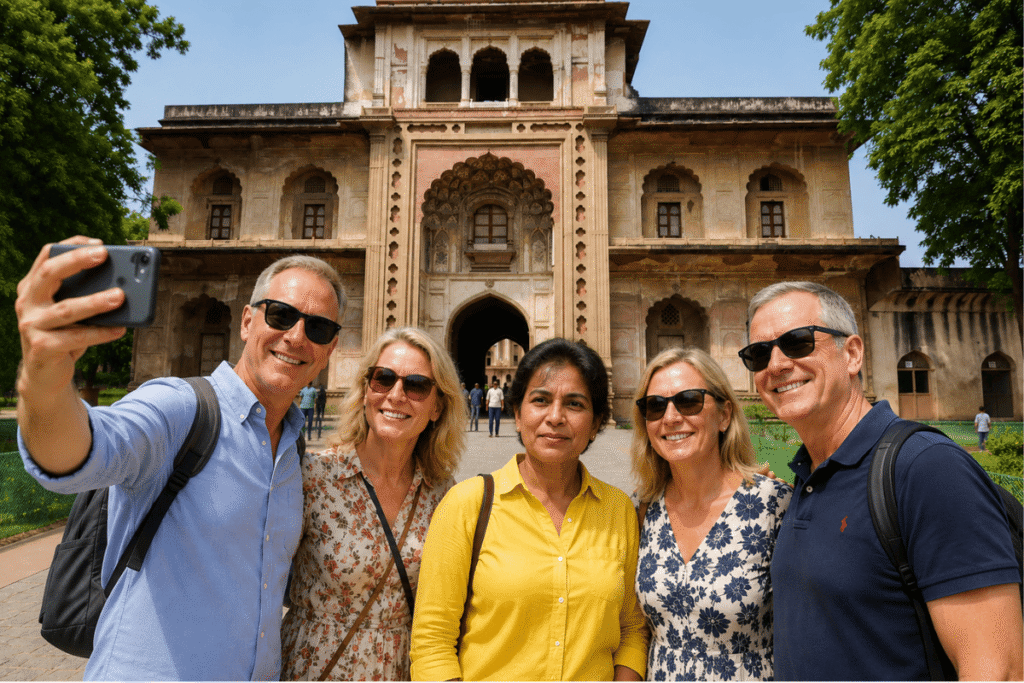
A memorable moment with visitors at the historic entrance of Safdarjung Tomb—every guided tour ends with stories, smiles, and unforgettable memories.
The two-story main gate welcomes visitors with regal ornamentation and an Arabic inscription that reads: “When the hero of plain bravery departs from the transitory, may he become a resident of God’s paradise.”
Inside, the tomb’s central dome dominates the view, and polygonal towers at each corner lend grandeur to the symmetrical layout. The main mausoleum spans 28 meters square, housing an octagonal cenotaph decorated with rococo plaster motifs. Beneath the structure, the underground chamber holds the remains of Safdarjung and his wife, Amat Jahan Begum.
Safdarjung Tomb A Lasting Impressions by an Ethiopian Hand
Designed by an Ethiopian architect, It was built by Bilal Muhammad Khan, at the cost of three hundred twenty five lacs of rupees. the Safdarjung Tomb stands as the final colossal garden tomb of the Mughal era. Although aligned with the renowned Humayun’s Tomb, this structure emanates its own aura, leaving a unique mark on history.
Safdarjung Tomb Tour Guide – Timings & Tickets
Timings: 9:00 AM – 5:00 PM daily
Entry Fee: ₹30 for Indians, ₹500 for foreign tourists
Best Time to Visit: October to March for pleasant weather and photography opportunities
Time Required: 1–2 hours
Visitors are advised to wear comfortable footwear and carry water, as exploring the extensive gardens and intricate pathways can take 1–2 hours for a complete experience.
Safdarjung Tomb Delhi with a Tour Guide
Explore Safdarjung Tomb with Harry, your licensed Safdarjung Tomb Tour Guide, and discover its fascinating Mughal history, magnificent architecture, peaceful gardens, and hidden stories through a private heritage tour.
Visiting Safdarjung Tomb in New Delhi tour with guide offers a deeper understanding of the final chapter of Mughal architectural glory. As the last grand Mughal garden tomb, it beautifully represents the empire’s transition period, reflected in its balanced gardens, elegant domes, and intricate facades. A knowledgeable guide helps you appreciate the monument’s calm, reflective atmosphere—an oasis amid Delhi’s bustle—while sharing fascinating insights into Safdarjung’s life, his Persian heritage, and his influential role in Mughal politics. With a guide, the visit becomes not just sightseeing, but a meaningful and inspiring journey into history.
Safdarjung Tomb Nearest Metro Station
By Metro:
The nearest metro station is Jor Bagh on the Yellow Line, just a short auto-rickshaw or cab ride away.
Alternatively, INA Metro Station is within reasonable distance for those coming from other parts of Delhi.
By Road:
Safdarjung Tomb is easily accessible via taxi, Uber/Ola, or private car, with parking available nearby.
For those on a heritage walk, the tomb can also be included in a Delhi historical tour with stops at nearby monuments like Lodhi Garden, Humayun’s Tomb, and India Gate.
Conclusion
A visit to Safdarjung Tomb Delhi is more than sightseeing; it is a journey through time, an intimate glimpse into the final days of Mughal architectural grandeur. From the serene charbagh gardens to the intricate rococo plaster decorations, each element tells a story of ambition, artistry, and legacy. Whether you are a history enthusiast, a photography lover, or a cultural traveler, Safdarjung Tomb promises an unforgettable experience in the heart of Delhi’s heritage trail.
Plan your visit, explore the tomb’s serene gardens, and step into the world of Mughal majesty with every corner whispering tales from the past.
My Experience as a Safdarjung Tomb Tour Guide
After bringing travellers from Australia, the USA, Europe, and many other countries to Safdarjung Tomb, I’ve noticed that many initially expect it to be just another Mughal monument. By the end of the visit, they’re often surprised by its peaceful atmosphere, elegant gardens, and the fascinating story behind one of the last great structures built during the Mughal Empire. Sharing these hidden stories and architectural details is what makes every guided tour unique.
Best Time to Visit Safdarjung Tomb
The best time to visit Safdarjung Tomb is between October and March when Delhi enjoys pleasant weather. Early mornings offer soft light for photography and a quieter atmosphere, while late afternoons create beautiful golden tones across the sandstone façade. Weekdays are generally less crowded than weekends, allowing visitors to enjoy the gardens at a relaxed pace.