I met Harry at Turkman Gate on a warm Delhi morning.
As a solo traveller, I wanted more than famous monuments. I wanted the Old Delhi of quiet shrines, hidden lanes, old stories and unforgettable food.
Harry smiled when I told him.
“Then don’t just see Old Delhi, Amanda. Walk through it.”
And so our Turkman Gate Old Delhi Walk began—to the Red Fort, lasting approximately 3.5 to 4 hours and priced at USD 45.
For the time and money, it was excellent value: the walk combined historic monuments, living religious sites, local markets, street food and Harry’s personal stories in one memorable experience.
If you are planning your own visit, a Delhi tour companion can help you discover more historic neighborhoods, local experiences and hidden places beyond the city’s most famous monuments.
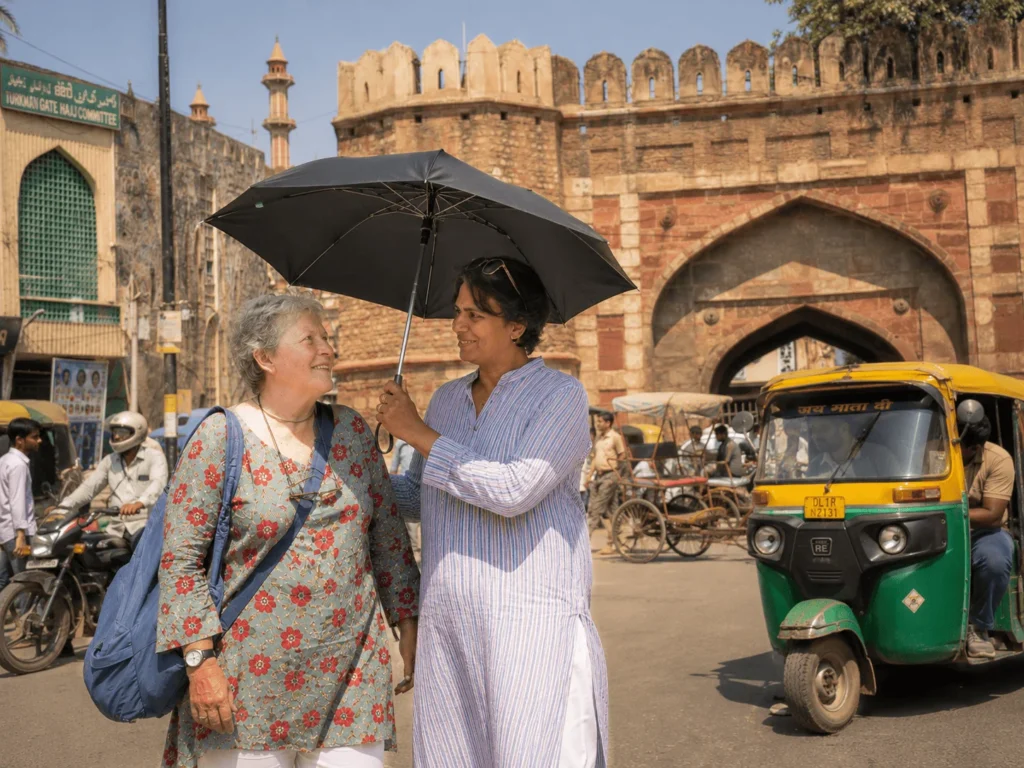
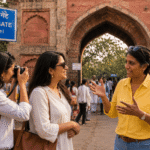
Amanda meets her local Delhi tour guide at Turkman Gate before beginning the Turkman Gate Old Delhi Walk.
Turkman Gate and the Sufi Shrine
Turkman Gate was already alive with rickshaws, shopkeepers and the fragrance of street food.
Harry led me to the Turkman Gate Sufi shrine, associated with Hazrat Shah Turkman Bayabani.
The busy street slowly faded behind us. Inside, the atmosphere felt calm and timeless.
“Who was Turkman Bayabani?” I asked.
Harry told me about the Sufi saint who once lived away from the settled city, surrounded by wilderness.
I looked at the crowded lanes and smiled.
“Wilderness? Here?”
“Delhi changes,” Harry replied. “But its stories remain.”
That was the beauty of Old Delhi. Beneath the noise, the past was still breathing.
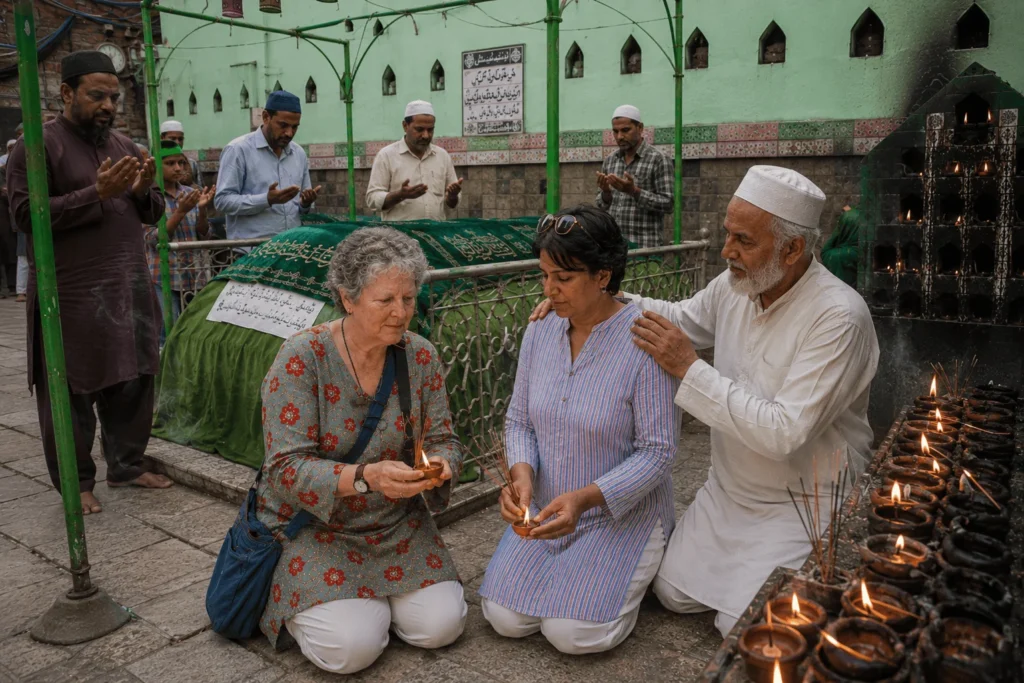
Inside the Turkman Gate shrine, Amanda discovers a quiet world of faith hidden behind the noise of Old Delhi.
The shrine was not just an old monument. People still came to pray, seek blessings and find peace is one of the famous Dargah in Delhi.
Standing beside Harry, I felt that I had discovered the Delhi I was searching for—not grand or distant, but warm, spiritual and alive.
Razia Sultan Tomb: A Queen in the Old City
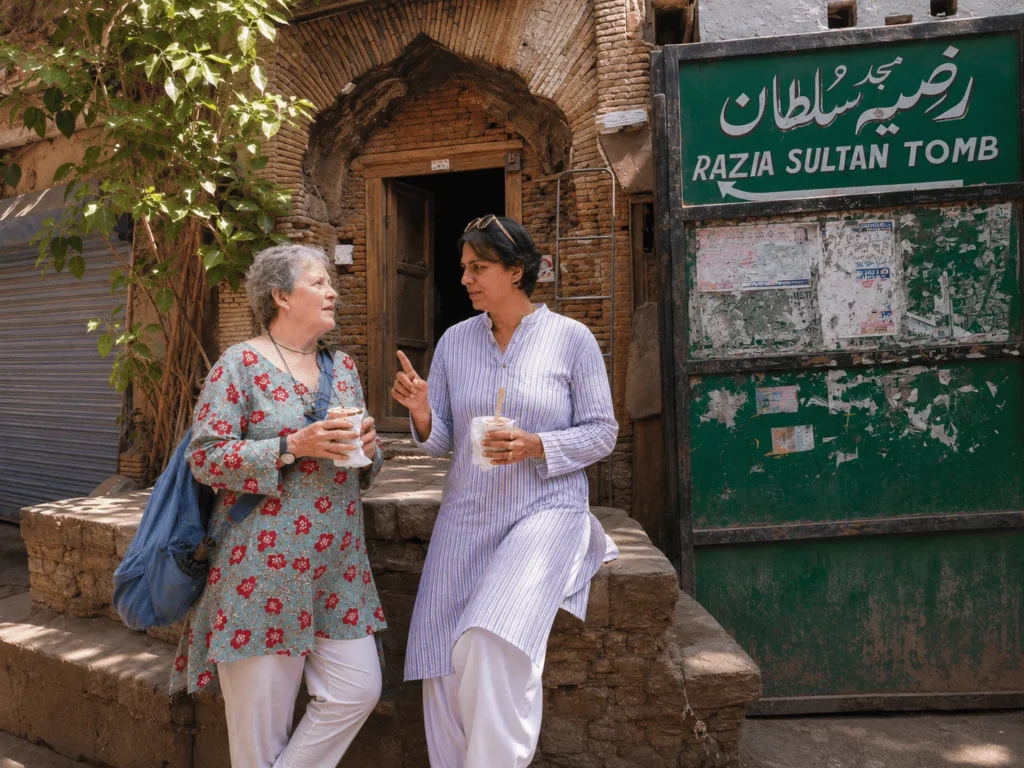
From Turkman Gate, Harry took me to the tomb traditionally associated with Razia Sultan, the first and only woman to rule the Delhi Sultanate.
The site was modest, almost hidden among the everyday life of Old Delhi. Yet its story was powerful.
Razia had ruled a difficult kingdom in a world dominated by men. Her reign was short, but her courage survived through the centuries.
I stood quietly near the ruins.
“As a woman travelling alone, I feel connected to her,” I told Harry.
He nodded.
“Some people leave behind palaces. Others leave behind courage.”
His words stayed with me.
Harry also told me about Razia’s father, Sultan Iltutmish, whose tomb stands in the Qutub Complex.
Two generations of Delhi’s history were connected through one family—and I was discovering their stories in the middle of a living neighborhood.
Kalan Masjid: A Hidden Fortress
Our next stop was Kalan Masjid, a striking Tughlaq-era mosque near Turkman Gate.
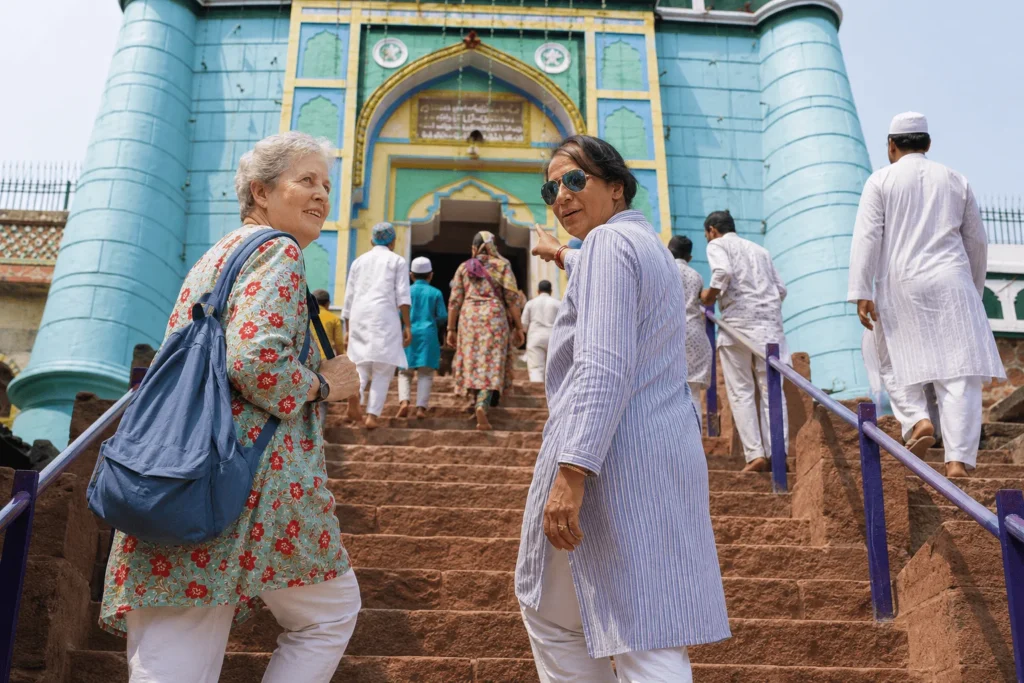
Its steep staircase, sloping walls and heavy domes gave it the appearance of a fortress.
As we climbed, the noise of the streets softened. From above, Old Delhi looked like a moving painting of people, shops and rickshaws.
Harry explained that the mosque was built during the Tughlaq period by Khan-e-Jahan Junan Shah.
“How many tourists come here?” I asked.
“Not enough,” he said.
I smiled. The hidden places were becoming my favourites.
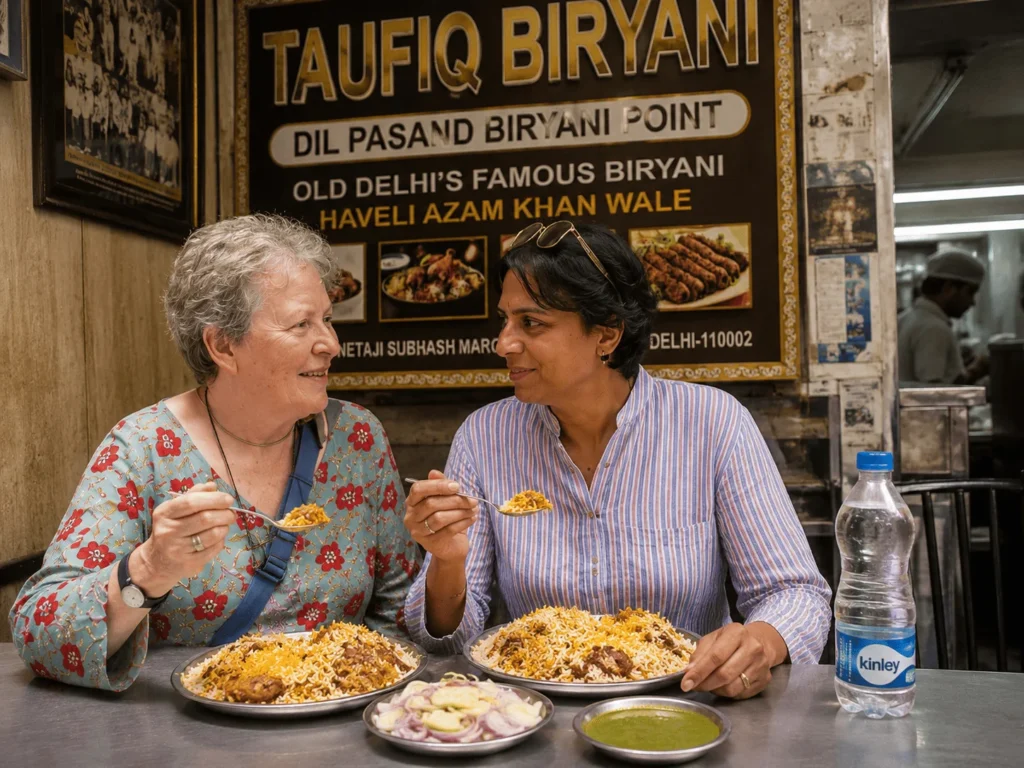
Biryani at Taufiq
By lunchtime, I was hungry.
Harry took me to Taufiq for biryani. The restaurant was simple, but the aroma was irresistible.
The first bite was warm, rich and full of spice.
I looked at Harry.
“Now I understand Old Delhi.”
He laughed.
That meal reminded me that Old Delhi’s history is not only found in stones and monuments. It is also found in its kitchens, recipes and shared tables.
For USD 45, the combination of a knowledgeable guide, several historic sites, local neighbourhoods and memorable food experiences made the walk especially worthwhile.
Chawri Bazaar and Tawaif Ki Masjid
After lunch, we entered Chawri Bazaar, where metal shops, traders and rickshaws filled the narrow lanes.
Harry asked me to look up.
Above the busy shops were old balconies, faded façades and forgotten details.
“Look down and you see today’s Delhi,” he said. “Look up and you may see yesterday’s.”
He then showed me Tawaif Ki Masjid, associated with Mubarak Begum.
The mosque was surrounded by noise, but its story felt intimate. Harry spoke about the woman behind the building, and suddenly the old walls seemed to have a voice.
He had a gift for making forgotten people feel close again.
Chaat and Wedding Cards
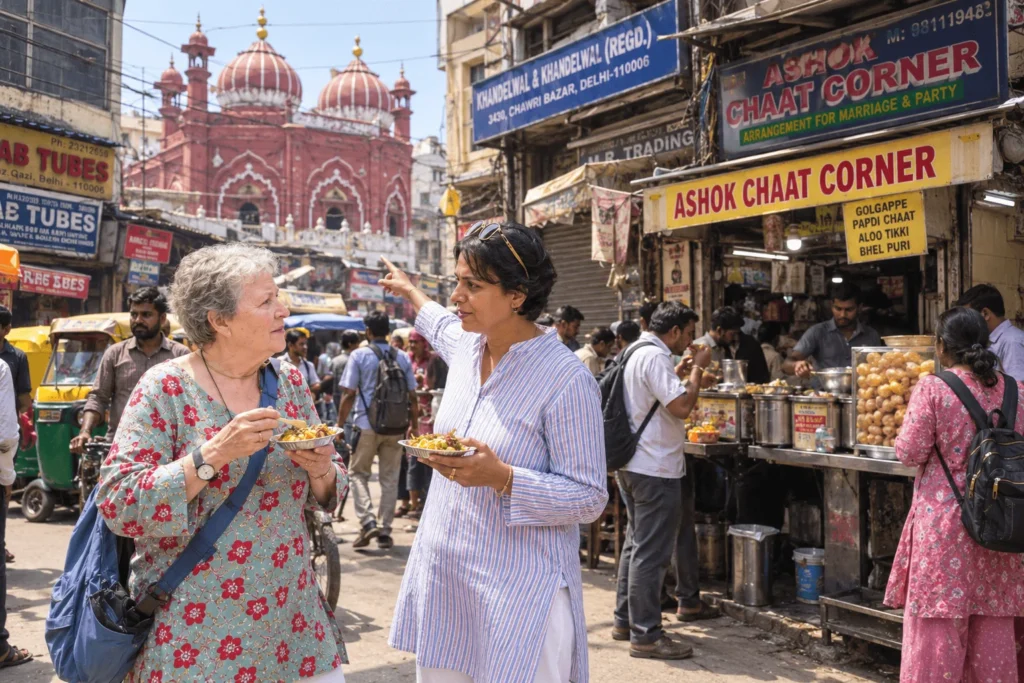
Soon Harry stopped at a street-food stall.
“Chaat?”
I could not refuse.
The flavours were sweet, sour, spicy and wonderfully confusing.
“Forget the rules,” Harry said. “This is Old Delhi.”
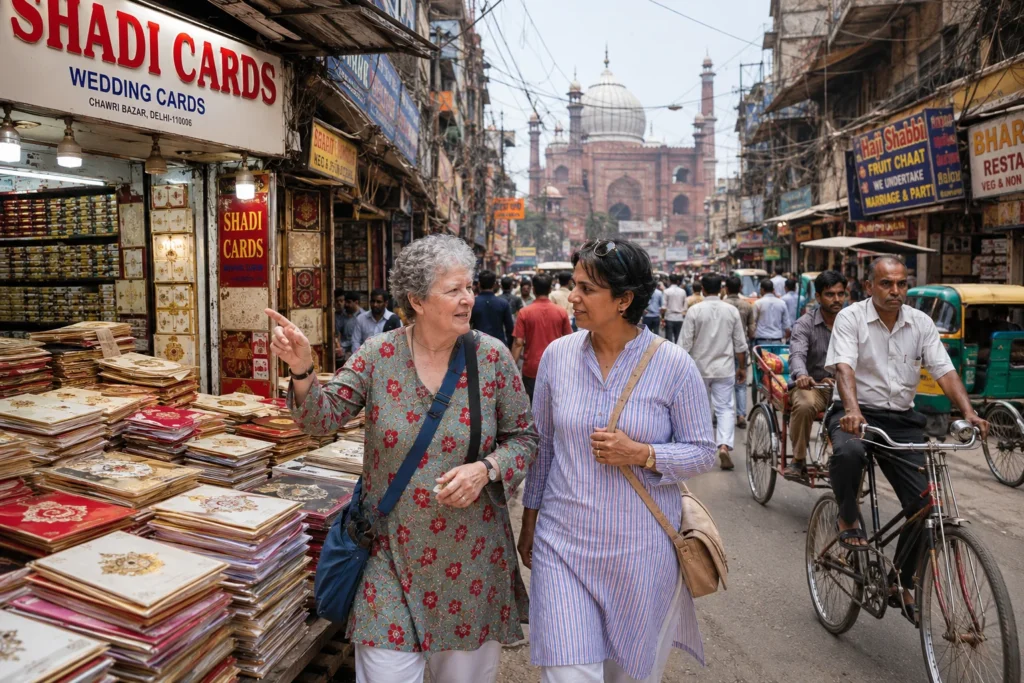
Later, we walked through the famous wedding-card market. Gold lettering, bright colours and delicate designs filled the shops.
I teased Harry about marriage, and for the first time that day, he became shy.
We both laughed.
That was Old Delhi—one moment discussing medieval history, the next talking about weddings over street food.
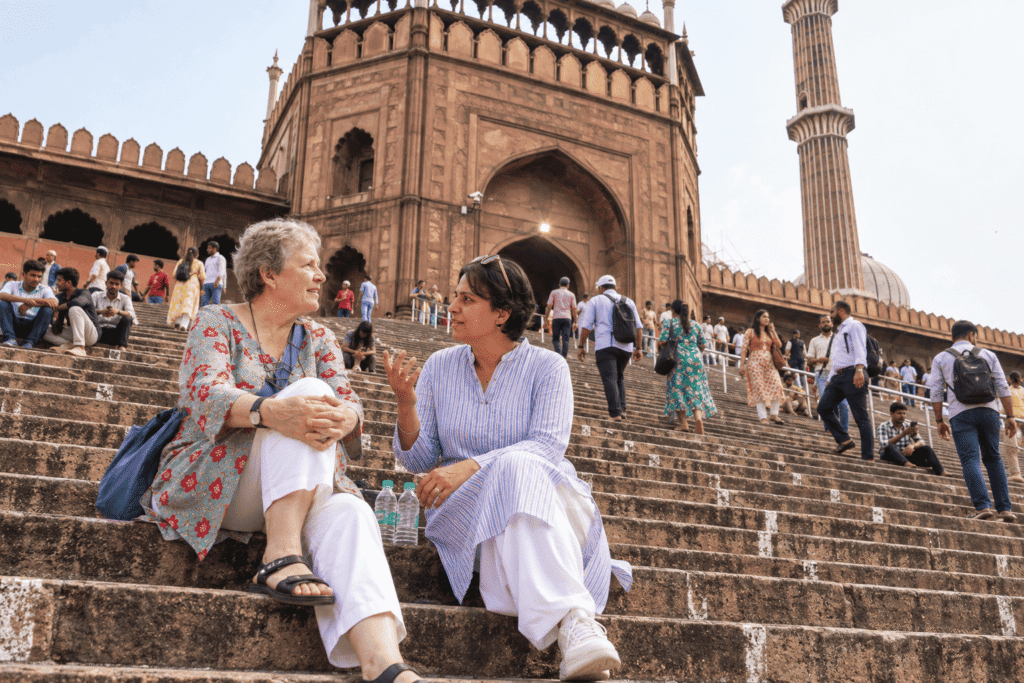
After the narrow lanes, its grand staircase and red sandstone walls felt breathtaking.
Harry told me about Shah Jahan and the creation of Shahjahanabad.
From the steps, I looked over the city and understood that Jama Masjid was not separate from Old Delhi. It belonged to the markets, the people, the food stalls and the centuries of life around it.
“The monuments make sense when you understand the streets around them,” Harry said.
I finally understood what he meant.
Pathar Wale Hanuman Ji Temple
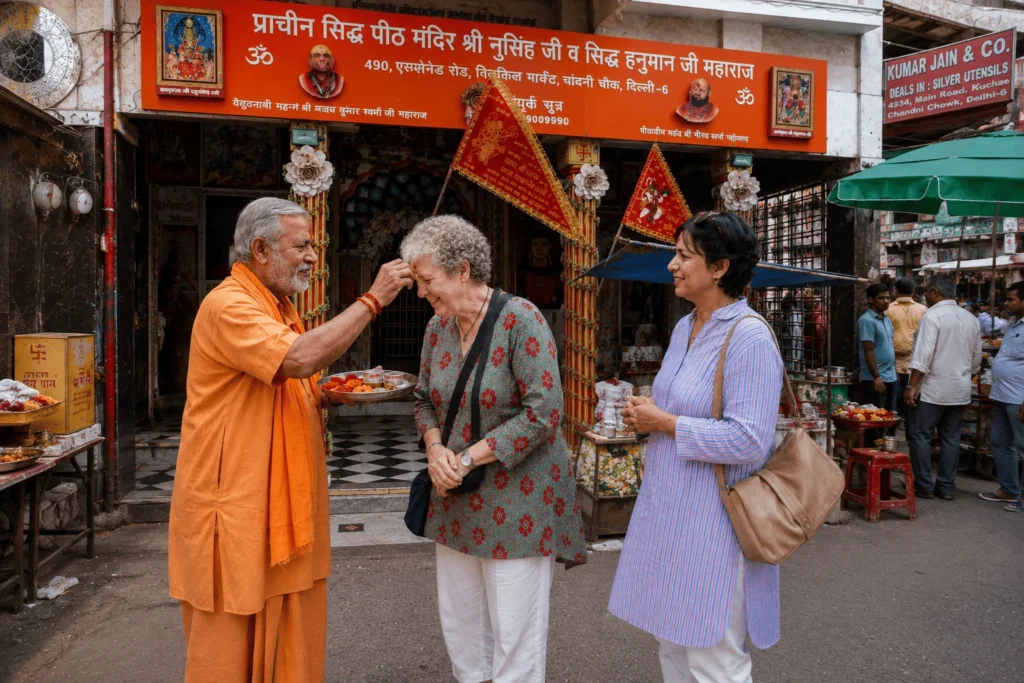
After visiting Jama Masjid, Harry led me towards Pathar Wale Hanuman Ji Temple, another important stop on our Old Delhi walk.
The change in atmosphere was striking. After the grand mosque and the busy streets around it, the temple offered a different kind of energy—devotional, colourful and deeply connected to the local community.
People arrived with flowers and offerings, pausing before the image of Hanuman Ji in prayer.
I watched quietly.
Old Delhi was showing me another side of itself.
Within the same historic city, a Sufi shrine, ancient mosques, a gurdwara and a Hindu temple all formed part of one living neighbourhood.
Harry smiled as he watched me take it all in.
“Old Delhi is not one story,” he said. “It is many stories living together.”
I looked back towards the crowded lanes.
He was right.
The temple was not separate from the history of Old Delhi. It was part of the same continuous journey through faith, memory and everyday life.
Chandni Chowk: A Living History Book
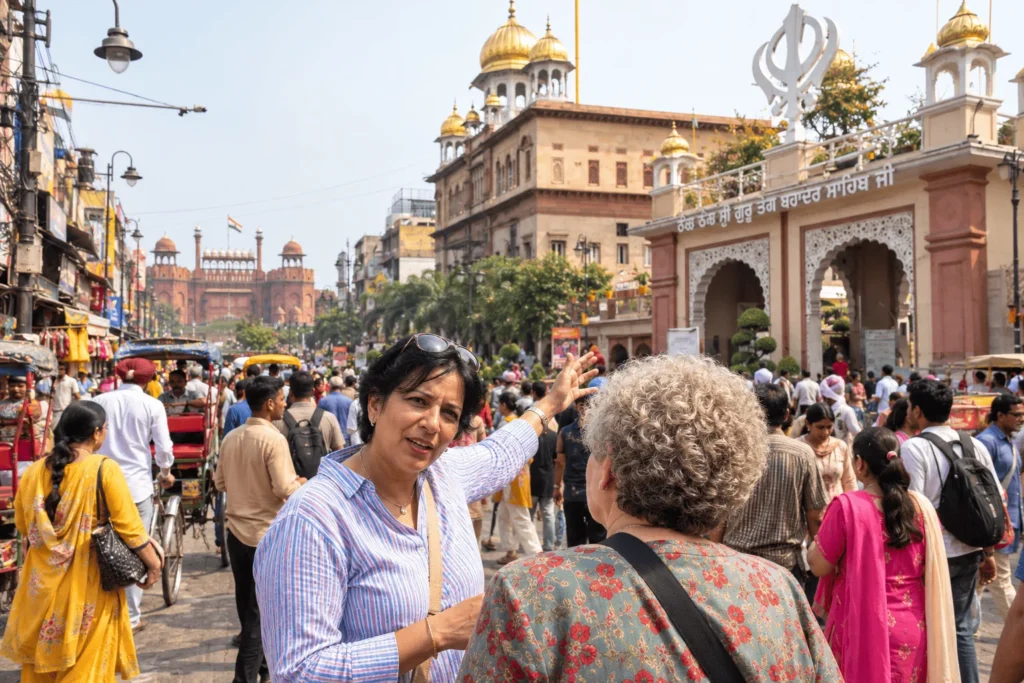
Our walk continued towards Chandni Chowk, where history and daily life moved together.
We visited Sis Ganj Gurudwara, a peaceful place connected with Guru Tegh Bahadur. After the noise outside, the quiet inside felt deeply comforting.
Harry also pointed out Sunahri Masjid and Begum Samru Ka Mahal, each carrying another layer of Delhi’s past.
I loved Begum Samru’s story—a powerful woman moving through the politics of eighteenth-century Delhi.
Every few steps revealed another story.
Red Fort: The Final View
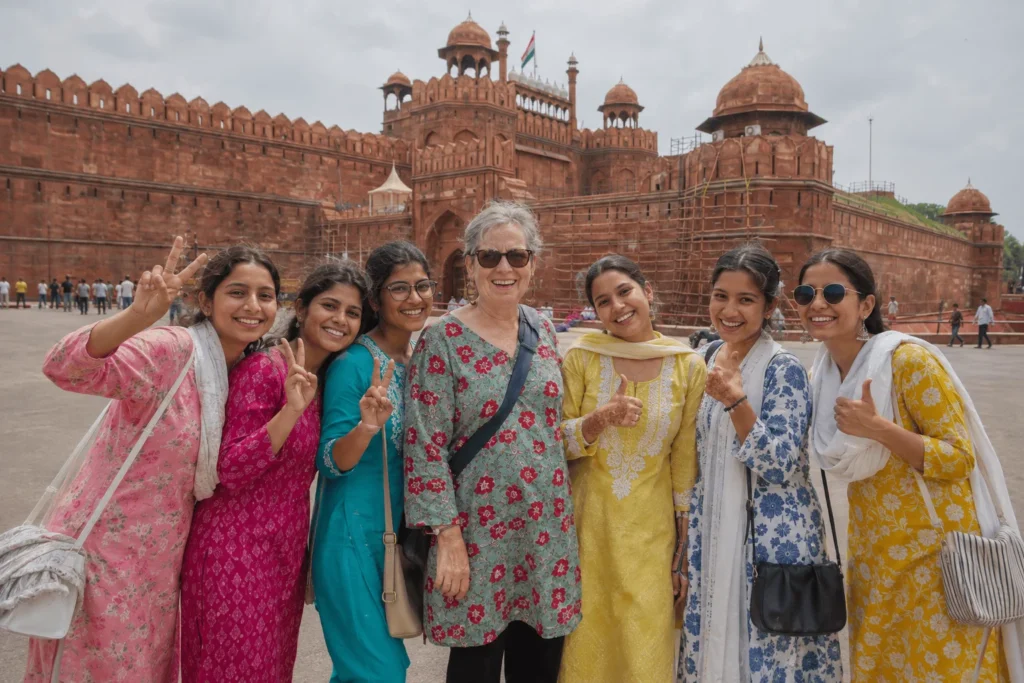
As evening approached, we reached the Red Fort.
Its massive red walls looked almost unreal after the intimate lanes we had explored.
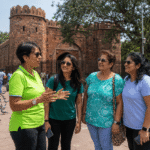
Near the entrance, I noticed a lively group of ladies gathered together. They were laughing, chatting and taking photographs, and their cheerful energy immediately drew me in.
One of them smiled at me and invited me to join them for a picture.
Within moments, we were laughing together as if we had known one another for years. They asked where I was from, whether I was travelling alone and what I had enjoyed most about Old Delhi.
I told them about the Sufi shrine, Razia Sultan’s tomb, the biryani at Taufiq and the chaat in Chawri Bazaar.
They became excited when I mentioned the food.
“Then you have truly experienced Delhi!” one of them said.
We took several photographs together, joked about our walking shoes and shared a wonderfully spontaneous moment outside the Red Fort.
Meeting those ladies was one of the most fun and unexpected parts of my day. I had started the walk as a solo traveller, but for a few minutes, I felt part of a joyful group of friends.
Harry pointed towards the city.
“The Red Fort is famous,” he said. “But the streets outside show how people lived.”
He was right.
I had seen the monument, but now I understood its world. I had walked through shrines, mosques, a historic temple, markets and food stalls. I had tasted biryani and chaat. I had listened to stories of saints, queens and forgotten women. And I had met a wonderful group of ladies who made the final stop even more memorable.
By the end of the day, I had stopped checking my phone.
I was no longer thinking about the next attraction. I was simply walking beside Harry, listening to Delhi breathe.
The Turkman Gate Old Delhi Walk had given me more than photographs. It had given me memories—the fragrance of incense, the sound of rickshaws, the taste of biryani, the devotion at Pathar Wale Hanuman Ji Temple, the quiet strength of Razia Sultan’s story and the laughter I shared with the ladies at the Red Fort.
When I said goodbye, I thanked Harry.
“You wanted the real Old Delhi,” he reminded me.
“Yes,” I said. “But I found something better.”
“What?”
“A Delhi I can remember.”
And perhaps that is what a good Delhi tour guide truly offers—not just places to see, but stories to carry home, delicious memories to savour and unexpected friendships to treasure.
For USD 45, this walk was well worth both the time and the money. In just a few hours, I experienced far more than a standard sightseeing tour: hidden monuments, living places of worship, local food, historic markets and the human stories that connect them all.