There are some parts of Delhi that you understand only after you walk through them. An Ajmeri Gate Delhi Walking Tour is one of those experiences—you can pass
This is the story of one such Sunday.
A Sunday Walk That Started at Ajmeri Gate
I live in Gurgaon, and one Sunday morning I called my friend.
“What are you doing today?”
“Nothing,” she replied. “I am getting bored.”
I laughed. “Then let’s do something different.”
While searching Google, we found a Sunday walking experience in Delhi conducted by a local guide. We decided to book it, mainly because we wanted to see a side of Delhi that we normally missed while travelling by car.
Our meeting point was Ajmeri Gate on the New Delhi Railway Station side.
The route would take us through the old streets around Ajmeri Gate, the wholesale markets, GB Road, New Delhi Railway Station, Paharganj and finally towards Central Delhi.
We thought it would be a simple heritage walk.
We were wrong.
Over the next few hours, we would walk through Mughal history, busy commercial lanes, a railway station that seemed to contain the whole of India, the backpacker streets of Paharganj, and some unforgettable food stops.
It became one of the most unusual walks in Delhi we had ever taken.
Meeting Harry at Ajmeri Gate
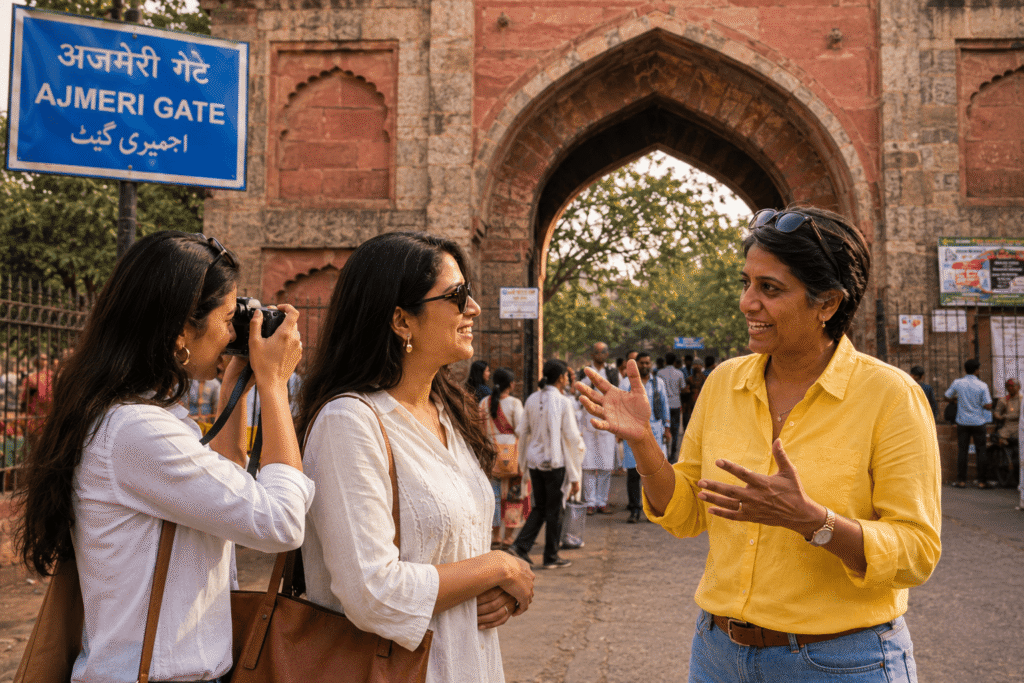
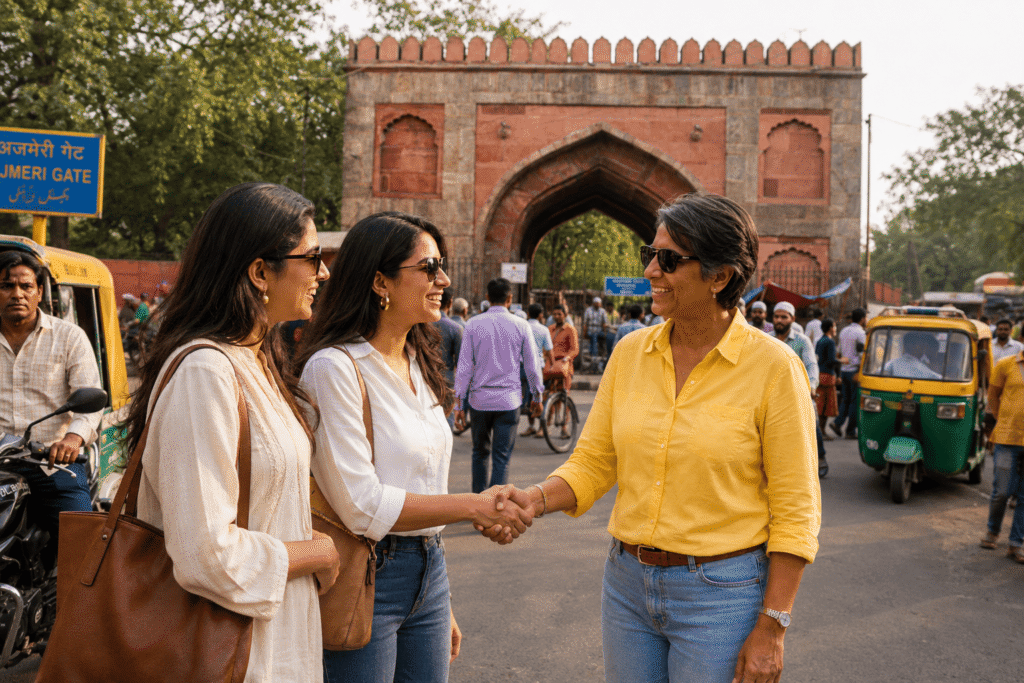
When we reached Ajmeri Gate, we met our guide, Harry.
He was young, charming and immediately easy to talk to.
Instead of beginning with a long lecture, he asked us to look around.
Modern traffic was rushing past us. Buses, cars, motorcycles, auto-rickshaws and pedestrians were moving in every direction.
Then Harry asked us to imagine this same place centuries ago.
That was when the story began.
He explained that Ajmeri Gate was one of the historic gateways of ShahjahanabadWiki, the walled city established by Emperor Shah Jahan in the seventeenth century.
The name itself tells part of the story.
Ajmeri Gate faced the road leading towards Ajmer in Rajasthan, the famous Sufi centre associated with Khwaja Moinuddin Chishti.
For centuries, people travelled between Delhi and Rajasthan along this broad historic route.
Merchants carried goods. Pilgrims travelled towards Ajmer. Travellers entered Shahjahanabad through its gates.
Harry pointed towards the surrounding streets and described the old commercial life of the city.
As he spoke about caravans arriving from Rajasthan, something strange happened.
The trucks and buses passing us no longer looked entirely modern.
For a few moments, they became caravans.
We imagined merchants arriving with goods from Jaipur and Rajasthan, looking for somewhere to rest, trade and continue their journey.
Harry was not simply giving us dates and names.
He was making the street itself tell its story.
That was our first lesson of the day: a good local guide can turn an ordinary Delhi street into a living history book
From Ajmeri Gate to Delhi’s Wholesale Markets
We left the historic gate and walked deeper into the commercial neighbourhood.
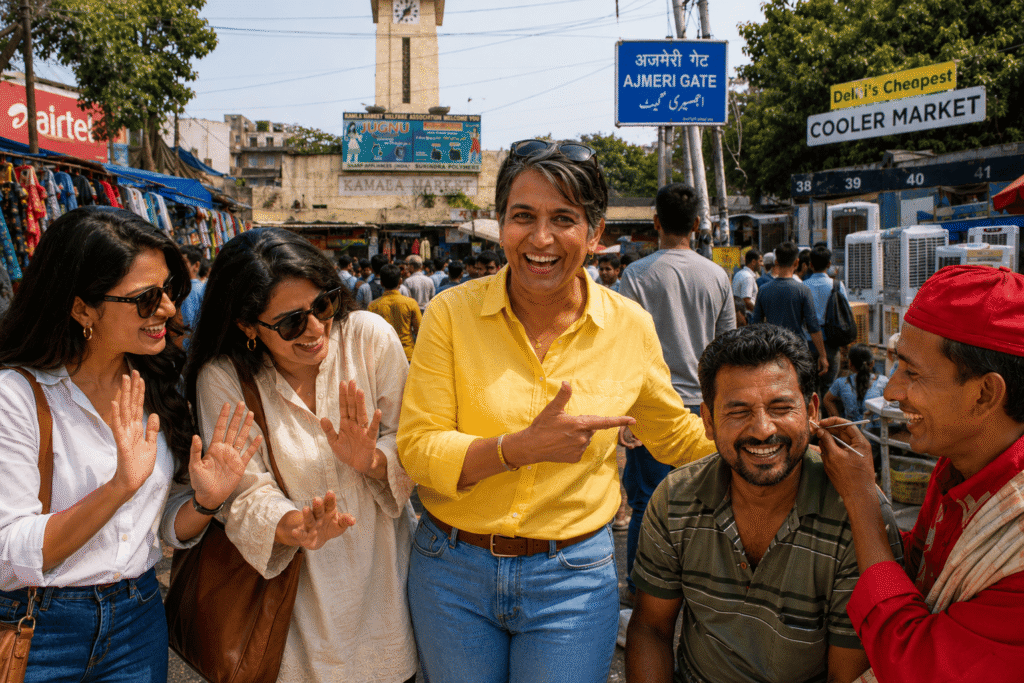
Our first surprise was Kamla Market.
Harry explained the area’s connection with shops dealing in coolers and air-conditioning equipment. On a warm Delhi morning, the sight of rows of desert coolers and cooling equipment felt almost amusing.
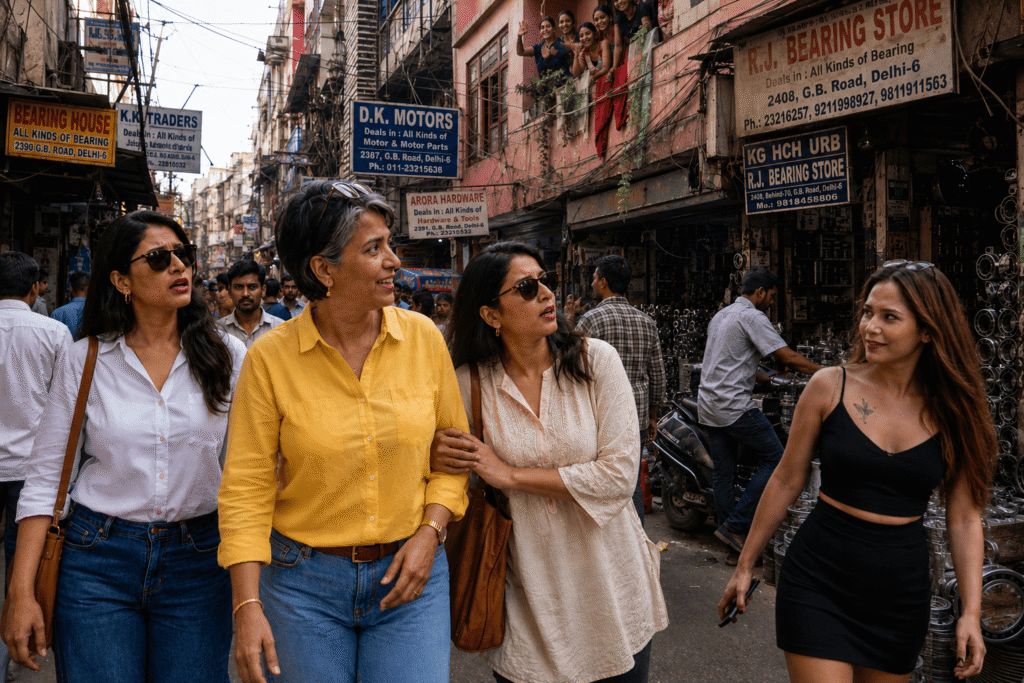
Then we entered the wholesale hardware market.
The atmosphere changed again.
There were narrow lanes filled with hardware shops, tools, fittings, pipes, electrical goods and building materials. Workers pushed loaded handcarts through spaces that seemed impossibly narrow.
Shopkeepers were negotiating prices.
Goods were being loaded and unloaded.
Customers came looking for supplies in quantities that would never make sense in a normal retail shop.
This was not the Delhi of monuments and souvenir photographs.
This was working Delhi.
Harry explained that these markets were part of the living commercial fabric surrounding the old city and railway area.
We realised that the history of Delhi isn’t preserved only inside museums.
Sometimes it is sitting behind a shop counter.
Sometimes it is being carried through a crowded lane on a handcart.
And sometimes it is written on the old buildings around you
If you want to explore another side of the city’s historic trading culture, you can continue your journey through our Magic of Old Delhi Bazaars, an Old Delhi heritage walk that takes you deeper into the stories, markets and traditions of the walled city.
Walking Through GB Road
As we continued, Harry told us that we were approaching the area popularly known as GB Road, or Garstin Bastion Road.
The atmosphere became different again.
GB Road is known historically as Delhi’s red-light district, and the area has a complicated social history.
From the street, we could see the upper floors of some of the old buildings and women looking down towards the busy road.
Harry did not treat the area as a spectacle.
Instead, he explained the history of the neighbourhood and the difficult realities surrounding the sex trade. He also shared stories of people he had come to know through his work as a local guide.
For us, this was one of the more serious moments of the walk.
Behind the noise, shops and traffic were human lives.
It reminded us that exploring a city means sometimes seeing the parts that do not appear in glossy travel brochures. Delhi is full of such contrasts, and beyond the famous monuments, there are many hidden places in Delhi where history, culture and everyday life quietly come together.
If you enjoy discovering lesser-known corners of the capital, you can continue exploring through our guide to hidden places in Delhi, featuring unusual neighborhoods, overlooked landmarks and experiences beyond the usual tourist circuit.
Delhi is beautiful.
Delhi is chaotic.
Delhi is historic.
But Delhi is also complicated.
A meaningful walking tour should be able to acknowledge all of those things.
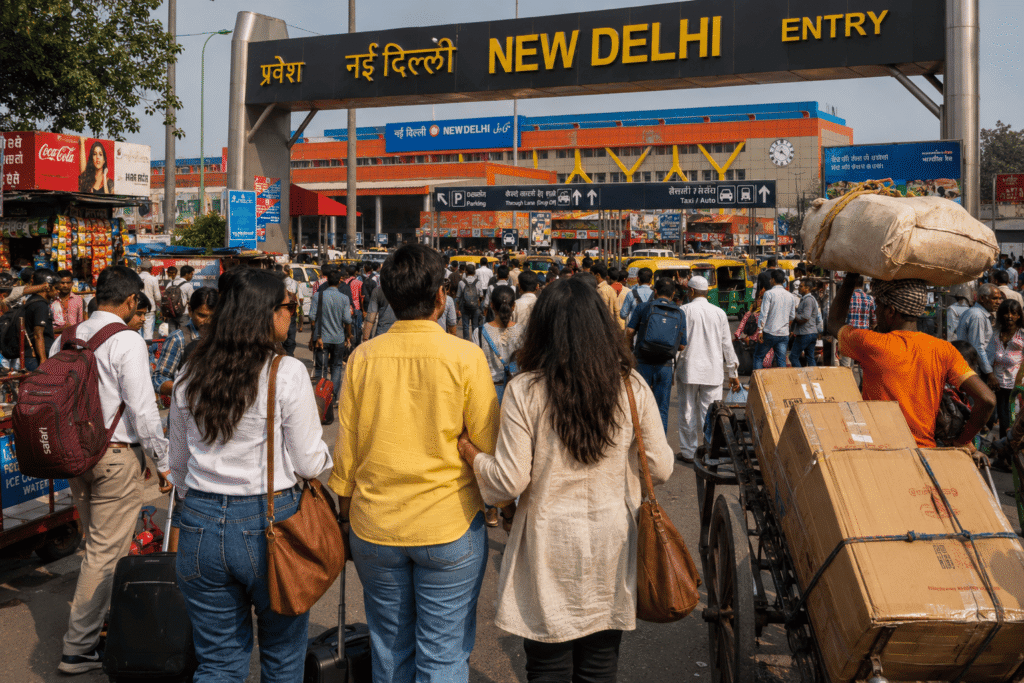
Entering New Delhi Railway Station from the Ajmeri Gate Side
From GB Road, we made our way towards New Delhi Railway Station, one of the busiest railway stations in the capital.
We entered through the Ajmeri Gate side of NDLS.
The change was immediate.
The street noise was replaced by another kind of noise.
Announcements echoed across the station.
People hurried towards platforms.
Porters carried luggage.
Families gathered around piles of bags.
Business travellers moved quickly.
Students waited for trains.
Tourists looked around trying to understand the station.
People from small towns, villages and major cities were all passing through the same place.
For a few minutes, it felt as though we were watching India rather than simply watching a railway station.
Harry told us about the development of modern Delhi and how the railway became such an important part of the city’s growth.
The unmistakable smell of a railway station surrounded us — metal, food, dust, tea and thousands of passing passengers.
The announcements were sometimes difficult to understand.
But somehow that made them even more familiar.
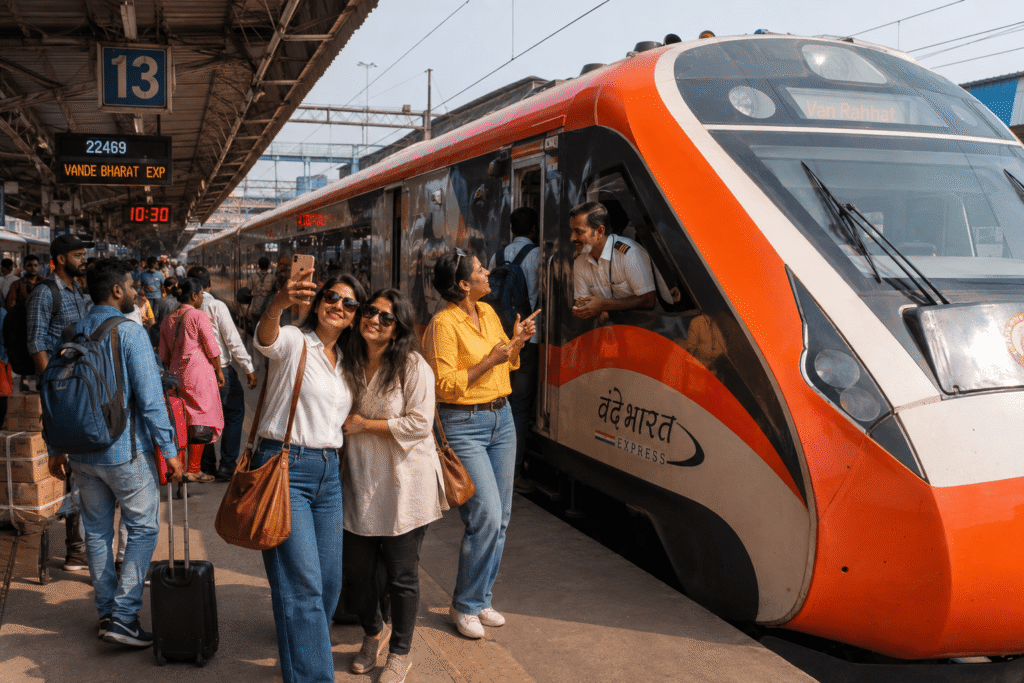
A Vande Bharat Train to Khajuraho
On the platform, Harry pointed towards a Vande Bharat train.
It was preparing for a journey towards Khajuraho, famous for its extraordinary medieval temples.
We had heard of Khajuraho before, but seeing a modern train ready to take passengers there created a strange connection between old India and new India.
Harry told us a little about the destination.
The railway station had suddenly become more than a place where trains arrived and departed.
It was a gateway to other stories.
Other cities.
Other cultures.
Other journeys.
For anyone interested in travelling beyond Delhi, a railway platform can sometimes be the beginning of the next adventure
The Train to Amritsar and a Cup of Railway Chai
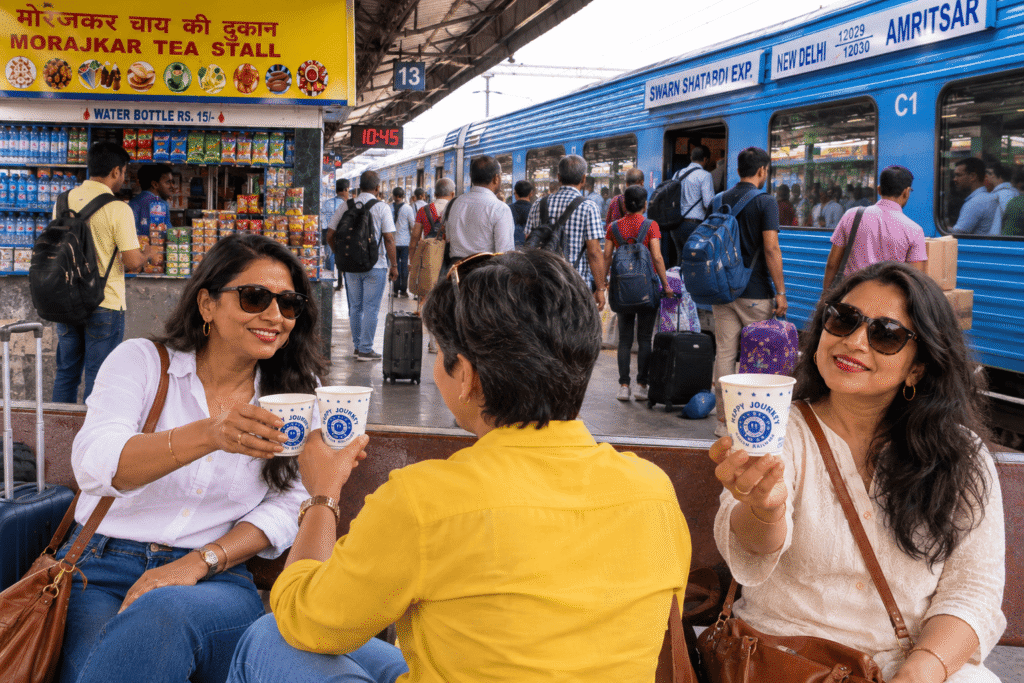
A little later, Harry showed us the Swarn Mandir Shatabdi, carrying passengers towards Amritsar.
He explained the connection between the train’s name and Swarn Mandir — the Golden Temple Amritsar.
We watched passengers preparing for their journey.
Some were travelling alone.
Others were travelling with children, elderly parents and enormous bags.
Then Harry said something that stayed with us.
He told us that a railway station can feel like a temple.
People arrive with hopes and prayers.
They wait.
They listen for announcements.
And then they leave towards a destination they have been dreaming about.
The announcements, he said, could almost be compared with the mantras of a temple.
The long whistle of a departing train sounded like a conch shell.
We sat on a bench at Platform 1 and ordered railway chai.
Honestly, it wasn’t the greatest tea we had ever tasted.
But sitting there and watching the movement around us made that ordinary cup of tea memorable.
Perhaps that is what a good guide does.
He doesn’t necessarily show you something extraordinary.
He teaches you how to see the extraordinary in something ordinary.
From New Delhi Railway Station into Paharganj
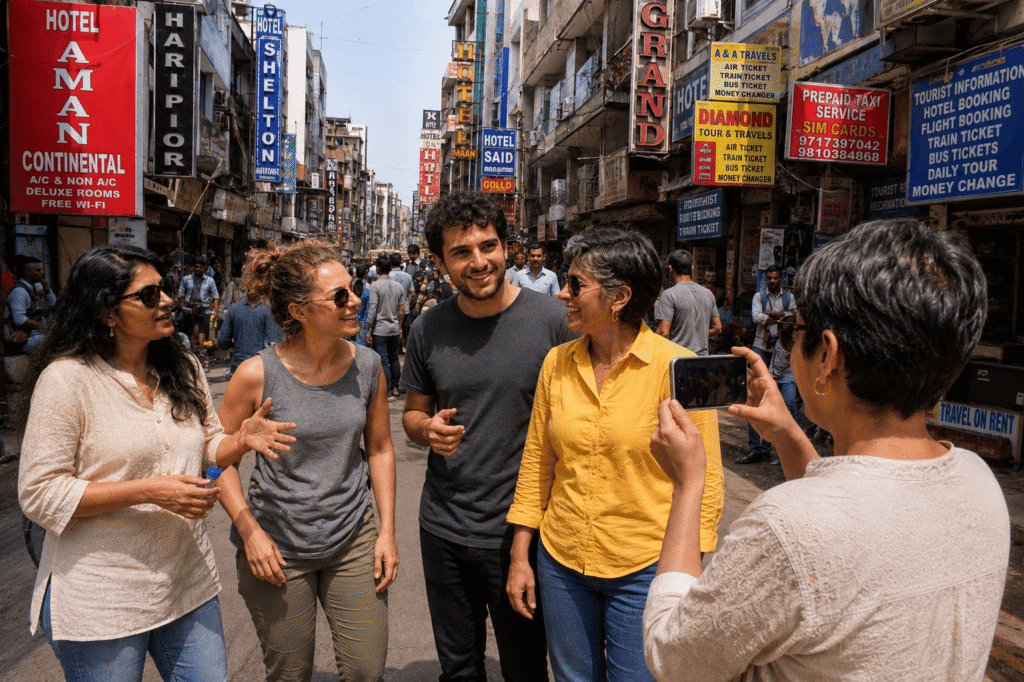
Eventually, we left the railway station and walked towards Paharganj.
The city swallowed us again.
Traffic.
Auto-rickshaws.
Passengers.
Luggage.
Shopkeepers.
Street vendors.
Hotel signs.
Backpackers.
Everything seemed to be moving at once.
Harry guided us through the traffic and introduced us to another side of Delhi.
We passed the old Sheela Cinema, which Harry told us had been a familiar name for generations of Delhi residents and moviegoers.
Then we reached Arakshan Road.
Paharganj has long been associated with budget accommodation and independent travellers. Its streets are filled with inexpensive hotels, guesthouses, restaurants, rooftop cafés, shops and businesses serving backpackers from around the world.
We noticed foreign travellers carrying large backpacks.
Some greeted Harry as we passed.
That surprised us.
It seemed that our guide knew people in almost every corner of the neighbourhood.
Paharganj suddenly felt less like a tourist district and more like a global crossroads.
Travellers arrived here from airports and railway stations, stayed for a night or two, and then continued towards Rajasthan, Agra, Varanasi, Amritsar, Nepal or further into India.
Chole Bhature in Paharganj
By now, our legs were beginning to complain.
Harry, however, seemed to have a solution.
Food.
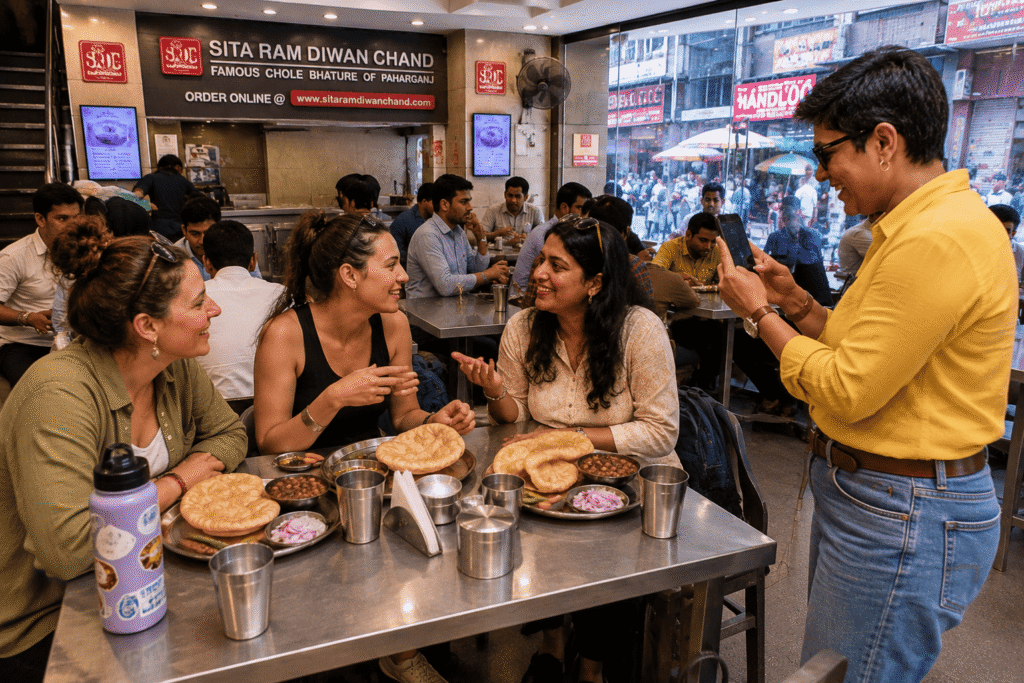
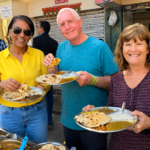
He took us to Sita Ram Diwan Chand, a famous Paharganj stop for chole bhature.
He ordered three plates with lassi.
When the food arrived, we forgot how tired we were.
The hot, puffed bhature, spicy chole and accompanying flavours were exactly what we needed after hours of walking.
If you are planning your own food-focused exploration of the city, you can also read our Delhi Street Food Tour for more ideas on what and where to eat.
We laughed and agreed that perhaps this was the real secret of a Delhi walking tour.
Walk until you’re hungry.
Then eat.
Then keep walking.
Bengali Market and a Quieter Side of Delhi
After lunch, we crossed Panchkuian Road and continued towards Bengali Market.
The surroundings gradually became less chaotic.
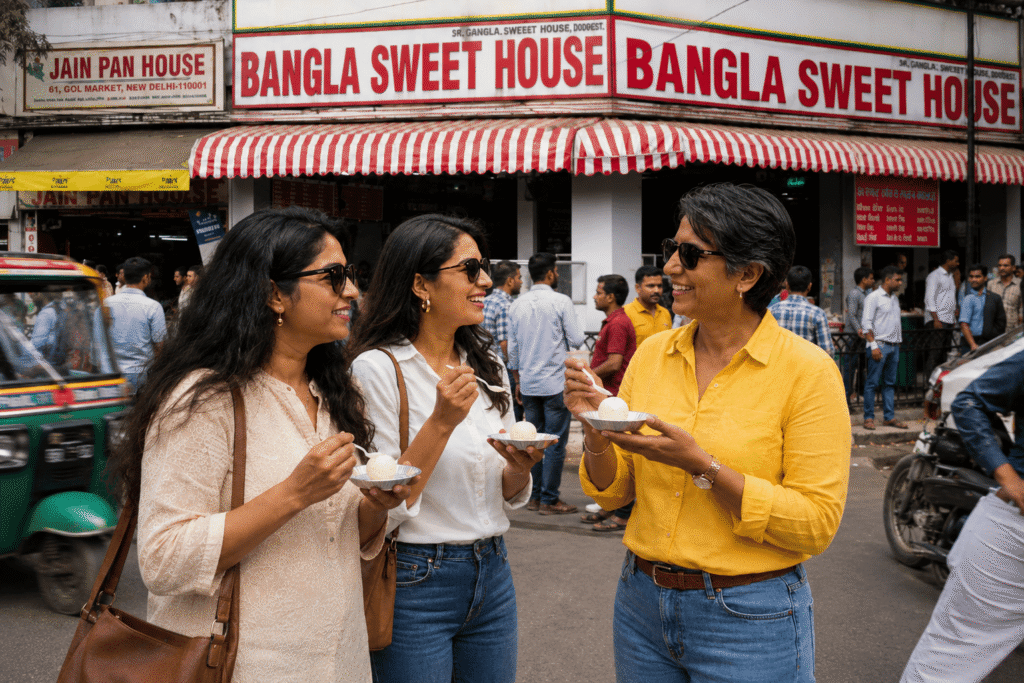
We stopped for Bengali sweets and tasted rasgullas.
After the spicy chole bhature, the sweetness was welcome.
But our walk still wasn’t over.
Harry told us that our next stop would be Gurudwara Bangla Sahib.
We followed him towards Central Delhi.
The contrast was remarkable.
Only a short while earlier we had been squeezed between crowded market lanes and railway traffic.
Now we were approaching one of Delhi’s most peaceful and spiritually significant place
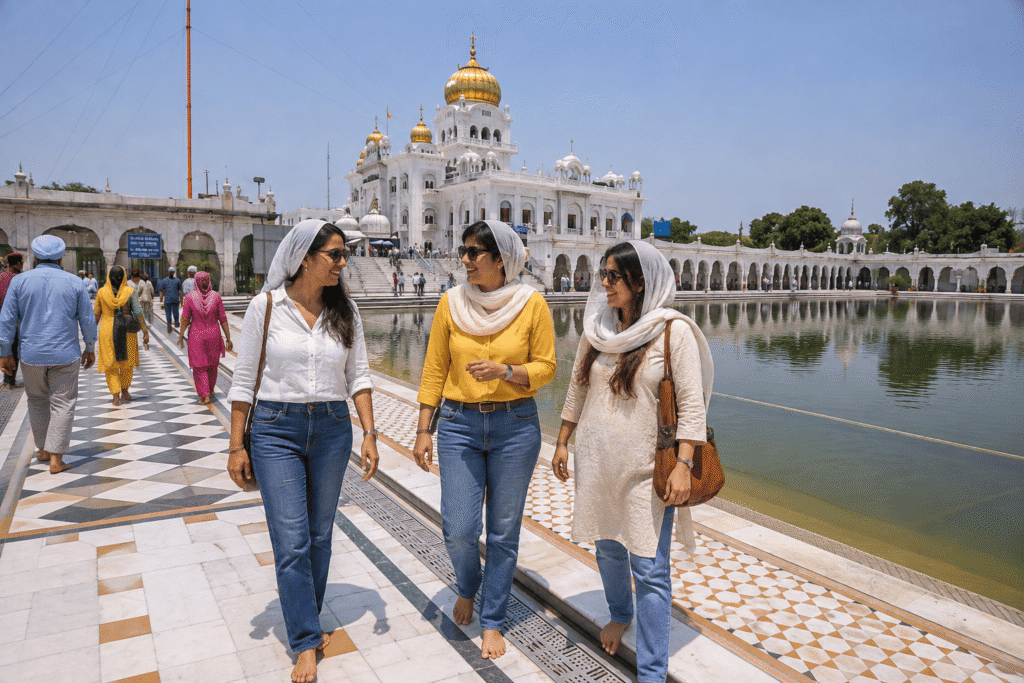
Gurudwara Bangla Sahib: Peace After the Noise
At Gurudwara Bangla Sahib, the atmosphere changed completely.
The noise of the markets seemed far away.
The white marble, golden dome and peaceful surroundings created a sense of calm after the intensity of Ajmeri Gate, GB Road, New Delhi Railway Station and Paharganj.
We stopped for a while.
Harry explained some of the history and significance of Bangla Sahib, and we simply enjoyed the peaceful atmosphere.
It felt like the right place to end our journey.
Our Sunday had taken us through several different Delhis.
The Mughal Delhi of Ajmeri Gate.
The working Delhi of wholesale markets.
The complicated Delhi of GB Road.
The travelling Delhi of New Delhi Railway Station.
The backpacker Delhi of Paharganj.
The food-loving Delhi of chole bhature and rasgulla.
And finally, the spiritual Delhi of Bangla Sahib.
From Bangla Sahib to Patel Chowk
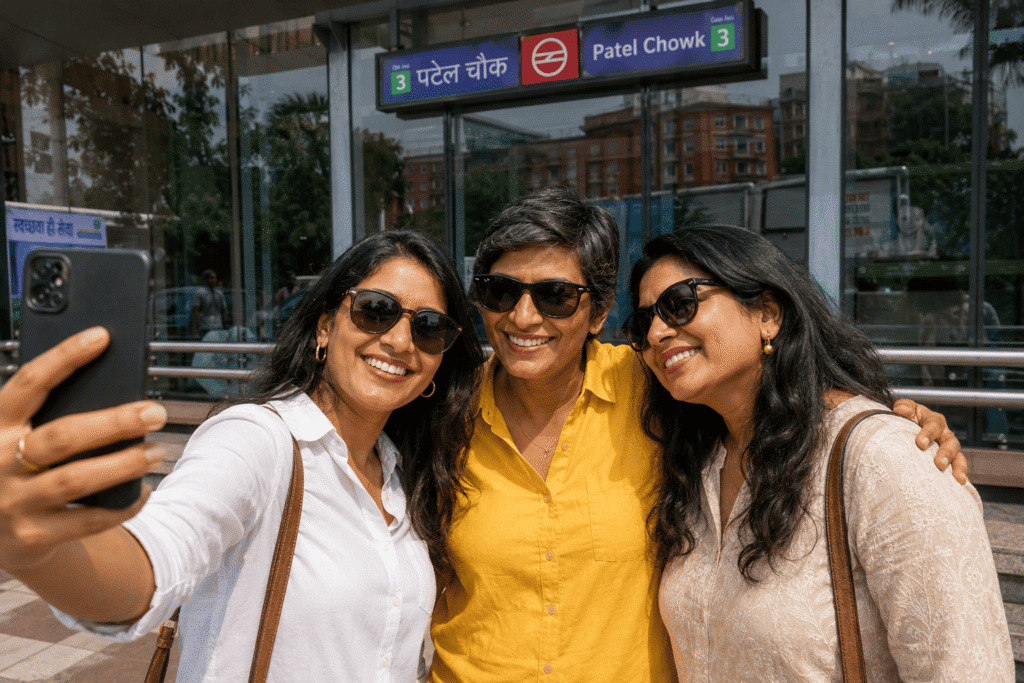
Our final walk took us towards Patel Chowk Metro Station.
By now, our feet were tired.
We had walked for hours.
Harry looked at us and jokingly said that we had probably burned “a million calories.”
We laughed.
But he wasn’t entirely wrong.
We felt tired, but strangely energetic at the same time.
At Patel Chowk, we said goodbye to Harry and boarded the Metro towards Gurgaon.